Invest1 publisher3 min readPublished
The NRSC just told AI firms their data centers are a losing issue
A private Republican memo blames data-center backlash for Jon Husted's trouble in Ohio. The warning inside it is about approvals everywhere, which makes it a cost line, not a talking point.
The Investor · Invest desk
Drafted by a language model from the sources cited here and checked against its claim ledger before publication. How we use AISend a correction
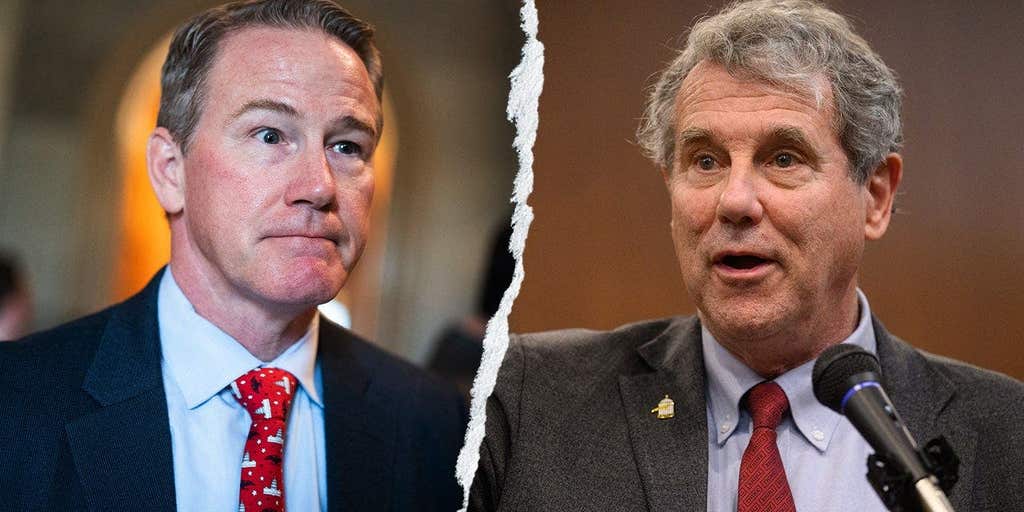
What happened
- Senate Republicans warned AI companies in a private memo that data-center backlash is sinking Sen. Jon Husted in Ohio.
- The memo also warned that politicians everywhere could become wary of approving new data-center projects.
- The National Republican Senatorial Committee letter was headlined "Ohio Data Center Risk" and warned AI giants that politicians could soon see support for data centers as a way to lose public support and elections.
- The NRSC memo was reported by Axios, which the article says had seen it.
- The NRSC describes its own polls as a "dead heat" between the candidates, while Democratic Sen. Sherrod Brown is described as polling ahead of the Republican candidate.
Compiled by The InvestorSomething wrong?How this is made
Why it matters
Senate Republicans' campaign arm told AI companies in a private memo that data-center backlash is sinking Sen. Jon Husted in Ohio, and warned that politicians everywhere could become wary of approving new projects [1][2]. Approvals set the schedule for the AI buildout, so a party telling its donors that approvals have become electorally expensive is a supply constraint, not a communications problem.
The letter was headlined "Ohio Data Center Risk" and was reported by Axios [3][4]. The committee's own polling is described as a dead heat, while Husted is also characterised as trailing with the election under 80 days away, which is the kind of gap that usually means the memo was written to move money rather than to describe a race [5][6]. Sherrod Brown has spent millions making Husted "the face of data centers in Ohio" and linking him to rising electricity bills and the state's nearly 250 data centers [7]. Ohio residential rates have climbed 175% since 2005, outpacing inflation and the national average, according to U.S. Energy Information Administration data cited in the report [8]. A Gallup poll this spring found 71% of Americans oppose building AI data centers near them, per ABC News [9].
The committee's advice to the industry was to explain who benefits, who pays, and why a community should want a facility [10]. That is a messaging brief. The repricing is in Husted's own bill: the Ratepayer Protection Act would require data-center-class power users to cover the cost of their own generation and grid upgrades rather than spreading it across households [11]. Set that against 2019, when Husted as lieutenant governor helped assemble $43.5 million in state tax incentives and a 15-year local property-tax abatement to bring Google to Ohio [12]. Husted told Spectrum News the change is "not really a shift" and said the industry "haven't been as forthcoming about the benefits" [13]. Whatever the label, the template has moved from paying developers to come to billing them for the wires.
It is not one seat. Pennsylvania Gov. Josh Shapiro signed an executive order on Aug. 18 requiring local approval for projects and said the state "will not be bullied by these developers," per NBC News [14]. New York Gov. Kathy Hochul has signed a moratorium and Texas Gov. Greg Abbott paused approvals pending an audit [15]. Three states with nothing else in common are converging on the same friction.
The money is large and mostly unfired. AI-focused super PACs have raised $107 million and spent $55.5 million on federal races this cycle, according to tracking cited by Newsweek [16], which is about 52% deployed and roughly $51.5 million still in hand [17]. Leading the Future, backed by Andreessen Horowitz and OpenAI President Greg Brockman, has built a roughly $140 million network, against $80 million raised by the pro-regulation Public First Action, including $40 million from Anthropic [18] - a ratio of about 1.75 to 1 [19].
Watch whether the Ratepayer Protection Act's cost-allocation language shows up in state legislatures, because that is where the capex per megawatt actually changes. Watch whether new abatements of the 2019 kind get signed at all [12]. Watch where the unspent federal war chest goes, since local siting fights are cheap to influence and decide the schedule [17]. One caution: this account rests on a single report of a memo we have not seen [4].