Invest4 publishers3 min readPublished Updated
Husted's data-center ratepayer bill dies 57-43 in the Senate after passing the House 417-3
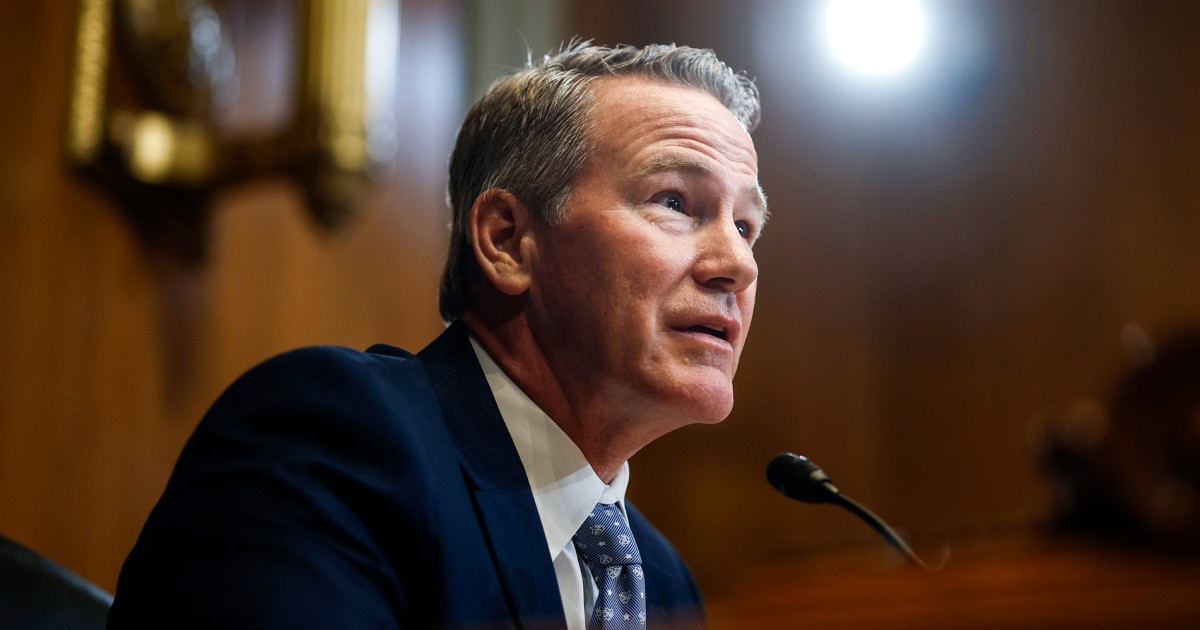
Senate Democrats blocked Jon Husted's Ratepayer Protection Act 57-43, three votes short of the 60 it needed. Democrats want a mandate that makes large data centers pay for their grid upgrades, so for now no federal rule says who covers those costs.
The Investor · Invest desk
What happened
- The act would have had state regulators weigh a standard making sites drawing 100 megawatts or more pay the full incremental cost of the generation and transmission they need.
- Sen. Martin Heinrich has a competing measure that would direct FERC to write binding rules for large electricity customers.
- As Ohio lieutenant governor, Husted steered $43.5 million in state tax incentives and a 15-year property-tax abatement to land a Google data center in 2019.
Compiled by The InvestorSomething wrong?How this is made
Why it matters
- constraint Who pays for grid upgrades at 100-megawatt sites stays a question for each state utility regulator, with no federal law even requiring them to weigh full-cost pricing.
- cost Developers of large sites avoid, for now, a federal expectation that they post financial assurances against a canceled or relocated project.
- decision Any revival has to settle whether the standard is optional or binding, since Schumer has made a mandate the price of Democratic votes.
- exposure Husted goes into the Brown race without the bill he wrote to answer the data-center attack his own party's committee ranked first.
The bill's cost term had two parts. A nonresidential customer drawing 100 megawatts or more at one site would pay the full incremental cost of the generation and transmission upgrades its demand requires [5], and the company would post financial assurances in case the project is canceled or moved [6]. The second part is the one with cash in it. It puts the developer's collateral behind grid built for its own demand, and the stated aim was to keep that cost from being spread across ordinary ratepayers [7].
The bill's enforcement was weaker than its cost term. The act would have amended existing energy law so that state utility regulators must at least consider the federal standard [4]. Democrats built their case on that verb, saying the bill only tells regulators to consider and sets no lower prices [8]. "They want it optional, which means zero. We want it mandatory," Senate Minority Leader Chuck Schumer said [10]. He also called the bill "a fraud, plain and simple" [9]. Zero overstates it, I think. A duty to consider makes each state regulator take the question up, though a developer in front of a regulator that says no has given up nothing, and on that point Schumer is right.
The vote split the same way. The bill failed 57-43, three short of 60 [1], and only four Democrats voted yes [2], so 53 of the 57 yes votes came from senators who are not Democrats [1]. The House had passed the same bill 417-3 in mid-September [3], a yes share of about 99% of members voting against 57% in the Senate [2]. "You all know this is the only game in town," Husted told reporters [12]. Sen. Peter Welch of Vermont told CNN, "I think voters see this for what it is: as kind of a political maneuver at the 11th hour" [11].
The Democratic alternative is a measure from Sen. Martin Heinrich of New Mexico that would direct the Federal Energy Regulatory Commission to write binding rules for large electricity customers [13]. Heinrich had earlier lodged the objection that stopped fast-track passage of Husted's bill [14]. The report does not say his measure has reached a vote. Democrats have blocked the optional standard without a mandatory one in law [3].
Husted's own record is part of the fight. As Ohio's lieutenant governor he steered $43.5 million in state tax incentives and a 15-year local property-tax abatement to land a Google data center in 2019 [16]. Sherrod Brown, his opponent in what is seen as one of the tightest Senate races on the November ballot [19], ties him to the 240 data centers now operating in Ohio [17]. In August the National Republican Senatorial Committee warned in an internal memo that "more than any other thing in this race, data centers are the anchor hanging around Husted's neck" [18].
The bill can go three ways from here. It could return after November and pick up the three votes it lacked. Heinrich's route could become the vehicle, putting the rule with one federal regulator. Or neither passes, and each state keeps its current practice. I'd expect the third before the election, because both campaigns now have a use for the failure. Husted called it a "Chuck Schumer play" and said, "Now they own it. The Democrats are obstructionists on lowering electricity prices for American consumers" [15]. A floor vote on either version before November that gains three senators would prove that view wrong.
What to watch
- Whether Heinrich's measure directing FERC to write binding rules for large electricity customers gets a floor vote or a path to 60.
- Whether the Ratepayer Protection Act returns after the November election and picks up the three votes it lacked.
- Whether any state utility regulator adopts the 100-megawatt full-incremental-cost standard without a federal requirement.