Invest3 publishers2 min readPublished
HD Hyundai XiteSolution pitches a two-to-three-year payback for heavy electric forklifts
HD Hyundai XiteSolution has put 10- to 18-ton electric forklifts into mass production for shipyards, ports and steel mills that have run on diesel. The case for switching rests on a payback estimate the company ran itself, with no purchase price published to test it against.
The Investor · Invest desk
Drafted by a language model from the sources cited here and checked against its claim ledger before publication. How we use AISend a correction
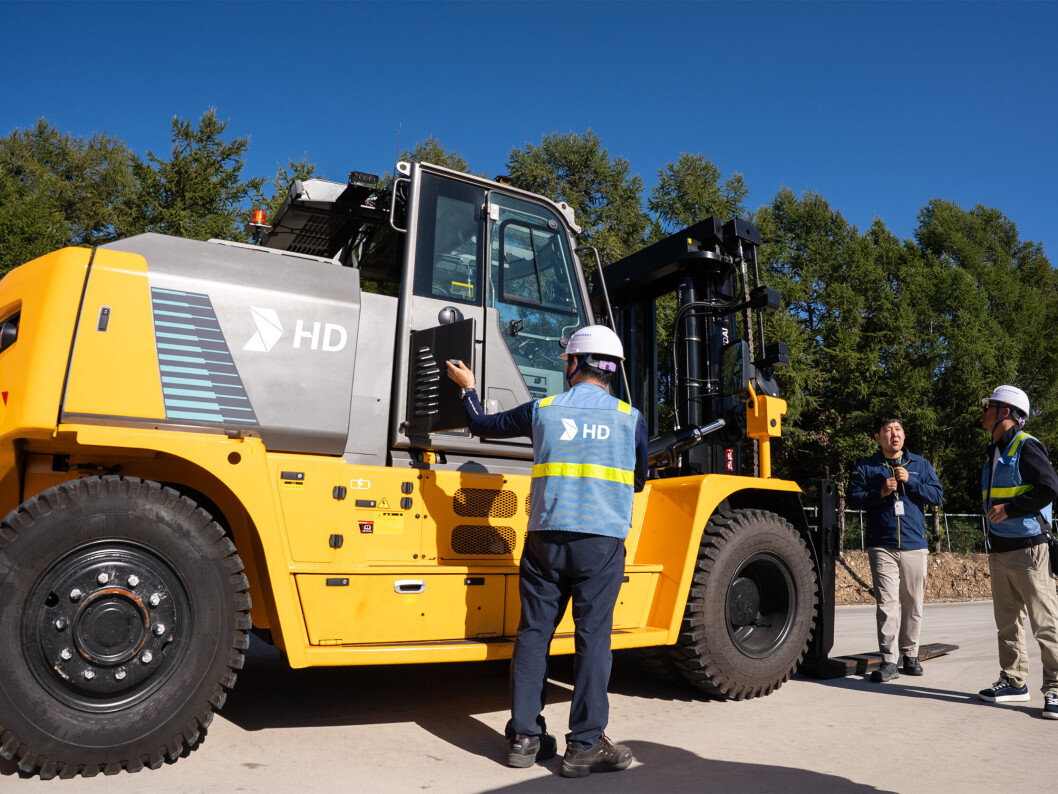
What happened
- The company says high-voltage batteries, fast charging and upgraded motors let the new models match diesel forklifts on speed and power.
- The battery system carries UL 2580 safety certification and an IP67-or-better dust and water rating, so the machines can work outdoors in harsh weather.
- The heavy range follows four- to nine-ton electric models launched last year, giving the company what it calls Korea's broadest electric forklift lineup.
- Mordor Intelligence projects the global electric forklift market growing from $52.5 billion in 2026 to $67.4 billion in 2031.
Compiled by The InvestorSomething wrong?How this is made
Why it matters
- decision Heavy-site operators have to rerun a medium-duty cost study against their own shift patterns before an electric quote can be compared with diesel.
- cost Round-the-clock yards would get roughly 7.2 working hours per 1.5-hour fast charge, so charging slots enter the count of how many machines a site has to buy.
- constraint Mordor's fastest-growing band stops at 15 tons, so demand forecasts for the 16- to 18-ton models have to come from somewhere other than that projection.
The payback figure comes from a total cost of ownership study the company ran itself. It found that lower operating costs could cover the higher purchase price within two to three years under medium-duty conditions, according to the Korea Herald [8]. A payback period is the price premium divided by the annual saving, so the claim implies an electric machine that saves between a third and a half of its premium every year [1]. Neither report includes the purchase price, the premium over a comparable diesel unit, or whether the optional charger is counted in the study.
The medium-duty condition matters because of who the buyers are. The target sites have long chosen diesel for its power and endurance [9]. On endurance, the 18-ton model runs up to nine hours on a charge, according to the company [5], and the optional 120-kilowatt charger restores 80 percent in 1.5 hours [6]. If the battery drains at a steady rate, that 80 percent is worth about 7.2 more hours of work [2].
Heavier use can move the payback either way. More hours displace more diesel each year against a premium paid once, so harder work shortens it. Charging pushes the other way: a site that cannot give up 1.5 hours mid-operation may need a second machine or a second charger, and each one adds to the premium. In a third case the payback stops being the test at all. The Herald ties rising demand for electric machines to tighter environmental regulations [9], and if rules close a site to diesel, the comparison with diesel is no longer the decision. "The large next-generation electric forklifts can meet environmental regulations without a drop in productivity," a company official told Korea JoongAng Daily [13].
I'd expect the first case to dominate wherever the nine-hour runtime holds, because the premium is fixed and the saving grows with every hour worked. That view is wrong if heavy sites end up buying two electric units to cover the shift one diesel unit covers. Then the premium is paid twice, and a medium-duty payback overstates the case for switching.
The market projections favor the heavier end. Mordor Intelligence's forecast for the whole electric forklift market compounds to about 5.1 percent a year [3], while it puts the five- to 15-ton segment at 8.21 percent [12], roughly three points faster [4]. The company says it is the only Korean manufacturer of forklifts above 10 tons [4].
What to watch
- A published list price, or the premium over a comparable diesel unit, so the two-to-three-year payback can be checked.
- First named orders from shipyards, ports or steel mills, and whether they buy more electric units than the diesel machines they replace.
- Korean environmental rules on diesel equipment at industrial sites, the driver the Korea Herald cites for rising electric demand.