Low testosterone readings turn up in 26% of 479 US Army men tested
Researchers led by Stephen Hennigar at Pennington Biomedical found testosterone below 300 ng/dL in 26% of 479 male US Army personnel. The count is of readings against a cutoff, so it sizes the pool the new age-30 screening rule could flag.
The Scientist · Science desk
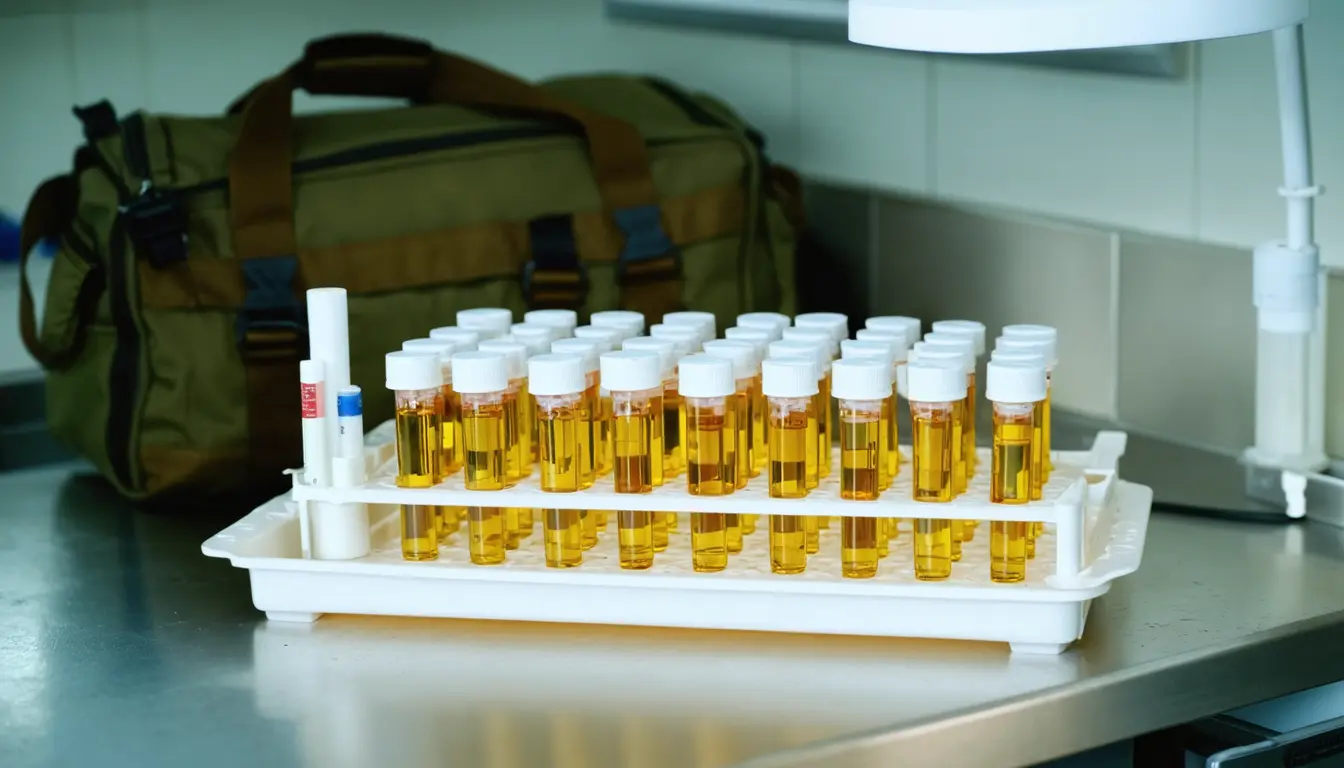
Key figures: 33% of male personnel aged 30 and older were classified as low; the American Urological Association's low cutoff is 300 nanograms per decilitre; researchers estimate 100,691 male US Army soldiers could have low testosterone readings.
| Figure | Value | Note | Claim |
|---|---|---|---|
| Male personnel aged 30 and older classified as low | 33% | 4 | |
| AUA low cutoff | 300 ng/dL | 2 | |
| Male US Army soldiers who could have low readings | 100,691 soldiers | estimate by Hennigar and colleagues | 3 |
What happened
- Among men aged 30 and older, 33% were classified as low, so older men were more likely to fall under the cutoff.
- The researchers extrapolate that 100,691 male soldiers in the US Army could have low testosterone readings.
- The data come from the Military Health and Nutrition Examination Study, which measured testosterone and other markers in active-duty personnel at five military centres between 2024 and 2026.
- US defence secretary Pete Hegseth announced in July that service members aged 30 and older get annual testosterone screening and an offer of voluntary therapy if their levels are low.
- Women were left out of the analysis because their testosterone levels were often below the limits of detection.
Why it matters
- Who's exposed exposure Men flagged low and offered therapy take on side effects that include acne, testicle shrinkage and reduced sperm production and fertility, plus fracture and pulmonary embolism risk in older men.
- What doesn't add up contradiction The study uses the AUA's 300 ng/dL line, but the rule offers therapy on low levels while the AUA also asks for symptoms before a diagnosis.
- What it limits constraint Per Katz, evidence that therapy improves military readiness, operational performance or fighting capacity is currently insufficient, and a prevalence count cannot supply it.
The Army-wide estimate rests on a sample of 479 men, about 125 of whom read low [2][13]. The figure for the whole force is extrapolated from that group [3]. If the sample were a simple random draw, the 95% interval around 26% would run from roughly 22% to 30% [19]. New Scientist's account does not say how personnel were chosen at the five centres or how the Army-wide figure was weighted, so that interval assumes the simplest possible design.
The cutoff is the bigger problem. Darren Katz of the University of Melbourne, who was not involved in the research, said a single test is not a reliable measure of deficiency. In his account, levels can fluctuate considerably within one person and shift with the time of day blood is drawn, recent food intake, poor sleep, obesity, acute illness and heavy physical or psychological stress [8]. A symptom condition would shrink the group further, because the men who meet a full standard are a subset of those who read low [14].
We think the 26% is a fair estimate of how many men in this sample a one-time screen would flag, and a weak estimate of how many would need treatment. The first holds only if the five centres resemble the Army.
Hegseth said the offer was "about restoring and optimising your natural capabilities, protecting your longevity, ensuring you have the biological foundation required to sustain the fight" [7]. Katz, who said treatment can improve sexual function, body composition, muscle mass and bone health in soldiers with genuine, symptomatic deficiency [17], was more cautious about that framing. "Testosterone should be prescribed to treat a medical condition, not simply to achieve a higher number on a blood test or as a general strategy to enhance the performance of otherwise healthy soldiers," he said [15]. He would favour targeting by symptoms, clinical findings and risk factors over automatic screening of every man over 30 [18].
A count of blood levels cannot show whether treatment changes how a soldier performs. That takes a comparison of treated and untreated men.
Timothy Piatkowski of the University of Queensland said high testosterone levels risk being mistaken for a sign of a good soldier [11]. "Testosterone is already increasingly being used as an oversimplified proxy for masculinity and virility," he said [12].
What to watch
- Whether the Hennigar team or the Army publishes how the 100,691 estimate was weighted and whether any men were retested.
- First-year results under the rule: the share of service members aged 30 and over flagged low and the share who accept therapy.
- Any controlled comparison of treated and untreated service members on readiness measures, the evidence Katz called insufficient.
Clarity's read
What the record supports and how the coverage leans. The claims behind it follow.
Reality
- Evidence50
- Adoption
- Insufficient
- Hype gap+30
- Incentives
- Insufficient
- Confidence55
Claim ledger
Ranked by verification strength, evidence, and original report placement.
- [1]
Stephen Hennigar of Pennington Biomedical Research Center in Louisiana and colleagues analysed data from the Military Health and Nutrition Examination Study, which measured testosterone levels and other health markers in active-duty personnel at five military centres across the US between 2024 and 2026.
- [2]
Among the 479 male personnel tested, 26 per cent had testosterone levels below 300 nanograms per decilitre, classified as low by the American Urological Association.
- [3]
The researchers estimate that 100,691 male soldiers in the US Army could have low testosterone readings.
- [4]
Older male personnel were more likely to have low testosterone, with 33 per cent of those aged 30 and older classified as low.
- [5]
Female personnel were not included in the analysis because their testosterone levels were often below the limits of detection.
- [6]
A recent ruling requires all US service members aged 30 and older to undergo annual testosterone screening and be offered voluntary replacement therapy if they have low levels; Pete Hegseth, the US defence secretary, announced the initiative in July.
- [7]
Hegseth said the decision to offer replacement therapy to soldiers with low levels was "about restoring and optimising your natural capabilities, protecting your longevity, ensuring you have the biological foundation required to sustain the fight".
- [8]
Darren Katz of the University of Melbourne, who was not involved in the research, said a single testosterone test is not a reliable measure of deficiency: levels can fluctuate considerably even within the same individual and may be influenced by the time of day blood is collected, recent food intake, inadequate sleep, obesity, acute illness and excessive physical or psychological stress.
- [9]
According to Katz, the American Urological Association recommends that a clinical diagnosis be made only if an individual also has related symptoms, such as reduced energy, motivation, libido and erectile function.
- [10]
Side effects of testosterone replacement therapy include acne, testicle shrinkage and reduced sperm production and fertility; it also increases the risk of bone fractures and pulmonary embolism in older men.
- [11]
Timothy Piatkowski of the University of Queensland said there is a risk that high testosterone levels will be conflated with being a good soldier.
- [12]
"Testosterone is already increasingly being used as an oversimplified proxy for masculinity and virility," Piatkowski said.
- [13]
26% of 479 male personnel is about 125 men with a low reading.
- [14]
Because a diagnosis under the AUA standard needs both a low level and symptoms, the men who meet the full standard are a subset of the men with low readings, so a symptom requirement can only shrink the 26% group.
- [15]
"Testosterone should be prescribed to treat a medical condition, not simply to achieve a higher number on a blood test or as a general strategy to enhance the performance of otherwise healthy soldiers," Katz said.
- [16]
Katz said there is currently insufficient evidence that testosterone treatment will improve military readiness, operational performance or fighting capacity.
- [17]
Katz said that for soldiers with genuine, symptomatic testosterone deficiency, appropriate treatment can improve symptoms and aspects of physical health, including sexual function, body composition, muscle mass and bone health.
- [18]
Katz said he would favour a more targeted approach to diagnosing and treating deficiency, based on symptoms, clinical findings and relevant risk factors, rather than automatically screening every man over the age of 30.
- [19]
Under simple random sampling, the 95% interval for a 26% proportion in 479 men is about plus or minus 3.9 points, roughly 22% to 30%.
Get this ledger inside ChatGPT. Ask about any of our stories and the answer brings its figure, each claim’s verdict and the sources. Free, no account.
Sources
1 independent publisher whose own reporting we read for this story.
- newscientist.comA quarter of male soldiers in the US could have low testosterone
1 article · October 15, 2026
Topics and entities
Follow any of these and your For You feed starts watching them — no settings page required.
Entities
- Pennington Biomedical Research CenterFollow
- New ScientistFollow
- Pete HegsethFollow
- Darren KatzFollow
- Stephen HennigarFollow
- American Urological AssociationFollow