Product1 publisher3 min readPublished
Zoom offers its My Notes transcription engine to the note-taking startups it competes with
Zoom CTO XD Huang says some AI note-taking firms are weighing a move to Scribe, the My Notes speech engine he says leads a benchmark of 60-plus systems. Startups that sign would buy their transcripts from the rival whose note-taker they are trying to beat.
The Product Desk · Product desk
Drafted by a language model from the sources cited here and checked against its claim ledger before publication. How we use AISend a correction
What happened
- Zoom makes the speech recognition behind My Notes available to any company as the Scribe API, part of Zoom AI Services, and version two is now out.
- Huang said My Notes records Zoom, Microsoft and Google meetings as well as conversations held in person.
- Scribe also runs ZoomMate, Zoom's AI assistant, and its customer support tools, with connectors to Slack, Jira and Salesforce supplying context.
- Zoom offers its best transcription in about ten languages, and Huang said he wants to cover all 24 official languages of the EU.
Compiled by The Product DeskSomething wrong?How this is made
Why it matters
- decision A note-taking startup that moves to Scribe can no longer sell transcript quality against My Notes, so the switch pays off only if its customers are buying what it does after the transcript.
- exposure The firm that switches would get its most basic input from a company that sells a competing note-taker and sets what that input costs.
- cost Companies whose calls include people with impaired speech would carry Scribe's higher error rate on those speakers into their notes if their vendor moves to Scribe.
XD Huang turns on My Notes in every meeting, lecture and workshop he attends, then asks ZoomMate what three big things he missed [7]. Huang is Zoom's chief technology officer. Before that he spent 30 years at Microsoft, ending as CTO of Azure AI [12]. He is the only user in his TNW interview whose daily habit is described.
Zoom pitches Scribe to other companies on something else. Huang's case for it is accuracy: he said it has stayed on top of Hugging Face's Open ASR Leaderboard since its first version [14]. The startups whose bots join calls and send summaries [5] sell the thing Huang actually uses, the short list after the meeting. A startup that moves to Scribe gets its transcript from the same engine that feeds My Notes [2]. Huang said Zoom's own model for summaries matches ChatGPT and costs far less to run, since it is trained only for summarising [15].
Zoom says My Notes works on rival platforms and in person [3]. Huang also said most people do not realise it works outside Zoom [4]. If he is right, a startup's bot on a Microsoft or Google call is up against a Zoom feature many of its users have not noticed. I think that gap is the clearest edge these startups have today, and a move to Scribe pays the one company able to close it.
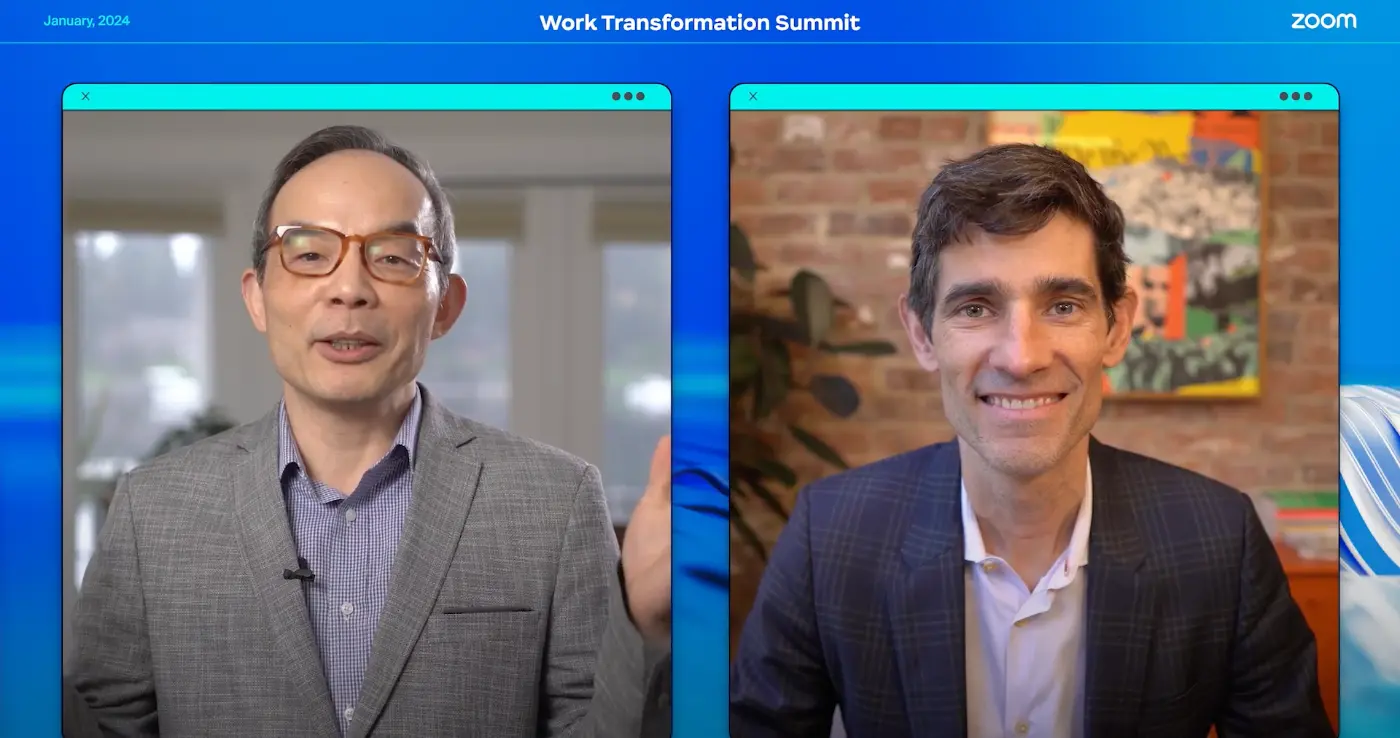
Asked by Cristian Dina whether My Notes had crushed those startups, Huang said: "I wouldn't say we crashed. And actually, we open this up." [6] The conversation was recorded on 22 September in Amsterdam, at a Zoom event ahead of HumanX [11]. The claim that some note-taking firms are considering a switch rests on Huang's account alone [1]. He did not name them, and the interview does not include Scribe's price or terms.
For an operator, Huang's own error figures are more useful than the ranking. Scribe's error rate rises from about 3% to 5 or 6 percent on the Speech Accessibility Project at the University of Illinois Urbana-Champaign [9]. The project records people who have had a stroke or cannot speak clearly [9]. For those speakers, the rate is roughly 1.7 to 2 times the baseline [13].
For a note-taking firm weighing the switch, two questions sort the decision. The first is whether customers pay for the transcript or for what gets done with it. The second is whether their meetings happen mostly on Zoom or mostly elsewhere.
Where customers buy the transcript and meet on Zoom, a startup on Scribe would be reselling the engine behind a feature they already have. Transcript buyers on other platforms would get the engine Huang says tops the leaderboard, but the pitch then depends on those users still not knowing My Notes works there. If customers pay for workflow and live in Zoom, the competitor is ZoomMate, which runs on Scribe too [8]. Workflow customers on other platforms are the safest case for switching. There, the startup's product is furthest from what My Notes does.
For the person rolling one of these tools out, the question for the vendor is which speech engine it runs. The useful test set is recordings of the company's own hardest speakers.
What to watch
- Whether any AI note-taking firm publicly confirms it has moved its transcription to Scribe, and on what terms.
- Published Scribe pricing from Zoom AI Services, which would show what a startup pays its competitor per hour of audio.
- Whether Zoom extends its best transcription beyond about ten languages toward the 24 EU languages Huang named.