Science1 publisher2 min readPublished
Previously healthy Yosemite toads leave their winter burrows infected with chytrid fungus
UCLA biologists found chytrid infections growing in Yosemite toads during winter hibernation on land, in a three-year survey of 1,800 samples. That makes the months a threatened species spends underground part of the high-risk season for the fungus.
The Scientist · Science desk
What happened
- From 2021 to 2023, researchers from UCLA and Yosemite National Park swabbed young toads near Tioga Pass in May, in summer and in September, just before hibernation.
- They returned during early snowmelt the following spring and swabbed the same toads again as they emerged.
- Biologists had assumed the toads caught Bd mainly during the brief breeding season in water, since the fungus was thought to spread mostly there.
- The Yosemite toad was listed as threatened under the Endangered Species Act in 2014 and is a highest-priority species of special concern in California.
- Toads reared at the San Francisco Zoo were being returned to the wild, though how Bd affected that effort was unknown.
Compiled by The ScientistSomething wrong?How this is made
Why it matters
- decision The Yosemite reintroduction program, already informed by the result, has to plan for Bd growth during overwintering as well as exposure in breeding pools.
- exposure Winter growth was strongest in metamorphs, so Bd presses hardest on young toads in a species where fewer tadpoles already survive to adulthood.
- constraint Until burrow transmission is separated from growth of infections carried in undetected, managers cannot tell whether to target the burrows or the toads' infection status before hibernation.
The strongest feature of the design is that the September and spring swabs came from the same animals [11]. Between those two swabs the toads were underground, away from any breeding pool, so a rise in infection between them happened on land. Sampling different toads in each season could not have excluded a simpler explanation: that the spring animals were a sicker group from the start.
Counting both surveys, the team collected 1,800 samples over three years at six sites [12]. That averages about 100 per site per year [1], spread across every life stage. The swabs were screened with PCR, the same kind of test used for COVID [13]. The phys.org report describes a high infection rate in toads that had been healthy [1], but it does not give prevalence or fungal-load figures, so the size of the winter increase cannot be judged from it.
The thing this doesn't tell you is where the winter infections begin. According to the report, the researchers do not know for sure that toads catch new infections in the burrow. The animals may go underground carrying an infection too light to detect [19]. A toad under the detection limit in September and over it in spring looks like a new case either way. "It certainly appears that the Bd fungus has the ability to move between individuals," said Brad Shaffer, a UCLA conservation biologist and co-author [17]. I think the paired swabs show when the fungus multiplies more firmly than they show how a toad acquires it.
The temperature result is the odder one. Bd had been thought to grow best in moderate conditions [16]. "The ability to increase in number on land at super low temperatures is a real surprise," Shaffer said [18]. "Although Bd is a largely aquatic pathogen, we discovered that major outbreaks of infection grow and spread during winter hibernation on land," said Dave Daversa, the UCLA ecologist who is first author of the paper in Functional Ecology [3][4].
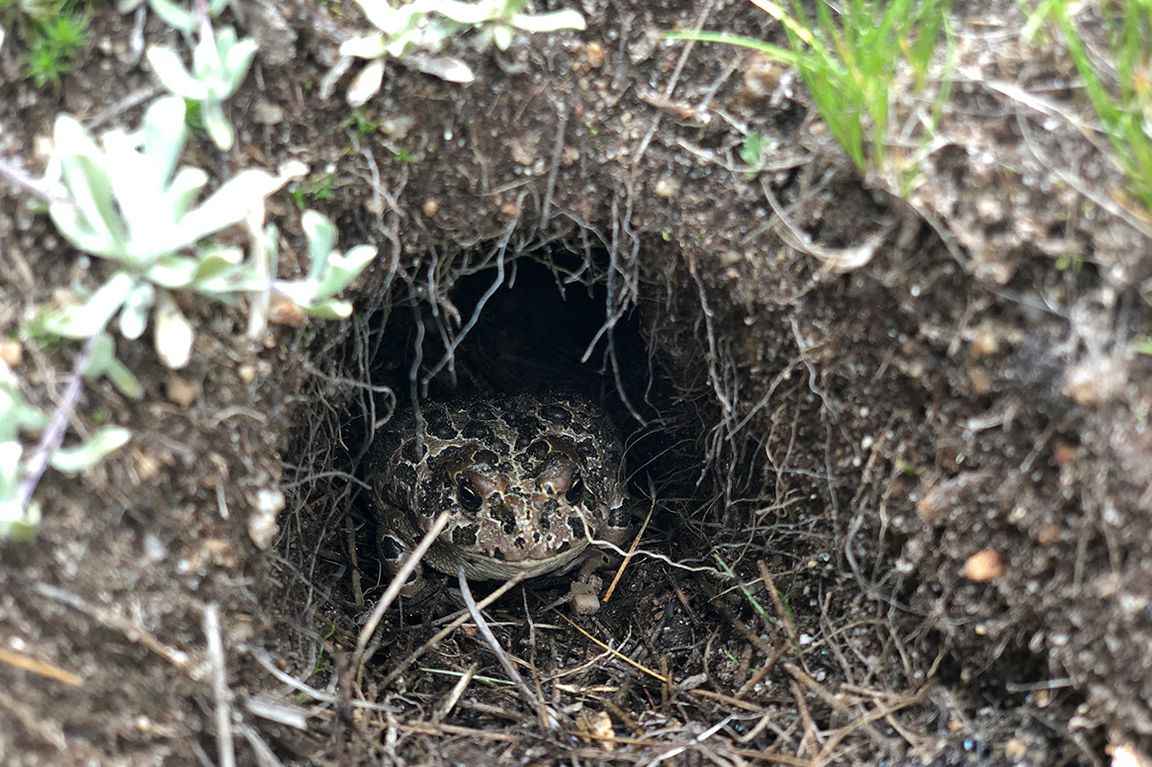
All of this comes from one species. The Yosemite toad, Anaxyrus canorus, is 1 to 3 inches long and lives almost entirely in Yosemite and Sequoia and Kings Canyon national parks [5]. It breeds in small pools but spends much of its life in abandoned rodent burrows, and it hibernates in those burrows through the High Sierra winter [6].
What to watch
- Sampling of burrow soil or of toads inside burrows that detects Bd directly, which would separate transmission underground from the growth of light infections carried in.
- Any change the Yosemite captive-rearing program makes to release timing or pre-hibernation testing in response to the winter result.
- Whether winter proliferation of Bd turns up in other amphibians that hibernate on land at low temperatures.