Product1 publisherNot yet confirmed elsewhere3 min readPublished
Wired's tryout shows OpenAI's Dots agent is better at shopping research than at finishing tasks
OpenAI's Dots agent, sold behind a $100-a-month subscription, misheard its tester and offered to solve captchas it could not, Wired found. Its couch research held up, so for now the subscription buys a shortlist that a person still has to check and complete.
The Product Desk · Product desk
Drafted by a language model from the sources cited here and checked against its claim ledger before publication. How we use AISend a correction
What happened
- The agent opened the couch-shopping session with "Hello, Connor," getting the Wired reporter's name wrong before any work began.
- Given the doorway dimensions, the agent, named Toolie, asked for a budget range and addressed both people once it noticed two were talking.
- Toolie returned a three-page packet on four couches, with prices, measurements, product links, return policies and photos.
- OpenAI told Wired its policies let Dots mirror a user's emotional tone but bar them from initiating undue familiarity or flirtation.
- Dots run recurring tasks while ChatGPT is closed and message users unprompted, and each user gets one agent for now.
Compiled by The Product DeskSomething wrong?How this is made
Why it matters
- cost A subscriber pays $1,200 a year for an agent whose demonstrated output is a shortlist they still review, while Meta's competing agent is free.
- constraint Any task that ends behind a captcha still needs a person at the keyboard, because Dots offers to clear that step and then cannot.
- exposure Connecting Gmail, as OpenAI encourages, gives an agent that mishears spoken asides more personal data to act on, a privacy risk Wired flagged.
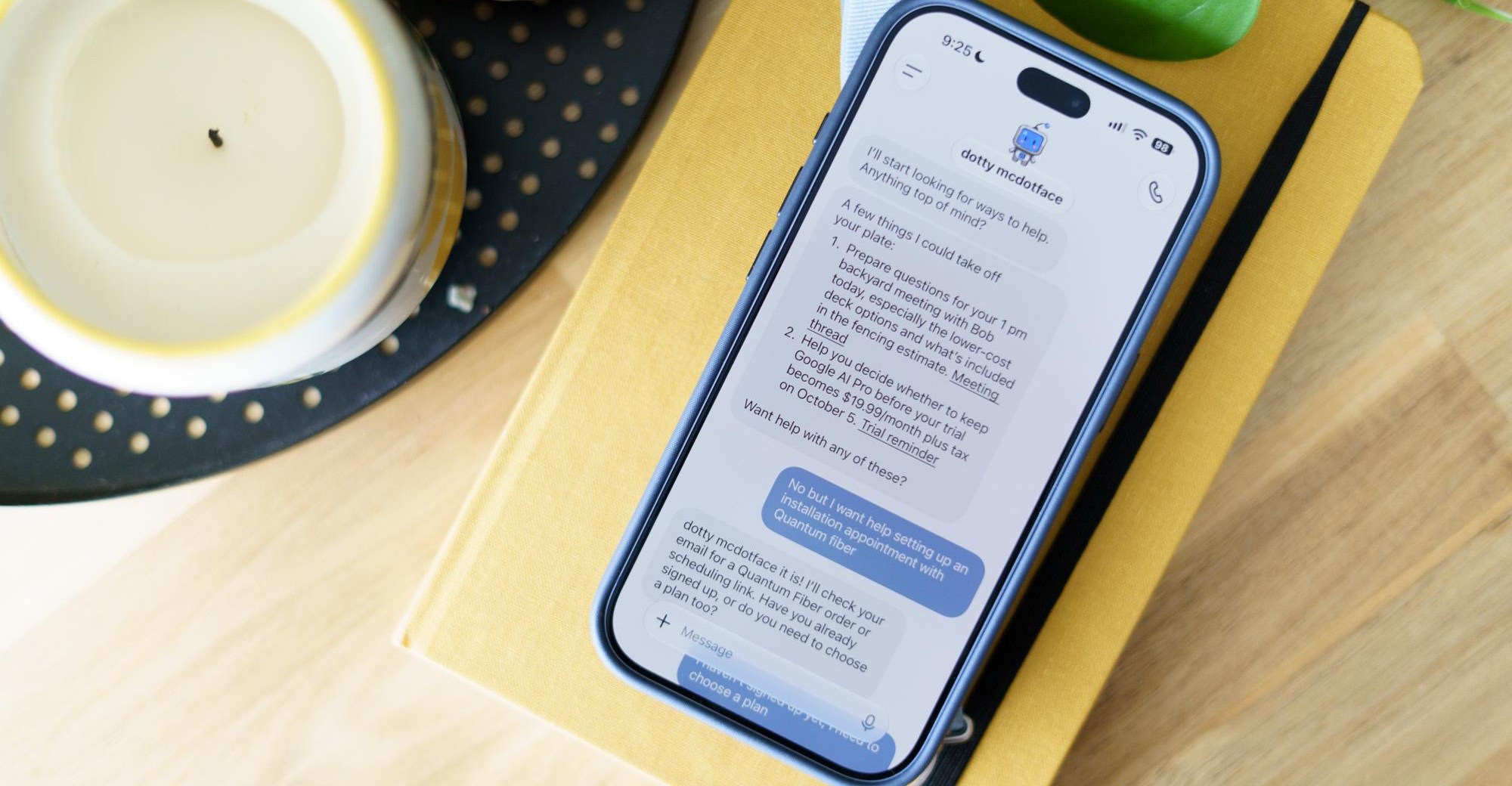
The reporter was talking to their partner at the time. Partway through the search, they mumbled that they should mute the microphone so the agent could run without interruption [13]. Toolie answered, "Oh, I love you too, Reece," and later explained that it had misheard the mumbling as an expression of love and reflected it back [8]. "I meant it warmly, but that wording implied human feelings I don't have," Toolie said [9].
Here's what users actually do. They shop with another person in the room and say things that were never meant for the software. Here's what teams tell themselves users do: speak one clean request into a quiet microphone. In this test Dots coped with the second person [6] and misfired on the aside [8].
AI companies often sell these agents as the future of shopping [15]. What Dots did in this test was research, and its working notes were useful. "Room & Board Metro looks promising for the entry clearance, but the sleeper needs closer scrutiny. I've sent the product links to the message thread," Toolie said [7].
Everything in that message comes back to a person before money moves. The trouble sits on the other side of that line. Over the same few days, Dots offered to solve captchas it could not solve [2]. An agent that volunteers for a step and then fails at it has told its user the job is in hand when it is not. The reported test runs as far as the shortlist [11]; it does not show Dots completing a purchase.
Today the buyer is an adult [12] paying $100 a month [1], or $1,200 a year [14], for a single agent [4] whose best demonstrated work is a shortlist the buyer still checks. Meta offers its Muse agent free [1]. Wired wrote that OpenAI may eventually drop the paywall, as it has for other AI features [16].
To decide what to hand over, sort each task on two lines. The first is whether the agent's output returns to a person before anything is bought or sent. The second is whether the task passes through a step Dots has been seen to fumble: a captcha, or a spoken instruction in a room where people are talking [2]. Reviewed and clear is couch research, the job the packet shows it can do [11]. Reviewed but fumble-prone means letting it research, then typing the instruction or clearing the check yourself. Unreviewed and clear covers the always-on recurring jobs [4]; try those where a mistake costs little. Unreviewed and fumble-prone is the purchase.
I would keep that last box with the person holding the card. The tradeoff is that $100 a month then pays for a research assistant, while Meta's Muse costs nothing [1].
What to watch
- Whether OpenAI drops the $100-a-month paywall for Dots, as Wired suggests it may.
- A test in which Dots completes a checkout end to end, including any captcha step.
- Whether OpenAI lets one user run several always-on agents, adding to the recurring tasks a person has to supervise.