Science1 publisher3 min readPublished Updated
Feral hogs are now a budget problem: containment is buyable, eradication is not
USDA's revived trapping program cut corn damage claims from 70 acres to 10 per policy, but all the money committed since 2018 is worth less than a month of the damage hogs do.
The Scientist · Science desk
Drafted by a language model from the sources cited here and checked against its claim ledger before publication. How we use AISend a correction
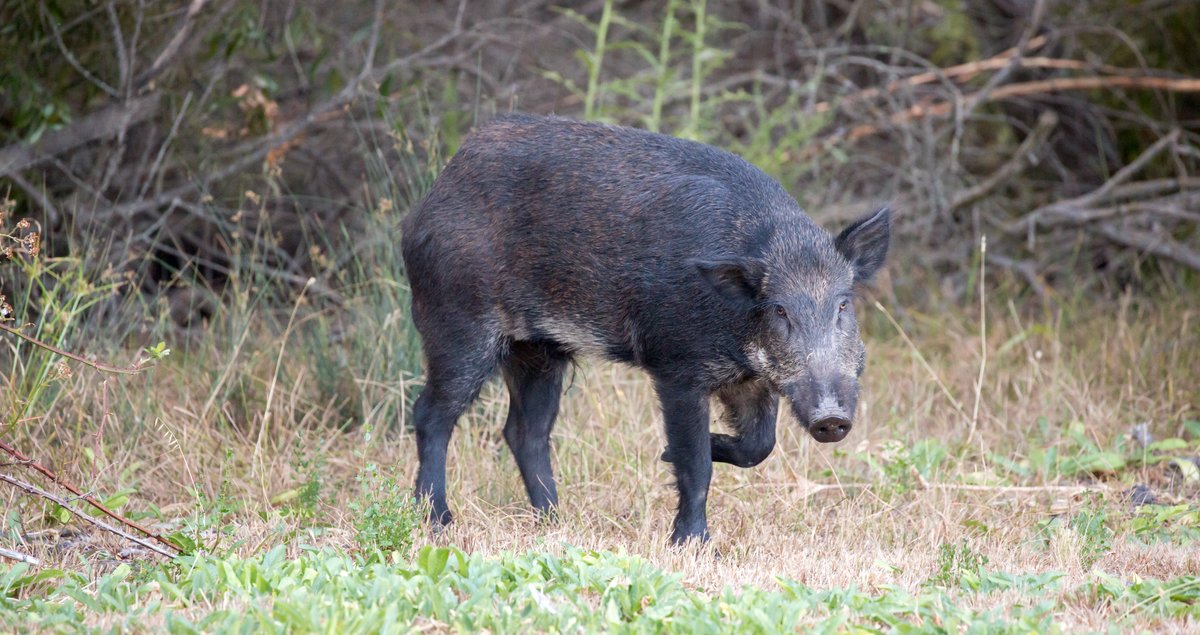
What happened
- Feral swine roam in 35 states, according to the U.S. Department of Agriculture.
- The most recent population figures, from 2016, estimated that 7 million feral pigs were loose in the United States.
- Feral hogs breed year-round and each year can produce up to two litters of four to 12 piglets per litter.
- Feral hog populations have been estimated to be able to double in just four months.
- USDA estimates that wild pigs do between $2.5 billion and $3.4 billion in property damage each year.
Compiled by The ScientistSomething wrong?How this is made
Why it matters
The federal feral swine program that began as a $75 million pilot in the 2018 Farm Bill has become a standing line item: Congress added $105 million to run it through 2029 in the budget and immigration package it passed in July 2025, and the Farm Bill now awaiting Senate debate would add $150 million more and extend the effort to 2031 [12][15][18]. A new evaluation by agricultural economists at the University of Tennessee and the University of Arkansas, writing in Scientific American, found the pilot cut damage claims sharply for one crop and did nothing measurable for four others [19][22][24]. That moves the decision from whether coordinated trapping works to how much containment is worth buying.
Start with the biology, because it sets the ceiling. USDA counts feral swine in 35 states and last estimated the national population at 7 million, in 2016 [1][2]. Hogs breed year round, producing up to two litters a year of four to 12 piglets each, and populations have been estimated to double in as little as four months [3][4]. A four-month doubling time implies up to eightfold annual growth where nothing checks it [8]. Against that, USDA puts annual property damage at $2.5 billion to $3.4 billion, of which at least $800 million, roughly a quarter to a third, is destroyed crops [5][6][7]. The remainder is disease transmission to livestock, wrecked fences and farm roads, damaged recreational parks, and degraded wildlife habitat, water quality and plant ecosystems [9].
The program's design targets an economics problem rather than a wildlife one. Hogs range across large tracts of private land, so if neighbors do not act together the animals relocate instead of being killed or contained; the authors' argument is that each landowner has an incentive to wait for someone else to pay, so nobody does [10][11]. Since 2020, USDA has funded landowners' purchases of trapping equipment, on-farm trapping and restoration of damaged ground in selected counties across ten states, from Texas and Oklahoma east to Florida and North Carolina [13][14].
The measurement used federal crop insurance claims to compare program and non-program counties, before and after the trial began [20]. Among counties that reported wildlife crop damage, non-program counties averaged 70 acres of corn damage per policy; program counties averaged 10, a decline of about 86 percent that the authors report as statistically significant [21][22][23]. Soybeans, wheat, cotton and peanuts showed no difference [24]. Corn is reportedly the crop most commonly damaged by feral swine, which the authors offer as a partial explanation for the single-crop result [25]. They also note the pilot launched into COVID-19 restrictions that limited the community meetings and outreach participation depends on [26].
Then the arithmetic that eradication talk does not survive. Federal money committed to the program since 2018 totals $180 million [27]. At the low end of USDA's damage range, that is less than a single month of losses [28]. If the House figure survives the Senate, the total reaches $330 million spread across 2018 to 2031, under 1 percent of cumulative damage over those years at the low-end estimate [29][30]. That buys suppression in chosen counties. It does not buy removal of an animal with an eightfold growth ceiling from 35 states.
Three things to watch. Whether the $35 million first tranche, one third of the 2025 allocation, is fully subscribed by the September 21, 2026 application deadline [16][17]. Whether the Senate keeps the $150 million [18]. And whether USDA publishes a population estimate newer than 2016, which will be a decade old by that deadline; without one, national containment cannot be judged on anything but insurance claims for corn [2][32].