Science1 publisher2 min readPublished
Ash on Sertung Island makes buried plants and dead plants look the same from orbit
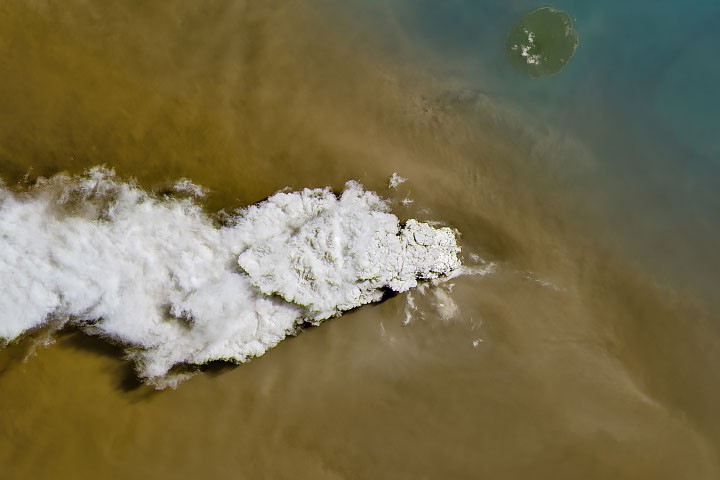
Sentinel-2 images show Sertung Island's vegetation index falling from 0.72 to about zero in the month spanning the September 2026 Anak Krakatau eruption. The researchers say ash over living plants gives the same signal, so survivors must be counted on the ground.
The Scientist · Science desk
What happened
- Sentinel-2 showed Sertung Island, just west of Anak Krakatau, mostly green on Aug. 8, 2026; by the Sept. 8 pass most of that green had gone and parts looked gray to brown.
- The average vegetation index (NDVI) across Sertung's vegetated areas fell from about 0.72 before the eruption to around zero by Sept. 8.
- A moisture index (NDMI) showed the vegetation-linked moisture signal dropping sharply, matching a shortwave-infrared shift toward the response of non-vegetated material.
- Panjang Island, just east of the volcano, kept a much stronger green signal, and satellite data show the ash plume drifted west and southwest toward Sertung.
Compiled by The ScientistSomething wrong?How this is made
Why it matters
- constraint A post-eruption vegetation-index map from orbit shows how much the ground cover changed. It cannot be used as a count of surviving plants until someone checks on the island.
- decision Anyone estimating eruption damage on Sertung has to pay for field samples and lab chemistry, because orbital imagery cannot measure what the deposit is made of.
- capability Sertung and Panjang are a few kilometres apart and got very different ashfall, so ecologists have a matched pair of sites for studying how wind-carried ash affects which ecosystems survive.
A satellite does not record whether a plant is alive. It records how the surface reflects light at different wavelengths [4]. NDVI is built from how green leaves reflect red and near-infrared light [6]. The authors of the phys.org analysis list what can pull that score down whether or not the plants beneath survive: a fresh layer of ash, fallen leaves, physical damage from heavy debris, burial, and atmospheric conditions [7].
They responded by looking at more of the spectrum. Shortwave infrared carries information on plant moisture and on the physical makeup of surface materials [9]. The authors describe true color, NDVI, shortwave infrared and the moisture index as four data sets that agree. They are careful about what the agreement shows: Sertung's surface underwent a profound transformation [11]. The authors do not say how independent those four checks are. Each reads the top layer from above. I'd expect a living shrub under a coat of ash to push all four in the same direction as a dead one, because the ash is what the sensor sees.
The comparison that does rule something out is geographic. Panjang Island is a few kilometres from Sertung and was badly battered in the 2018 eruption, yet it kept a much stronger green signal this time [c12, c13]. That makes haze over the whole archipelago, or a seasonal browning, a poor explanation for Sertung. The authors attribute the split to the direction of the plume [14]. Where ash settles depends on wind direction, plume height and particle size [13].
That explanation rests on one eruption and two islands. It is a sound correlation with the plume data.
The 0.72 is an average over Sertung's vegetated parts [5]. A mean near zero afterward is compatible with some patches keeping a little signal while others lost all of it. The two passes were 31 days apart [1], and the account dates the eruption only to early September [1], so the second image recorded deposits within days of the blast. The account does not report the size of the vegetated area or the thickness of ash on either island.
Those gaps are the questions the authors want answered on the ground: whether the plants are dead or buried, how much debris landed, and what happens to it next [17]. Once the material is exposed, rainwater reacts with its minerals and volcanic glass, some components dissolve, and chemical elements are released [16]. Microorganisms then colonize the deposits [16].
What to watch
- Field surveys on Sertung counting plants that survived under the ash, which would show how far the near-zero NDVI overstates mortality.
- Later Sentinel-2 passes over Sertung: green returning to the same pixels would point to burial over death.
- Lab chemistry and mineralogy of the Sertung deposit, the properties the authors say control how it weathers and is colonized.