iOS 27 gives Android-iPhone RCS threads quoted replies and real emoji reactions
The feature sits in beta and ships this fall, which finally gives anyone maintaining degraded-reaction strings or SMS-fallback branches a date to plan against, even though the version floor belongs to Apple's adoption curve.
The Product Desk
What happened
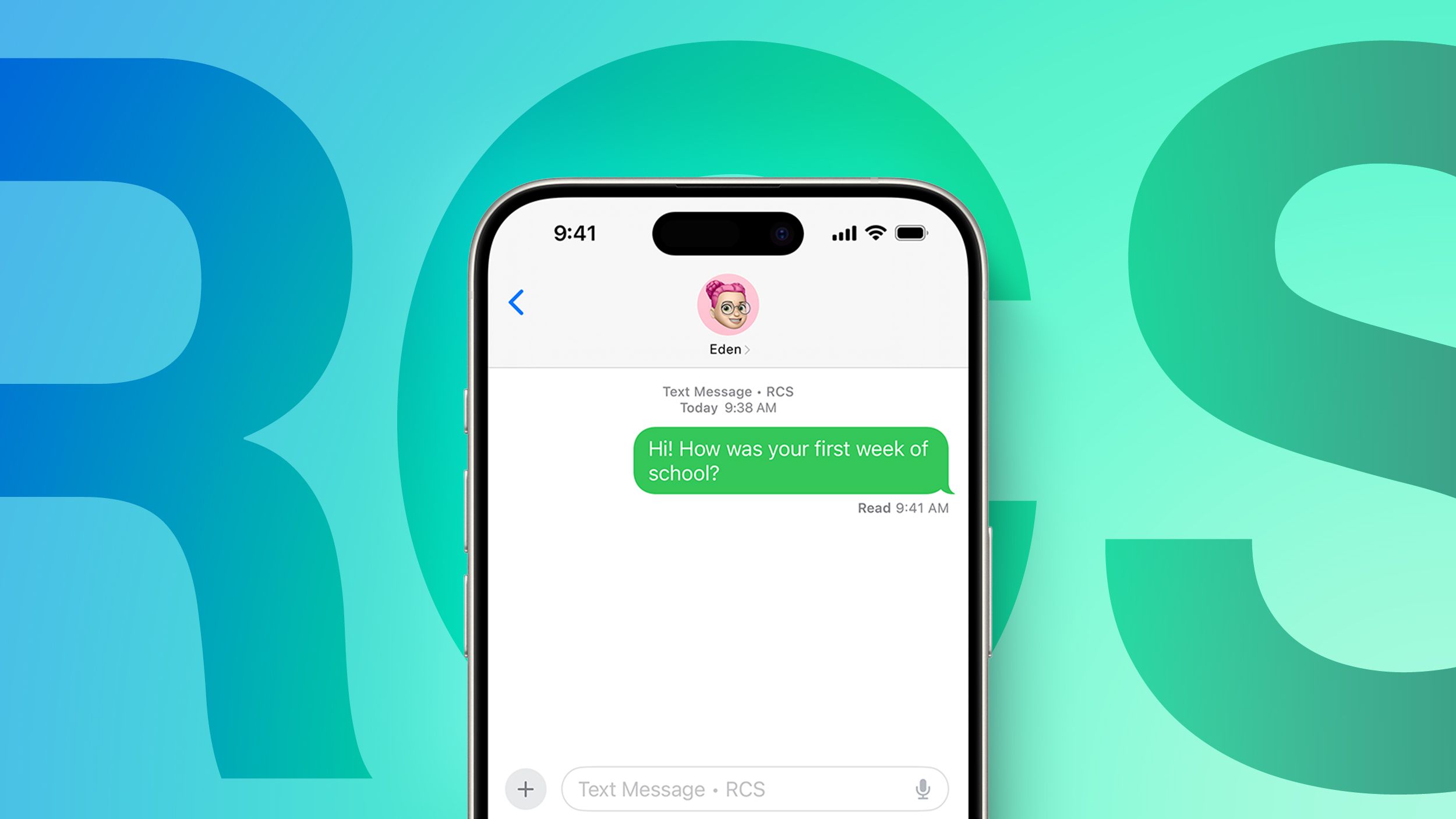
- 9to5Google's rollout tracker says that when iOS 27 launches this fall, Android-iPhone RCS conversations will support inline replies that carry the quoted message, and that the feature is in beta now.
- The same release brings photo reactions that show the actual emoji rather than the text description of it that mixed threads currently display.
- Encrypted RCS between Android and iPhone, arriving with iOS 26.5, already sits on the list of recent stable launches rather than the still-rolling-out section.
Why it matters
- decision Teams that wrote copy and rendering to excuse degraded mixed threads now have a dated reason to take it out, and the tradeoff is that the removal depends on an Apple version floor they do not set.
- constraint Because Messages features are A/B tested before stable, the fallback code stays in the build for some period after parity technically ships, so any cleanup plan needs a verification step on a real device rather than a release note.
- capability With encryption already stable and quoting on the way, the honest reasons to pull users out of the default thread and into your own app narrow to features you actually built.
- cost Dropping QR pairing for Messages for web pushes the cost onto shared-device and support-desk workflows, which now need a Google Account sign-in where a scan used to do.
A reaction crossing between platforms shows up in the thread as a written description of the emoji rather than the emoji [2], and a reply arrives without the message it was answering attached [1]. Those are small artifacts. They are also why a fair amount of messaging code exists.
This is for the person who owns a branch in the send path labelled something like "iPhone recipient, degrade gracefully." That branch usually holds two different kinds of thing. One is visible: custom strings, a help-centre article explaining why reactions look strange in mixed threads, a nudge to move the conversation into your own app. The other is invisible logic nobody has read since it was written: SMS length assumptions, reaction suppression, reply context stripped before send. iOS 27 makes the first kind embarrassing and the second kind deletable.
What is being pitched as parity is really the removal of a branch, and that removal has a schedule problem. 9to5Google's tracker is a useful corrective to reading "rolling out" as "shipped": it notes that Messages features are A/B tested and that the RCS client can take a long time to move anything into stable [3]. Take its own example. The first read receipts redesign started appearing in August 2024 and is only now seeing wide beta and stable availability [5]; the tracker entry is dated 29 August 2026 [6], which puts roughly 24 months between first sighting and broad availability [10]. The interop items do complete, though. Encrypted RCS between Android and iPhone arrived with iOS 26.5 and now sits on the stable list [4]. On the Android side the client you test against is narrowing, since US Samsung users are being moved onto Google Messages, which lands in the homescreen dock automatically on Android 14+ [7].
What the tracker cannot tell you is how many of your users are in mixed threads, or whether the degraded reaction ever cost you a conversation. It tracks releases, not how people are actually using them. What it dates is the retirement of a specific excuse.
So sort every mixed-thread assumption you hold by what its removal waits on. Bucket one waits on your own code: the copy, the help article, the nudge. You can schedule that. Bucket two waits on Apple's version adoption, which means a version check plus an adoption threshold you pick deliberately and write down, rather than a vibe about when "most people" have updated. Bucket three waits on Google shipping the receiving half in stable, which means somebody verifies it on a real device before the branch comes out. Only bucket one is yours, and it is usually the bucket teams leave alone longest because deleting an explanation feels like less work than it is.
The check on whether you got it right is not how many messages move through the thread. It is the fallback branch firing less often in your logs, and support closing out the ticket that starts with a sentence where an emoji should have been. Parity shows up first as a version floor. That floor, and not any announcement, is the unit worth planning against.
What to watch
- Whether the inline-reply and emoji-reaction support clears beta into the general iOS 27 release, and whether Google Messages ships the receiving half in stable at the same time.
- Apple's iOS 27 adoption curve, since that is the number that dates any removal of a mixed-thread fallback branch.
- Whether QR code pairing for Messages for web actually disappears, which would strand shared-device workflows that never sign in with a Google Account.
Clarity's read
What the record supports and how the coverage leans. The claims behind it follow.
Reality
- Evidence36
- Adoption34
- Hype gap+16
- Incentives42
- Confidence44
Claim ledger
Ranked by verification strength, evidence, and original report placement.
- [1]
When iOS 27 launches this fall, Android-iPhone conversations over RCS will gain support for inline replies that include quotes; the feature is currently in beta.
- [2]
iOS 27 will also bring photo reactions with the actual emoji to Android-iPhone RCS conversations, instead of just the text description.
- [3]
9to5Google notes that Messages for Android A/B tests many features and that it can take the RCS/SMS client a rather long time to actually launch new functionality in stable.
- [4]
Encrypted RCS for Android and iPhone with iOS 26.5 is listed among Google Messages' recent stable launches.
- [5]
The first read receipts redesign started appearing in August 2024 and is now seeing wide beta and stable availability.
- [6]
The 9to5Google Google Messages feature tracker entry is dated 29 August 2026.
- [7]
In the US, Samsung is having users switch to Google Messages, and on Android 14+ Google's RCS app will automatically shift to the homescreen dock after the move.
- [8]
Messages for web is removing QR code pairing in favour of Google Account sign-in; as of late April the QR code method was still available.
- [9]
A beta long-press menu in Google Messages opens a floating menu over a blurred background and lets users copy just part of a message, where previously the entire message had to be copied.
- [10]
Roughly 24 months separated the first sighting of the read receipts redesign from its wide beta and stable availability.
Get this ledger inside ChatGPT. Ask about any of our stories and the answer brings its figure, each claim’s verdict and the sources. Free, no account.
Sources
1 independent publisher whose own reporting we read for this story.
- 9to5google.comWhat new Google Messages features are rolling out [August 2026]
1 article · August 29, 2026
Topics and entities
Follow any of these and your For You feed starts watching them — no settings page required.