Leadership1 publisherNot yet confirmed elsewhere3 min readPublished
US pressure strips three official sponsors from Europe's main disinformation conference
Canada, Lithuania and the EU's diplomatic service dropped their sponsorship of #Disinfo2026 days before it opened after US pressure, the Guardian reported. For groups that rely on government sponsors, the episode shows one panel can cost an event its official backers.
The Board Room · Leadership desk
What happened
- Internal State Department documents seen by the Guardian show US officials thanking Lithuania for "taking US concerns seriously".
- The US focus was a Wednesday panel, "USA as a FIMI threat: adapt, acknowledge, push back", whose speakers included three Americans, one of them a former CIA officer.
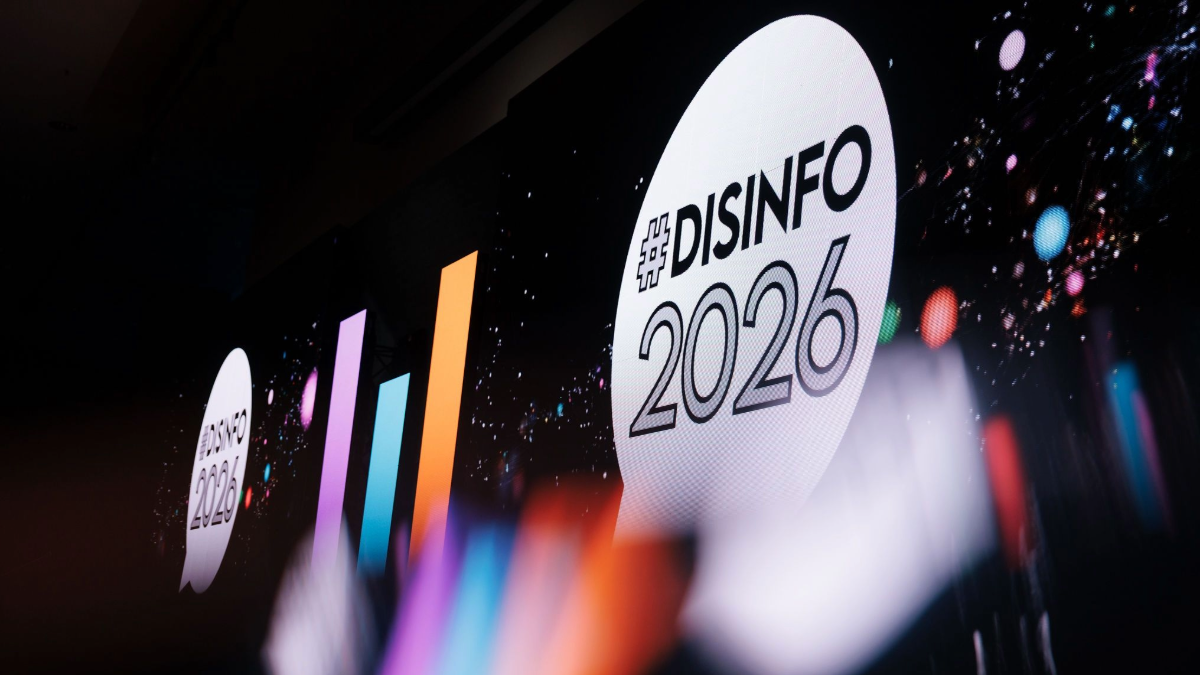
- Photos from the Vilnius venue show white stickers pasted over the sponsors' logos on printed conference materials, suggesting the removal was rushed.
- One person familiar with the deliberations said some communications appeared to come from the office of Sarah B Rogers, the undersecretary of state for public diplomacy.
- France was also contacted, according to the Guardian.
Compiled by The Board RoomSomething wrong?How this is made
Why it matters
- constraint Organisers cannot count a signed sponsorship as a public endorsement that will hold, because a sponsor can keep paying and still pull its logo days before an event.
- exposure Research and trust-and-safety groups with European government sponsors are now exposed to US diplomatic requests aimed at those sponsors.
- precedent The State Department recorded Lithuania's withdrawal as a success, so it has an approach that worked and that it can repeat with other European funders of counter-disinformation work.
At least one sponsor kept paying after its name came off. The EU continues to fund the conference even though it withdrew its branding as an official supporter, the Guardian reported [20]. Canadian officials are still taking part, Global Affairs Canada spokesperson Samantha Lafleur said [19]. That leaves two of the three withdrawing sponsors with a working tie to the event [22]. Lithuania's foreign ministry went further. "Lithuania has cancelled its participation in 'Disinfo 2026' as several parts of the conference programme differ from the official position of the Government," it wrote [8].
Washington's interest was in one session. An internal State Department document said the US was "grateful" Lithuania had found that panel "reprehensible and surprising" and welcomed its decision to limit involvement, according to the Guardian [13]. It appears to be the first time the conference has entertained the idea that the US could be a disinformation actor in Europe [15]. EU Disinfo Lab, the independent Brussels non-profit that runs the event, had drawn hundreds of researchers, journalists, technologists and policymakers to a Vilnius hotel [2].
A sponsor's defender would say a government may keep its name off a session that contradicts its policy, and the EU's policy is on record. Its diplomatic service named Russia and China as "threat actors" in a March report on foreign information manipulation [21]. EU officials did not agree with describing the US as a disinformation actor, the Guardian understands [11]. An EU spokesperson said the organisers "chose to frame some of the discussions in a way which does not align with the official positions held by the EU" [10].
The calendar weakens that defence. Lafleur said: "Following changes to the framing of several panel discussions, GAC decided to revise its participation in those sessions at the EU DisinfoLab 2026 conference." [9] By the Guardian's account, the programme had been in place since June, months before the sponsors withdrew [7]. The logos came off the conference website days before it opened [3]. By then the State Department had been in touch with multiple governments, according to three people familiar with the matter, including European officials [5].
Nina Jankowicz, a former US official who briefly headed the Biden administration's Disinformation Governance Board in 2022, said she understood Washington had pressured Lithuania and Canada [17]. "What this amounts to is a purported defender of free speech at the state department using the enormous power of the US government to try to pressure Americans from criticizing their government," Jankowicz said [18].
For organisations that depend on government sponsors, the case is narrower than a funding cut. It covers one conference, three sponsors and one panel, and it does not show any organisation losing a grant. It does show sponsors acting on a third government's request, prompted by a single session, in the last days before an event [5][13]. The trade-off for a sponsor is between its name on work it funds and its standing with an ally that objects to that work. This quarter's choice for a programme committee is whether to book sessions that name a sponsor's ally as a disinformation source. In my view, next quarter's consequence is sponsor agreements negotiated with that programme in mind, and the sponsor's diplomatic relationships sitting beside the grant amount as a term of the deal.
What to watch
- Whether Lithuania or Canada says if any sponsorship money was withdrawn or returned, as distinct from logos and session participation.
- Whether France, which the Guardian understands was also contacted, changes its involvement in this or future EU Disinfo Lab events.
- Whether EU Disinfo Lab's next programme keeps sessions treating the US as a source of foreign information manipulation, and whether EU funding continues if it does.
Clarity's read
What the record supports and how the coverage leans. The claims behind it follow.
Reality
- Evidence60
- Adoption
- Insufficient
- Hype gap+15
- Incentives45
- Confidence58
Claim ledger
Ranked by verification strength, evidence, and original report placement.
- [1]
The Trump administration pressured multiple countries to withdraw their sponsorship of a leading European conference on disinformation; Canada, Lithuania and the EU's diplomatic service subsequently agreed to do so.
ReportedSupportedSource: The Guardian understands2 sources— create a free account to open themView cited source - [2]
#Disinfo2026, held Wednesday and Thursday, is the annual meetup of Europe's counter-disinformation community, drew hundreds of researchers, journalists, technologists and policymakers to a hotel in Vilnius, and is run by an independent Brussels non-profit, EU Disinfo Lab.
- [3]
Days before the conference, the logos of its main supporters, the Lithuanian ministry of foreign affairs, the European External Action Service and Global Affairs Canada, were wiped off its website.
- [4]
Photos of the event shared with the Guardian show white stickers affixed over the sponsors' logos on official conference materials, appearing to indicate they were struck from the program in haste.
ReportedSupportedSource: The Guardian, from photos shared with it2 sources— create a free account to open themView cited source - [5]
Three persons familiar with the matter, including European officials, confirmed that the US State Department had been in touch with multiple governments over their support for the conference.
ReportedSupportedSource: Three people familiar with the matter, via the Guardian2 sources— create a free account to open themView cited source - [6]
France was contacted as well.
ReportedSupportedSource: The Guardian understands2 sources— create a free account to open themView cited source - [7]
Lithuania, Canada and the EU said in statements that the conference program did not align with their official views on the US role in disinformation, although that program had been in place for months, since June, before they withdrew their support.
- [8]
"Lithuania has cancelled its participation in 'Disinfo 2026' as several parts of the conference programme differ from the official position of the Government," Lithuania's foreign ministry wrote in a statement.
ReportedSupportedSource: Lithuanian foreign ministry statement, via the Guardian2 sources— create a free account to open themView cited source - [9]
"Following changes to the framing of several panel discussions, GAC decided to revise its participation in those sessions at the EU DisinfoLab 2026 conference."
ReportedSupportedSource: Samantha Lafleur, Global Affairs Canada spokesperson, via the Guardian2 sources— create a free account to open themView cited source - [10]
An EU spokesperson confirmed the EEAS withdrew its support because "the organisers chose to frame some of the discussions in a way which does not align with the official positions held by the EU."
ReportedSupportedSource: EU spokesperson, via the Guardian2 sources— create a free account to open themView cited source - [11]
EU officials did not agree with the characterisation of the US as a disinformation actor.
ReportedSupportedSource: The Guardian understands2 sources— create a free account to open themView cited source - [12]
Internal State Department documents seen by the Guardian show US officials thanking Lithuania for "taking US concerns seriously".
- [13]
The document says Washington was "grateful" Lithuania supposedly found a panel framing the US as a foreign information threat "reprehensible and surprising" and welcomed its decision to limit involvement in the conference.
- [14]
The panel "USA as a FIMI threat: adapt, acknowledge, push back" took place Wednesday and included three American speakers, among them a former CIA officer; sources and the internal document indicate the State Department was explicitly focused on this panel.
- [15]
The panel is the first time the conference appears to have entertained the idea that the US could be a disinformation actor in Europe.
- [16]
Other communications appeared to originate from the office of Sarah B Rogers, the US undersecretary of state for public diplomacy.
ReportedSupportedSource: One person familiar with the deliberations, via the GuardianView cited source - [17]
Nina Jankowicz, a former US official who in 2022 briefly headed the Biden administration's Disinformation Governance Board, said she understood that Washington had pressured Lithuania and Canada to withdraw from the conference.
- [18]
"What this amounts to is a purported defender of free speech at the state department using the enormous power of the US government to try to pressure Americans from criticizing their government," said Jankowicz.
- [19]
Canadian officials are still participating in the conference.
ReportedSupportedSource: Samantha Lafleur, Global Affairs Canada spokesperson, via the GuardianView cited source - [20]
Despite withdrawing its branding as an official supporter, the EU continues to fund the conference.
- [21]
In its latest report on foreign information manipulation and interference threats, published in March, the EU's diplomatic service named Russia and China as "threat actors".
- [22]
Two of the three sponsors that withdrew their branding kept a working tie to the conference: the EU through continued funding and Canada through participating officials.
Sources
1 independent publisher whose own reporting we read for this story.
- mezha.netКанада, Литва та дипломатична служба ЄС відкликали підтримку конференції у Вільнюсі
1 article · October 7, 2026
- theguardian.comEU drops sponsorship of disinformation conference at Trump officials’ request
1 article · October 7, 2026
Topics and entities
Follow any of these and your For You feed starts watching them — no settings page required.