Ukrainian drones hit Sberbank's Balakovo data center, the fourth Russian site struck in a week
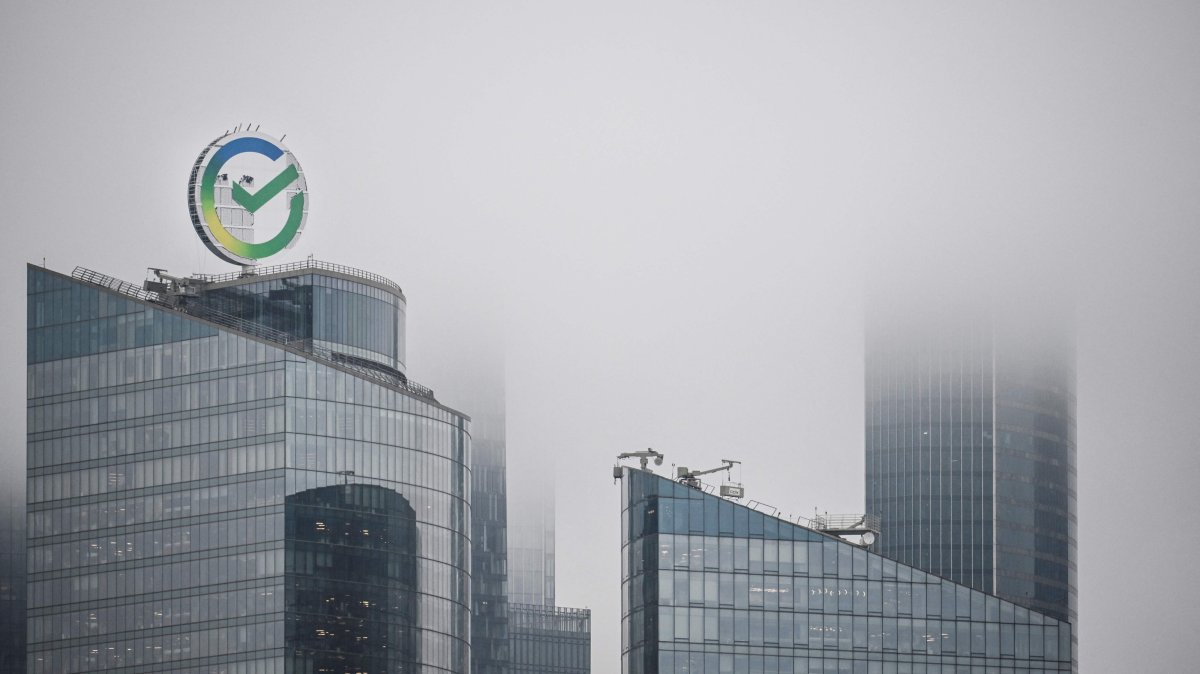
Ukrainian drones hit Sberbank's Balakovo data center on Wednesday, the fourth Russian site struck in a week after three of Yandex's. Neither company has said whether a supercomputer was damaged.
The Product Desk
Share chart: 3 of Yandex's 5 facilities were hit in the last week, at Vladimir near Moscow, Sasovo and Kaluga, according to DataCenterDynamics.
- Yandex facilities hit, last week, claim 4 3 of 5 facilities 60% computed
Yandex facilities hit, last week The rest of the 5
| Share | Part | Whole | Percent | Claim |
|---|---|---|---|---|
| Yandex facilities hit, last week | 3 facilities | 5 facilities | 60% (computed) | 4 |
What happened
- Sberbank first deputy CEO Alexander Vedyakhin confirmed the attack and said the bank's systems and services are running normally.
- RIA Novosti reported in 2024 that the Balakovo center would host Russia's biggest supercomputer, scheduled to go into operation in 2027.
- Yandex's three struck sites, at Vladimir, Sasovo and Kaluga, held all three of its operating supercomputers.
- Russia's digital development ministry said it is talking with the military about protecting data centers, and some lawmakers want them moved underground.
Why it matters
- contradiction The sources support 'data centers are targets' firmly and 'AI is the target' only by inference, since Ukraine cites retaliation and damage to compute is unreported.
- decision Owners of Russian data centers must choose between paying for protection and risking state takeover of their administration if a site is judged poorly protected.
- constraint A struck GPU cluster cannot simply be reordered under sanctions, so downtime at a training site is a procurement problem as much as a repair one.
Yandex's customers saw the strikes first. The company's taxi and food delivery units reported disruptions, while Sberbank has reported none, and some commentators took the contrast as a sign that Sberbank's centers are better protected [17]. "This is a great example of what a business owner can do to protect their assets," wrote military blogger Alexander Kots [18].
Daily Sabah frames the strikes as appearing to target Moscow's ambitions to develop AI on a par with the US and China [22]. What the sources document is a building. Local social media posts appear to show a damaged data center building at Balakovo, and Sberbank has not outlined the overall impact [20]. The site is a phased build of 55,000 square meters, begun in 2021 and planned through 2030, and it reportedly reaches more than 80 MW at full build-out [21]. It uses the nearby Balakovo nuclear plant as an energy source, and no damage was reported to that plant or to the Saratov hydroelectric plant [19]. Sberbank's most advanced operating supercomputer, Christofari Neo, is in Moscow [12].
Ukraine gives a different reason. It says it is responding to Russian attacks on its own data sites [23]. DataCenterDynamics lists facilities run by Parkovyi Data Center, MiroHost, Datagroup, Vodafone Ukraine, Ukrsibbank and Ukrtelecom among those Russian forces have hit in recent weeks [27]. Daily Sabah adds that the two countries have attacked each other's refineries, power stations, ports and e-commerce companies [28].
Yandex said previously that its supercomputers operated on Nvidia A100 chips, a model launched in 2020 and since succeeded by the H100 [10]. Its Chervonenkis ranks 101st on the Top 500 list, and Sberbank's Christofari Neo ranks 167th, 66 places lower [c12, c11, d3]. Three of Yandex's five facilities, or 60 percent, have been hit [11]. Sberbank estimates that Russian models trail US and Chinese leaders by up to nine months, partly because of sanctions [8]. CEO German Gref said on Sept. 29 that the difficulty of buying modern GPUs is the biggest reason for the gap [9].
IT expert Mikhail Klimarev told Reuters that damage to the supercomputers could set back the Russian AI industry [29]. On replacement he said: "The equipment is being imported, but it's done at a high cost, through indirect routes. First, you need to negotiate so that someone is willing to sell it to you and is not afraid of sanctions," he said [15].
For a team deciding where its own compute lives, the sources point to two questions per workload: whether a second site can run it within the downtime customers will tolerate, and whether the hardware can be bought again on a schedule the team knows. If both answers are yes, move the tenants; some customers hosted in the struck Yandex facilities are already being transferred to Selectel, K2Cloud and VK Cloud [5]. With a second site but hard-to-replace hardware, the second site covers services and the cluster still needs physical protection. Without a second site but with easy hardware, hold spare capacity under contract. With neither, the workload resembles an A100 cluster under sanctions, where a replacement needs a seller willing to take the risk [c10, c13]. We'd spend on physical protection there first and use contracts and migration everywhere else. The tradeoff is that a hardened building is still one building.
What to watch
- Whether Yandex or Sberbank states that any supercomputer was damaged; until then the AI-target reading rests on inference.
- Whether the talks between Russia's digital ministry and the military produce a funded protection plan, and who is made to pay for it.
- Whether the Balakovo supercomputer keeps its 2027 start date.
Clarity's read
What the record supports and how the coverage leans. The claims behind it follow.
Reality
- Evidence62
- Adoption
- Insufficient
- Hype gap+25
- Incentives60
- Confidence58
Perspective Coverage
4 publishers- Builder
- Builder 22%
- Operator
- Operator 44%
- Investor
- Investor 34%
Claim ledger
Ranked by verification strength, evidence, and original report placement.
- [1]
Ukrainian drones hit Sberbank's Balakovo data center, described as Russia's biggest, on Wednesday.
- [2]
Sberbank First Deputy CEO Alexander Vedyakhin confirmed the data processing center was attacked and said all of Sberbank's systems and services are operating normally and without disruption.
- [3]
The Balakovo strike followed three attacks in the past week on data centers owned by Russian technology group Yandex.
- [4]
Yandex has seen three of its five facilities hit in the last week: Vladimir near Moscow over the weekend, Sasovo on Thursday and Kaluga on Friday.
- [5]
Some customers previously hosted in impacted Yandex facilities are being transferred to services hosted by Selectel, K2Cloud and VK Cloud.
- [6]
Under an August decree by President Vladimir Putin, the state can take over administration of poorly protected facilities.
- [7]
Russia's digital development ministry said this week it was in talks with the military on protecting data centers, and some lawmakers called for them to be moved underground, out of reach for drones.
- [8]
Sberbank and Yandex lag global AI leaders in the US and China by up to nine months, according to Sberbank's own estimates, partly due to Western sanctions that hinder access to advanced hardware.
- [9]
Sberbank CEO German Gref said on Sept. 29 that difficulties purchasing modern graphics processing units, which both Sberbank and Yandex suffer from, are the biggest reason Russia lags behind the US and China in AI.
- [10]
Yandex said previously that its supercomputers operated on Nvidia A100 chips, a model launched in 2020 and since succeeded by more advanced H100 chips.
- [11]
Three of Yandex's five facilities, 60 percent, have been hit.
- [12]
Sberbank has two functioning supercomputers; the most advanced, Christofari Neo, ranked 167th on the Top 500 list, is located in Moscow and is based on Nvidia A100 chips.
- [13]
Four Russian data centers (three Yandex, one Sberbank) were struck within about a week.
- [14]
Yandex's most advanced supercomputer, Chervonenkis, is ranked 101st on the Top 500 list.
- [15]
IT expert Mikhail Klimarev said: "The equipment is being imported, but it's done at a high cost, through indirect routes. First, you need to negotiate so that someone is willing to sell it to you and is not afraid of sanctions," he said.
- [16]
Yandex's Chervonenkis (101st) ranks 66 places above Sberbank's Christofari Neo (167th) on the Top 500 list.
- [17]
Yandex's taxi and food delivery units had reported disruptions; some commentators compared the lack of reported disruption at state-controlled Sberbank with Yandex and said it showed Sberbank's centers are better protected.
- [18]
Military blogger Alexander Kots wrote: "This is a great example of what a business owner can do to protect their assets,"
- [19]
The Sberbank site is close to the Balakovo nuclear power plant, which the data center uses as an energy source, and the Saratov hydroelectric power plant; no damage was reported to either plant from the attack.
- [20]
Local social media posts appear to show a damaged data center building at Balakovo, but the company has not outlined the overall impact of the attacks.
- [21]
Sberbank began construction of the 55,000 sqm Balakovo facility in 2021, building it in phases through 2030; the site will reportedly total more than 80MW at full build-out.
- [22]
The Balakovo strike is part of a series of attacks appearing to target Moscow's ambitions to develop Russian AI capabilities on a par with those from the US and China.
- [23]
Ukraine says it is responding to Russian attacks on its own data sites.
- [24]
Russia's state news agency RIA Novosti reported in 2024 that the Sberbank center hit on Wednesday would host Russia's biggest supercomputer, scheduled to go into operation in 2027.
- [25]
The Yandex data centers that were hit hosted all three of that company's operating supercomputers.
- [26]
Neither Yandex nor Sberbank has said whether supercomputers, used to train AI models, were damaged in the Ukrainian attacks.
- [27]
Facilities operated by Parkovyi Data Center, MiroHost, Datagroup, Vodafone Ukraine, De Novo, Cosmonova, Omega Telecom, Ukrsibbank and Ukrtelecom have been hit by Russian forces in recent weeks.
- [28]
Both Russia and Ukraine have attacked each other's refineries, power stations, ports and e-commerce companies.
- [29]
Klimarev told Reuters that damage to the supercomputers could set back the Russian AI industry, which already suffered from sanctions.
Get this ledger inside ChatGPT. Ask about any of our stories and the answer brings its figure, each claim’s verdict and the sources. Free, no account.
Sources
4 independent publishers whose own reporting we read for this story.
- Ukrainian drones hit Russia's top data center in attack on AI ambitions | Daily Sabah
dailysabah.com
1 article · October 14, 2026
- datacenterdynamics.comSberbank data center in Russia struck by Ukrainian military
1 article · October 14, 2026
- Ukrainian drones reportedly hit Sberbank data center in Russia
kyivindependent.com
1 article · October 14, 2026
- mezha.netПісля атаки дронів на датацентр «Сбербанку» в Росії повідомляють про збої сервісів – ЗМІ
1 article · October 14, 2026
Topics and entities
Follow any of these and your For You feed starts watching them — no settings page required.
Topics
- Russia-Ukraine infrastructure strikesFollow
- Technology sanctionsFollow
- Data centersFollow
- AI supercomputingFollow