Leadership1 publisherNot yet confirmed elsewhere2 min readPublished
Train lessors backed by JPMorgan and pension money lose their automatic claim on new UK orders
Heidi Alexander's rolling stock strategy lets Great British Railways buy new trains outright instead of leasing from firms paid £2.7bn in 2024/25. The change covers new orders, so owners such as JPMorgan Chase and PSP have fewer new trains to put their capital into.
The Board Room · Leadership desk
Drafted by a language model from the sources cited here and checked against its claim ledger before publication. How we use AISend a correction
What happened
- Great British Railways also plans to take control of train manufacturing and maintenance and to speed the replacement of diesel trains with battery fleets.
- JPMorgan Chase bought Beacon Rail, which City AM identifies as Eversholt's owner, for £855m in April 2017.
- The three lessors' chief executives took a combined £3.4m, led by Porterbrook's Mary Grant on £1.4m, more than the heads of Network Rail and HS2 are paid.
- Dalmore Capital, JPMorgan Chase and PSP declined to comment, while Royal London and Allianz did not respond to City AM.
Compiled by The Board RoomSomething wrong?How this is made
Why it matters
- decision Lessors now compete with direct public ownership for each new order. Their growth depends on how a public body chooses to buy.
- precedent How investors receive this strategy affects other privately financed assets: City AM reports analyst concern that banks could pull money from UK infrastructure beyond rail.
- contradiction The case for public purchase rests on a disputed record. Unions say the lessors profited at passengers' expense, while some analysts cited by City AM point to sustained improvements.
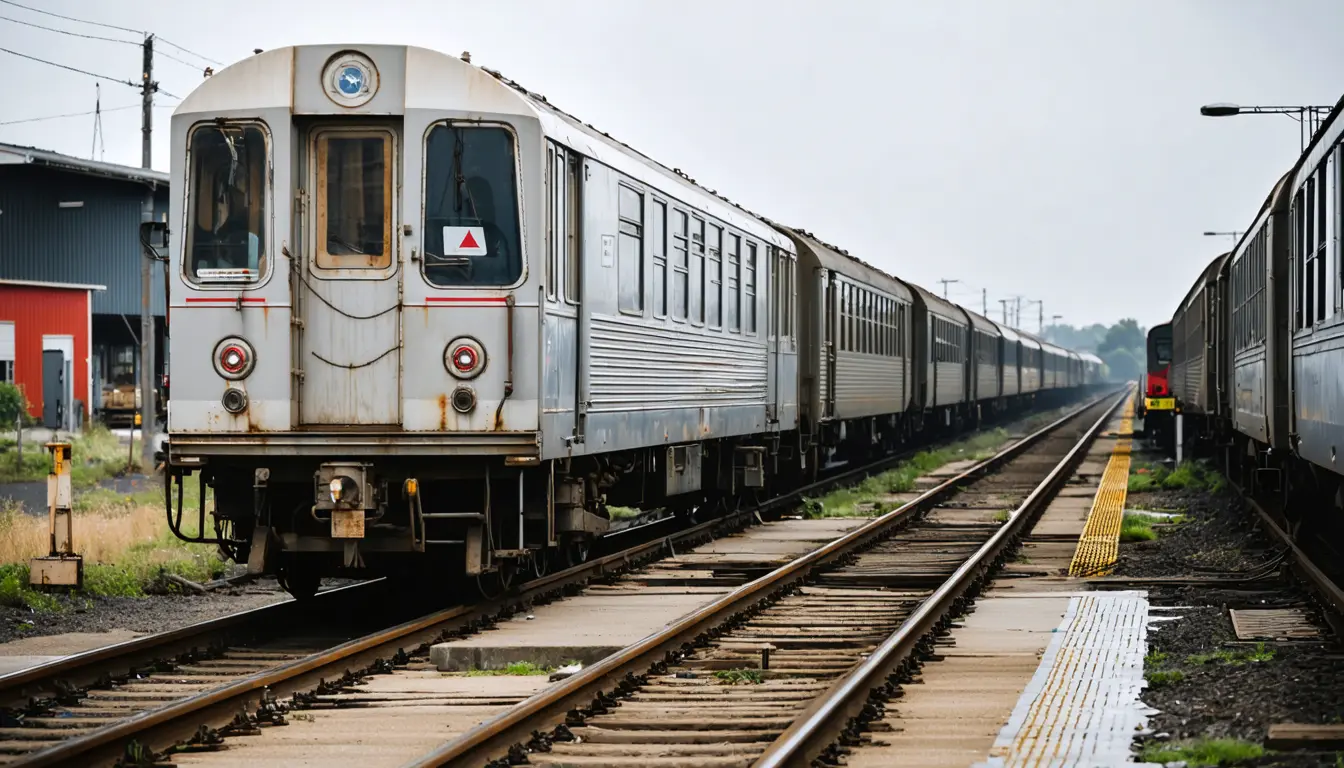
The key phrase in the strategy is "case-by-case". Great British Railways will judge each new train order on its own terms, weighing direct public ownership instead of defaulting to a lease from a rolling stock company [3]. Those companies have owned Britain's passenger fleets since British Rail was privatised in the mid-1990s [5]. According to City AM, the strategy is expected to end their near total control of train leasing [18]. The report does not say how GBR would pay for trains it buys, or how often it expects to choose ownership.
The income at stake is large. The £2.7bn that franchised operators paid the lessors in 2024/25 was 66.3 per cent of a rolling stock bill of roughly £4.1bn, according to the Office of Rail and Road. Maintenance took the remaining £1.5bn [11]. Porterbrook, Angel Trains and Eversholt paid a record £390m in dividends in 2025, according to the firms' latest figures [12]. That is about 14 per cent of the lease bill [19]. The match is loose: the periods differ, and the lease figure is the operators' total while the dividends come from three named firms.
The owners are long-term money. Allianz holds a stake in Porterbrook, and Royal London owns Porterbrook stock through Dalmore Capital, which it bought for £103m in November 2025 [6]. Canadian pension investor PSP holds 30 per cent of Angel Trains [7].
The sceptic's case came from Gerald Khoo, transport analyst at Panmure Liberum, who said: "The likely shrinking of attractive, profitable opportunities to deploy capital will inevitably see it invested elsewhere." [9] For new trains, I think that outcome is what the policy intends.
The harder question concerns the trains the lessors already own, and it will play out over decades. The strategy sets out a roadmap for the next three decades [2]. City AM reports analyst concern that lessors may be expected to fund refurbishment of existing fleets while new capital stops coming in, so they would be investing without the chance of fresh profit [14]. For the owners, this quarter's decision is whether to keep backing companies whose new leases now depend on GBR's choices. The consequence comes later, fleet by fleet, as each train falls due for overhaul.
The RMT is pushing for more, and sooner. "The government's new rolling stock strategy is a welcome recognition that the fragmented system of procurement and maintenance of our trains inherited from privatisation is basically broken," an RMT spokesperson said [16]. The spokesperson added that the union would "urge the government to be bolder and move faster" [17].
What to watch
- The first new train order GBR assesses under the case-by-case test, and whether it buys or leases.
- Any statement from JPMorgan Chase, PSP, Allianz or Royal London on holding or selling their lessor stakes.
- Whether GBR's terms require lessors to fund refurbishment of fleets already on lease.