LeadershipNot yet confirmed elsewhere1 publisher2 min readPublished
With red diesel almost doubled since February, UK arable farmers ask how to pay for the next crop
Red diesel has almost doubled in price since the Iran conflict began in late February, just as UK arable farmers need it to plant next season's crop. How much growers can afford to put in the ground this autumn will shape domestic food supply when that crop is harvested.
The Board Room · Leadership desk
Red diesel users: cost almost doubled since the Iran conflict began in late February. Fertiliser and feed buyers: most fertilisers and animal feed up about 20% since then. Cereal growers in England: worst recorded cereals harvest after heatwaves and drought.
- cost Red diesel users The cost of red diesel has almost doubled since the Iran conflict began in late February, claim 1
- cost Fertiliser and feed buyers Most fertilisers used to grow crops and feed for animals have risen by about 20% since late February, claim 3
- constraint Cereal growers in England Heatwaves and drought in the UK's hottest summer on record resulted in England's worst recorded cereals harvest, claim 4
| Who | How | Kind | Claim |
|---|---|---|---|
| Red diesel users | The cost of red diesel has almost doubled since the Iran conflict began in late February | cost | 1 |
| Fertiliser and feed buyers | Most fertilisers used to grow crops and feed for animals have risen by about 20% since late February | cost | 3 |
| Cereal growers in England | Heatwaves and drought in the UK's hottest summer on record resulted in England's worst recorded cereals harvest | constraint | 4 |
What happened
- The cost of most crop fertilisers and of animal feed has risen by about 20% over the same period since late February.
- Heatwaves and drought in the UK's hottest summer on record produced England's worst recorded cereals harvest, according to official production estimates.
- Jamie Burrows, who chairs the NFU crops board, said of struggling arable farms: "Some of these businesses aren't going to make it."
- Parliament's public accounts committee begins hearings on Monday in its inquiry into the resilience of the UK's food supply.
- More than 150 food experts and academics have accused ministers of being "complacent" about food security and of having no plan to feed people in an emergency.
Why it matters
- cost Growers pay for dearer fuel and fertiliser out of cash and credit that a poor harvest has already thinned. The first cost lands on farm balance sheets, before it reaches any buyer.
- constraint Britain grows only about 60% of its food at home, leaving little domestic slack. Any shortfall in the next crop adds to an import share of roughly 40%.
- exposure Lang's count of 131 hubs serving 12,300 stores averages about 94 stores per hub, and most imports land through four ports. With that much concentration, a failure at one site reaches many shops at once.
- decision Food supply businesses were largely left out of Defra's last catastrophe planning exercise. Operators setting contingency levels this quarter cannot rely on a government scenario that included them.
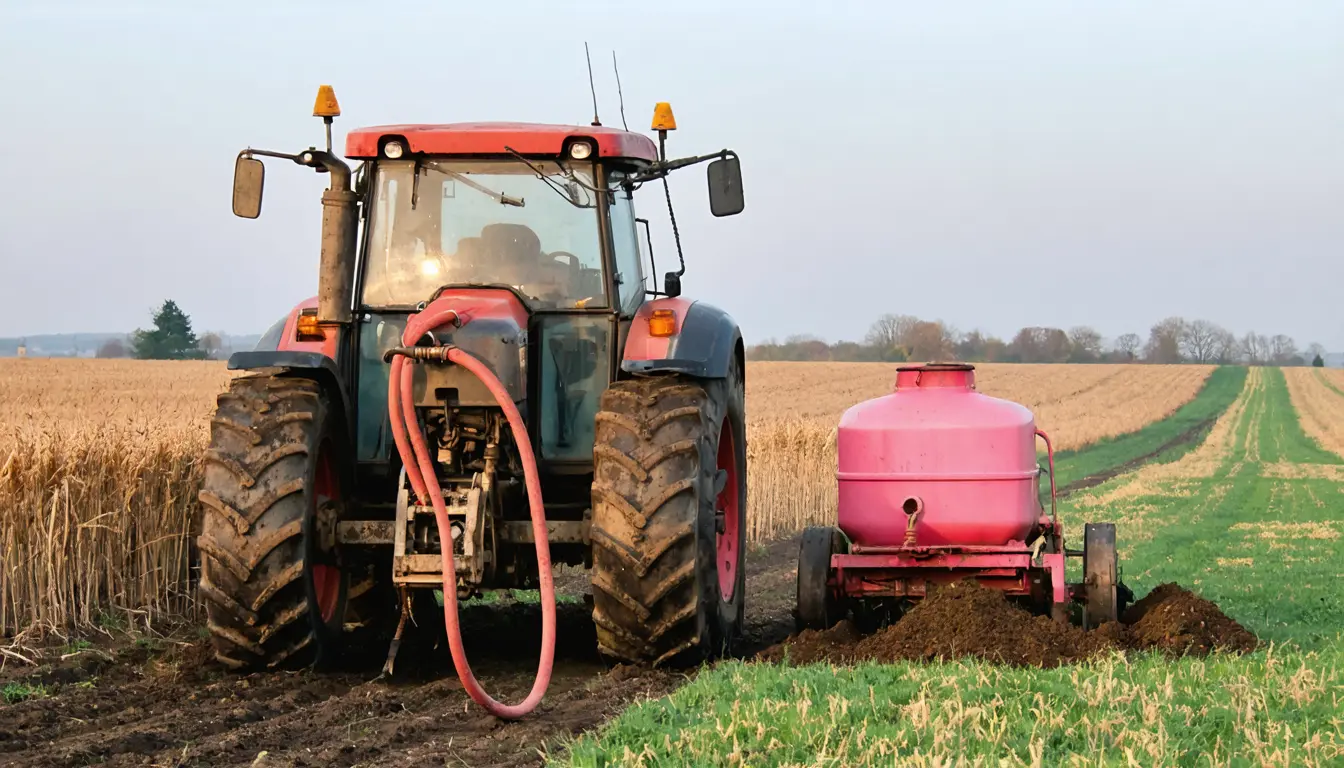
Arable growers are ploughing and cultivating ground that the summer left hard and dry, getting it ready for the next crop [8]. That work runs on red diesel, the lower-taxed fuel used in farm vehicles and machinery [2]. In our view the difficulty is sequencing: the cash goes out at planting and comes back only when the crop is sold. "There are so many decent, capable, productive, efficient arable farmers out there, asking how they are supposed to finance the crop they are meant to be putting in the ground," said Jamie Burrows, who farms in Norfolk and chairs the crops board at the National Farmers' Union [5][6].
Burrows is describing efficient farms that are short of money to plant [5]. For anyone buying from the UK food chain, that separates two risks. The first is cost: red diesel and most fertilisers cost more than they did in February [1][3], and that is a problem for this season. The second is volume. It would appear at the next harvest, if growers who cannot fund full inputs plant less. The Guardian did not report how many farms have cut planting or taken on new borrowing.
The case for patience is that the UK has absorbed shocks before [13]. Paul Behrens of the Oxford Martin School at the University of Oxford, one of the experts' letter's signatories [20], accepts the history and disputes what it predicts. "Historically we have done pretty well coping with specific events such as Covid and we've managed to ride through them, but we're moving into a period where we're having multiple crises impact at the same time," Behrens said [13]. The crises in view include the worsening climate crisis and water scarcity in the Mediterranean and north Africa, regions that now supply some of the fresh produce UK households rely on [14].
Official preparation so far is aimed at households. The Cabinet Office will run a campaign telling people to stock up on tinned food as part of preparations for possible emergencies [17]. The government has already wound up its strategic food stockpile [18]. Some in the food industry see signs that Andy Burnham's government is starting to take the threats to the food system more seriously, the Guardian reported [19].
What to watch
- What Defra and food supply businesses tell the public accounts committee in the hearings starting Monday, and whether the inquiry recommends bringing businesses into catastrophe planning.
- Autumn planting figures showing whether arable area has fallen against last year as growers weigh input costs.
- Red diesel and fertiliser prices if the Iran conflict eases or escalates before spring applications.
Clarity's read
What the record supports and how the coverage leans. The claims behind it follow.
Reality
- Evidence45
- Adoption
- Insufficient
- Hype gap+10
- Incentives60
- Confidence45
Claim ledger
Ranked by verification strength, evidence, and original report placement.
- [1]
The cost of red diesel has almost doubled since the conflict in Iran began in late February.
- [2]
Red diesel is used for agricultural vehicles and machinery and is taxed at a lower rate than standard diesel.
- [3]
The cost of most fertilisers used to grow crops and of feed for animals has risen by about 20% since the Iran conflict began in late February.
- [4]
Heatwaves and drought during the UK's hottest summer on record resulted in England's worst recorded cereals harvest, according to official production estimates.
- [5]
"There are so many decent, capable, productive, efficient arable farmers out there, asking how they are supposed to finance the crop they are meant to be putting in the ground,"
- [6]
Jamie Burrows runs an arable farm in Norfolk and is chair of the crops board at the National Farmers' Union.
- [7]
"Some of these businesses aren't going to make it," ... "It is very, very difficult."
- [8]
Crop growers are ploughing and cultivating fields, hardened and dried out during the long hot summer, to prepare for their next crop.
- [9]
Parliament's public accounts committee is to begin a series of hearings on Monday as part of its inquiry into the resilience of the UK's food supply.
- [10]
MPs will look at National Audit Office findings on the shortcomings of Defra's last catastrophe planning exercise, which largely excluded food supply chain businesses.
- [11]
Britain produces about 60% of the food it needs and is more dependent on imports than many European peers.
- [12]
More than 150 food experts and academics accused ministers of being "complacent" about food security and of not having a plan to feed people in an emergency.
- [13]
"Historically we have done pretty well coping with specific events such as Covid and we've managed to ride through them, but we're moving into a period where we're having multiple crises impact at the same time,"
ReportedSupportedSource: Prof Paul Behrens, Oxford Martin School, quoted by the GuardianView cited source - [14]
The multiple crises include the worsening climate crisis and increased water scarcity in regions that now provide some of the fresh produce UK households rely on, including the Mediterranean and north Africa.
- [15]
Prof Tim Lang has stated that the UK's supermarket network is supplied by just 131 distribution hubs serving 12,300 stores.
ReportedSupportedSource: Tim Lang, Centre for Food Policy, as reported by the GuardianView cited source - [16]
The Cold Chain Federation has warned that most of Britain's food imports enter through four ports: Dover, Felixstowe, Southampton and London Gateway.
- [17]
The Cabinet Office will launch a campaign telling households to stock up on tinned foods alongside preparations for possible future emergencies.
- [18]
The UK government wound up the strategic food stockpile.
- [19]
Some in the food industry believe there are signs Andy Burnham's government is beginning to take the threats to Britain's food system more seriously.
- [20]
Prof Paul Behrens of the Oxford Martin School, University of Oxford, signed the letter from food experts and academics.
- [21]
Lang's figures work out at about 94 supermarket stores per distribution hub on average.
- [22]
Roughly 40% of the food Britain needs comes from outside domestic production.
Sources
1 independent publisher whose own reporting we read for this story.
- theguardian.com‘Some aren’t going to make it’: how pressure on farmers threatens UK food security
1 article · October 11, 2026
Topics and entities
Follow any of these and your For You feed starts watching them — no settings page required.