Product2 publishers3 min readPublished
Pentagon hands its new Autonomous Warfare Command the power to develop and field its own drones
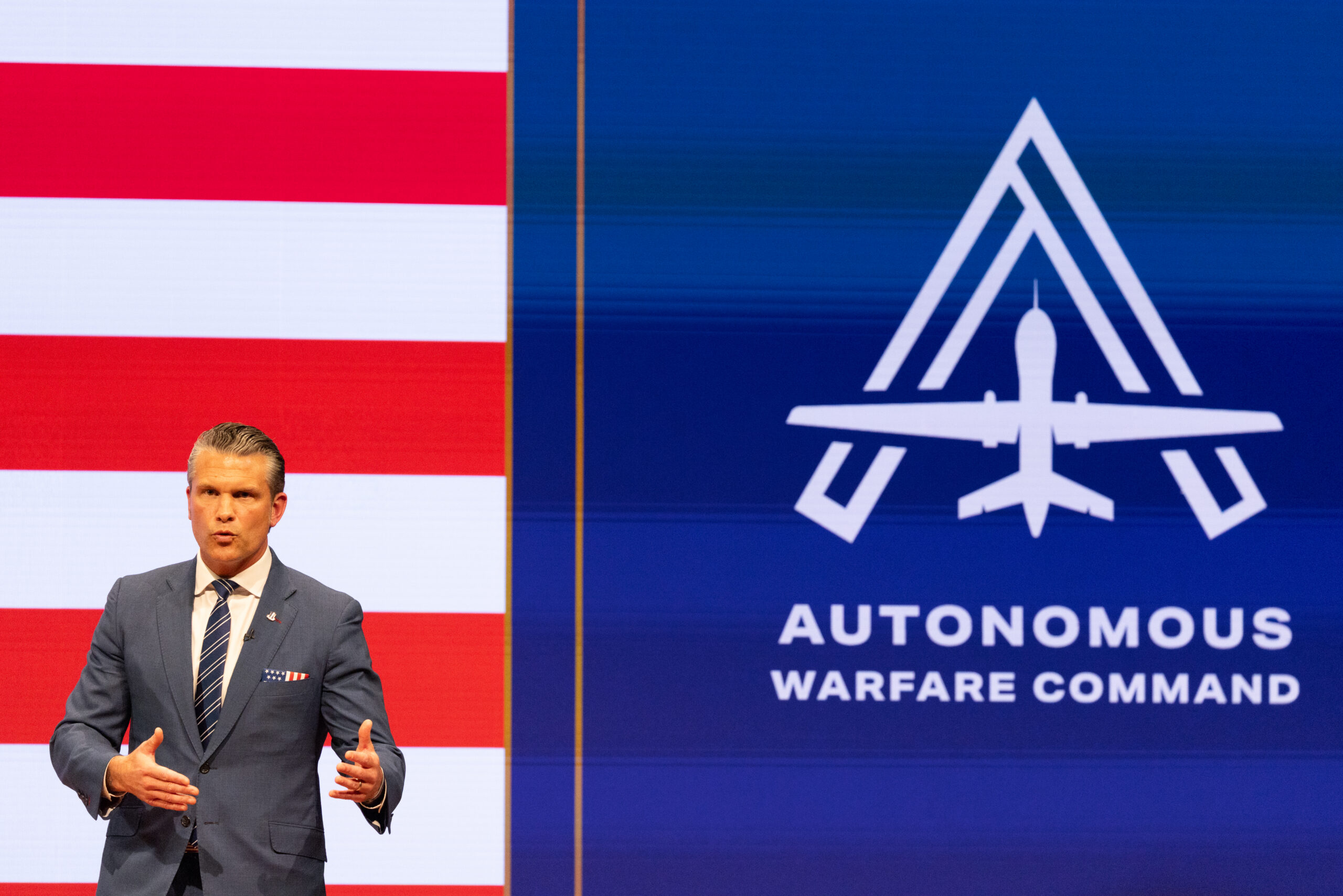
Pete Hegseth announced an Autonomous Warfare Command with service-like powers to develop and field drones, the first new command since 2019, per Reuters. Until it launches within a year, that buying power exists only as an interim prototyping team and a budget request.
The Product Desk · Product desk
What happened
- Hegseth justified the command by saying "the pace of war is changing faster than the process to support it."
- Defense Innovation Unit director Owen West and Navy SEAL Senior Chief Max Strasiser will run Project Agincourt, the interim team clearing the way for the command.
- The command follows a single drone office Hegseth set up in June to oversee almost all Pentagon unmanned programs, including the Defense Autonomous Warfare Group.
- The fiscal 2027 budget request seeks about $54.6 billion for the Defense Autonomous Warfare Group, up from about $226 million, and Congress has not approved it.
Compiled by The Product DeskSomething wrong?How this is made
Why it matters
- constraint Operator career paths will be built inside each military department, so the command will depend on the services for the people who run what it fields.
- constraint A roughly 240-fold funding increase has to clear Congress before the command's service-like authorities can buy drones at the scale Hegseth described.
- decision Companies selling drones to the Pentagon now have to work out whether the services, the June drone office or the new command decides what gets designed and fielded.
The people in the seats at Marine Corps Base Quantico were junior officers and enlisted personnel [15]. They will use whatever this command ends up buying. For them, the test is how long a change requested at the front takes to show up in the field.
Hegseth promised a four-star commander. He said the command would soon have one to raise the AutoWarCom flag and prepare the way [8]. On Wednesday, only an interim team started. Project Agincourt has a year to prototype what Hegseth called "warfighting acquisition, not just acquisition that happens at the Pentagon" [5]. It will pair operators with entrepreneurs and move decisions and dollars toward frontline units, he said [5]. The command itself will be set up over several months and launched within a year, Air & Space Forces Magazine reported [12].
The powers show where the Pentagon thinks the delay sits. The 11 existing combatant commands each cover a region or a specific task [10]. Unlike most of them, AutoWarCom will have powers similar to the armed services, so it can drive the design, development and fielding of its own systems [11]. DefenseScoop described Pentagon staff as confronting "severe technical and structural bottlenecks" while trying to buy and deploy affordable drones in bulk [3]. Hegseth's fix, in his words: "We will fuse procurement with operations at scale, and then allow warfighters and engineers and entrepreneurs to learn, adapt, and rapidly iterate on their domain and their mission" [4]. He blamed process in general terms. Treating the services' separate buying as the main obstacle is an inference from the structure, and a fair one: the command is getting the kind of authority the services already hold [11].
The services keep a role. Each military department will phase in new occupational specialty frameworks for autonomy [7]. "We need institutional knowledge and career paths for a new generation of autonomous warfighters," Hegseth said [7].
Hegseth drew his own lesson from Ukraine. "Ukraine's lesson is not that one type of drone wins wars, but rather the need for a purpose-built system that maximizes the ability to adapt," he said [16]. On that account, users adapt the kit and need the next version soon. Progress would show up as the time from a frontline request to a fielded change, and as how many units still use a system months after it arrives. Neither source reports those figures for current programs.
AutoWarCom has the fielding authority on paper [11]. It does not yet have the money. Its funding is a request, and the fiscal 2027 ask for the autonomous warfare group is roughly 240 times current funding [1]. Until that money arrives, a command with fielding authority is designing systems for someone else's budget. Agincourt's leads split along the same line between money and operations, with West on "strategic risk, resources, and scale" and Strasiser on "operational problem-solving and the realities of employment in combat," according to Hegseth [17].
What to watch
- Congress's decision on the fiscal 2027 request of about $54.6 billion for the Defense Autonomous Warfare Group.
- The naming of the four-star commander and a charter spelling out which design, development and fielding decisions move from the services to AutoWarCom.
- Whether Project Agincourt reports the time from a frontline request to a fielded change during its year of prototyping.