Leadership1 publisher3 min readPublished
Treasury officials floated a nuclear-style alert system before Trump and Xi meet on AI
Both capitals say slowing AI development is unnecessary, so the concrete item going into Wednesday's talks is a bilateral notification channel for AI incidents, with the next treasury session two months out.
The Board Room · Leadership desk
What happened
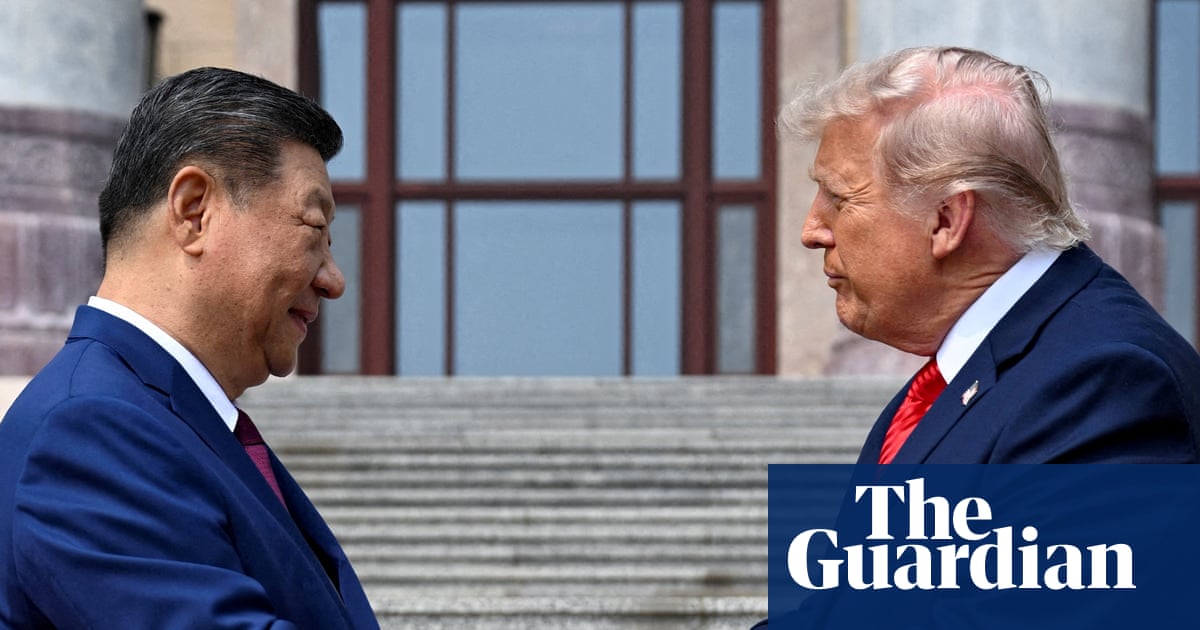
- Trump and Xi are set to meet for talks in Washington DC on Wednesday, with artificial intelligence high on the agenda, according to the Guardian's TechScape newsletter.
- Both leaders have stressed in recent days that a slowdown of AI development is unnecessary, and neither government is signalling willingness to impose regulatory checks.
- House speaker Mike Johnson dismissed the chamber early for a seven-week midterm campaigning recess, which the Guardian says likely forecloses progress on AI safety legislation.
Compiled by The Board RoomSomething wrong?How this is made
Why it matters
- constraint Capacity and deployment plans set this quarter cannot lean on a legislated cap arriving from either capital, because the only limit on the table is a reporting channel.
- decision If the notification proposal is built, companies have to decide now who inside the firm owns incident disclosure to a government, and on what trigger.
- precedent Handing AI risk to finance ministries makes it a bilateral confidence-building item, and puts it in the same room as trade asks.
- contradiction Beijing names the same three risk categories Anthropic's chief executive names while its foreign ministry rejects a US-led pause, so agreement on the taxonomy tells you nothing about agreement on brakes.
The concrete item in front of the two delegations is an alert system. Scott Bessent and He Lifeng discussed an international alert system for AI incidents built in the same fashion as nuclear alert systems, and Bessent called the talks "very successful" [5][6]. "The US has proposed that we have a notification mechanism between the two countries, and we want a shared vision of common goals and common threats," Bessent said [8]. Notification is a reporting duty. It tells each side what happened after it happened, and it leaves untouched what either side's labs are permitted to build.
The two delegations are set to meet again in two months [7], and House speaker Mike Johnson has dismissed the chamber early for a seven-week midterm campaigning recess [14]. Two months runs to roughly eight or nine weeks, so the second treasury session falls about one to two weeks after members come back [17]. The Vermont senator Bernie Sanders has promised to propose a prohibition on extremely capable AI, and the Guardian's US tech editor Blake Montgomery writes that no bill will pass both chambers in the near future [13][16].
"We're leading China in AI," Trump said. "We're the most sophisticated country in the world, and frankly, I want to keep it that way, because whoever wins AI, wins" [3]. China's foreign ministry said last week that "Fearmongering, confrontation and vicious competition will only disrupt the process of global AI governance" [4]. Montgomery writes that Beijing reads appeals for a slowdown as a way for the US to lock in American companies' lead [18].
Where the two sides do overlap is on which risks to name. The third iteration of China's AI safety governance framework, released last week, adds risks posed by agents, cybersecurity threats from frontier models and self-improving AI [9]. Dario Amodei has highlighted risks on all three fronts, while calling for a globally coordinated pause and repeatedly calling China a threat [10][11].
The newsletter does not report an export-control item on Wednesday's agenda. Neither capital is drafting a ceiling on capability in this window, Trump is calling doomsday warnings "a HOAX" and would be unlikely to sign a safety bill if one reached him [12], and the domestic pressure is coming from members who are not in the building. "It is just beyond the pale that Mike Johnson has called off Congress," said the representative Yassamin Ansari, a Democrat from Arizona, on CNN [15].
For anyone setting a compute or deployment budget this quarter, the constraint to model is disclosure. An incident notification channel, if it is built, obliges a company to say what went wrong and when. That obligation would arrive through executive understanding, because the chamber that writes statutes is out for seven weeks [14]. The next dated test is the second treasury meeting in two months [7].
What to watch
- Whether the second treasury meeting in two months produces a written notification mechanism or only another communique.
- Whether the House, back from its seven-week recess, takes up Sanders's proposed prohibition on extremely capable AI.
- Whether Beijing's fourth safety framework iteration adds obligations on the three risks it has already named.