Science1 publisher3 min readPublished
Woods Hole broadcasts healthy-reef sounds to draw coral larvae onto damaged Caribbean reefs
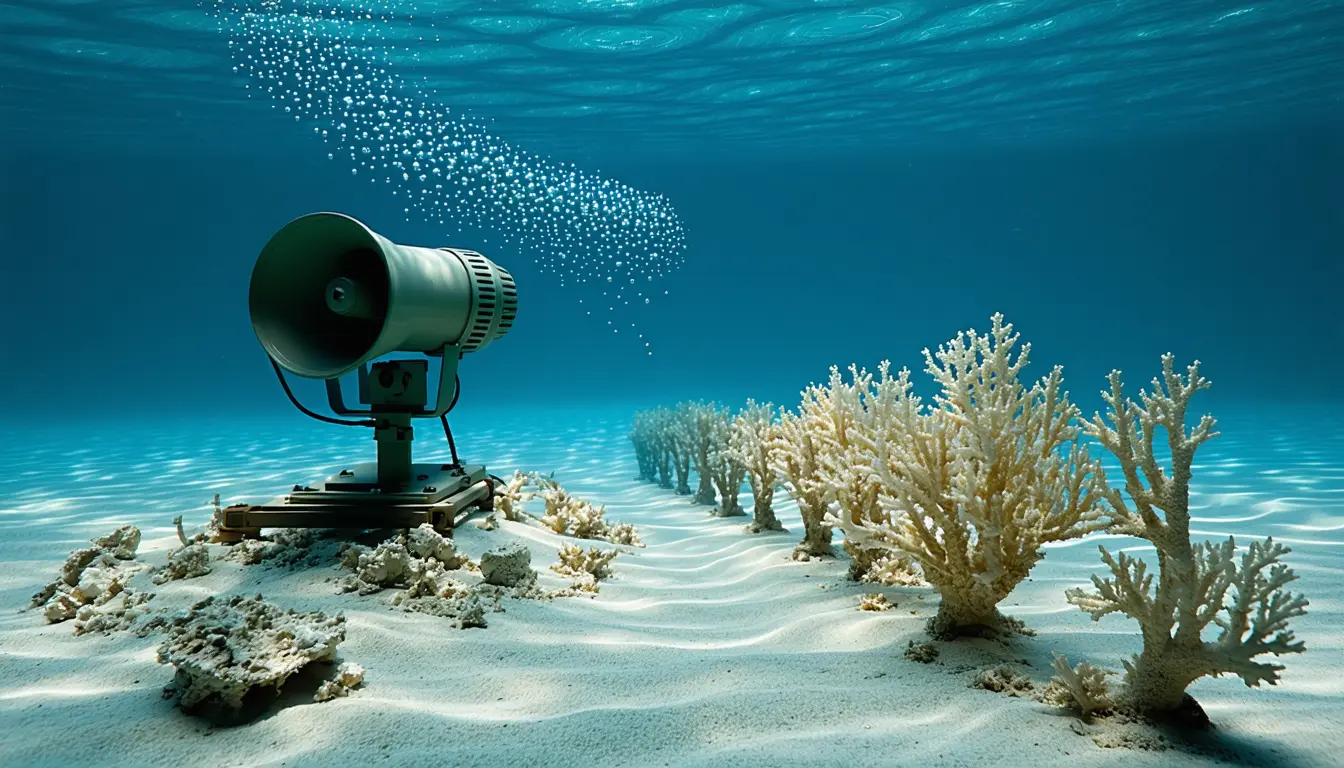
Woods Hole researchers are playing healthy-reef sounds to Caribbean coral larvae as hard coral cover for 2020-2024 sits 9.5% below its 1980-2009 level. Larvae they draw in will meet hotter water in 2027, and no settlement counts have been reported.
The Scientist · Science desk
Drafted by a language model from the sources cited here and checked against its claim ledger before publication. How we use AISend a correction
What happened
- The speakers play recordings from vibrant reefs, including the clicks of snapping prawn and the thrum of fish, at spots stressed by heat and pollution.
- Other researchers are moving corals from shallow water to deeper, cooler sites and inoculating reefs with protective microorganisms.
- By late August, bleaching had been observed around Florida, on the Pacific coast of Panama and in Kiribati in the Central Pacific.
- This year's bleaching began less than a year after the previous global bleaching event ended in 2025.
Compiled by The ScientistSomething wrong?How this is made
Why it matters
- capability Because larvae use sound as a settlement cue, a degraded reef can be given a healthy reef's acoustic signal without transplanting or handling any coral.
- constraint With less than a year between global bleaching events, any reef these measures help this season gets little recovery time before temperatures climb again in 2027.
- exposure Reefs already bleaching carry accumulated stress into the stronger El Nino year, the condition Apprill expects to make the coming heat more harmful than earlier events.
Coral larvae can sense sound and use it as a cue while searching for a permanent home, and the Woods Hole project rests on that finding [4]. Taking it onto a degraded reef raises a design problem. A test of whether a speaker changes anything needs matched degraded sites with and without speakers, and a count of the young corals that settle at each. The Nature report does not say whether the Caribbean deployments include quiet control sites or how settlement will be counted [1]. "Healthy reefs are naturally broadcasting sound all over the place," said Aran Mooney, the WHOI marine bioacoustician who leads the project [5].
Sound acts on one step, the moment a larva picks a spot, and it does nothing about heat. Bleaching happens when corals expel the symbiotic algae they rely on for nutrients, and it can kill them [8]. This year's record ocean temperatures come from human-caused climate change and a super-strong El Nino brewing in the Pacific [7]. They are expected to rise further in 2027 as the El Nino reaches full strength [11]. Larvae settle permanently [1], so any recruit a speaker draws in this season will be fixed to that reef when the 2027 heat arrives [11]. "It's sort of like having COVID, also getting the flu, and at the same time being stressed about your job," said Amy Apprill, a marine geochemist who leads WHOI's coral-restoration team, of the stress that has built up on reefs [13].
Reefs can recover from bleaching, but recovery takes time [20]. Hot oceans have bleached corals worldwide four times since 1998 [16]. The 9.5% figure comes from an August report by hundreds of scientists comparing hard coral cover in 2020-2024 with 1980-2009 [17]. The same report found that 2024's record heat caused bleaching at nearly all the world's reefs and cut cover 8.9% from 2023, the largest single-year drop so far [18]. The first figure compares averages across decades and the second compares one year with the year before, so the two cannot be added into a single total loss [1]. "What that decline tells us is that the recovery is never enough before that decline happens again," said Manuel Gonzalez-Rivero, a report co-author at the Australian Institute of Marine Science [19].
NOAA's Coral Reef Watch found that large swathes of ocean had reached temperatures putting corals at risk of bleaching and heat mortality [10]. In my view the evidence supports a modest claim. More researchers are intervening directly this season [6], and programmes such as Coral Reef Watch still tell them where the heat is [10]. Michael Sweet, a coral biologist at the University of Derby, described the mood among researchers who have chosen to keep working. He said: "You swing between almost giving up, to going, 'I'm going to fight to my dying breath to try and make things a bit better'." [15]
What to watch
- Settlement counts from WHOI's speaker sites compared with matched degraded sites without speakers, once this spawning season ends.
- NOAA Coral Reef Watch heat-stress levels as the El Nino strengthens toward its expected 2027 peak.
- Whether corals moved to deeper, cooler water survive the 2027 heat better than those left in the shallows.