Product1 publisher3 min readPublished
The dirtiest part of the AI gas buildout is a turbine spec, not a nameplate
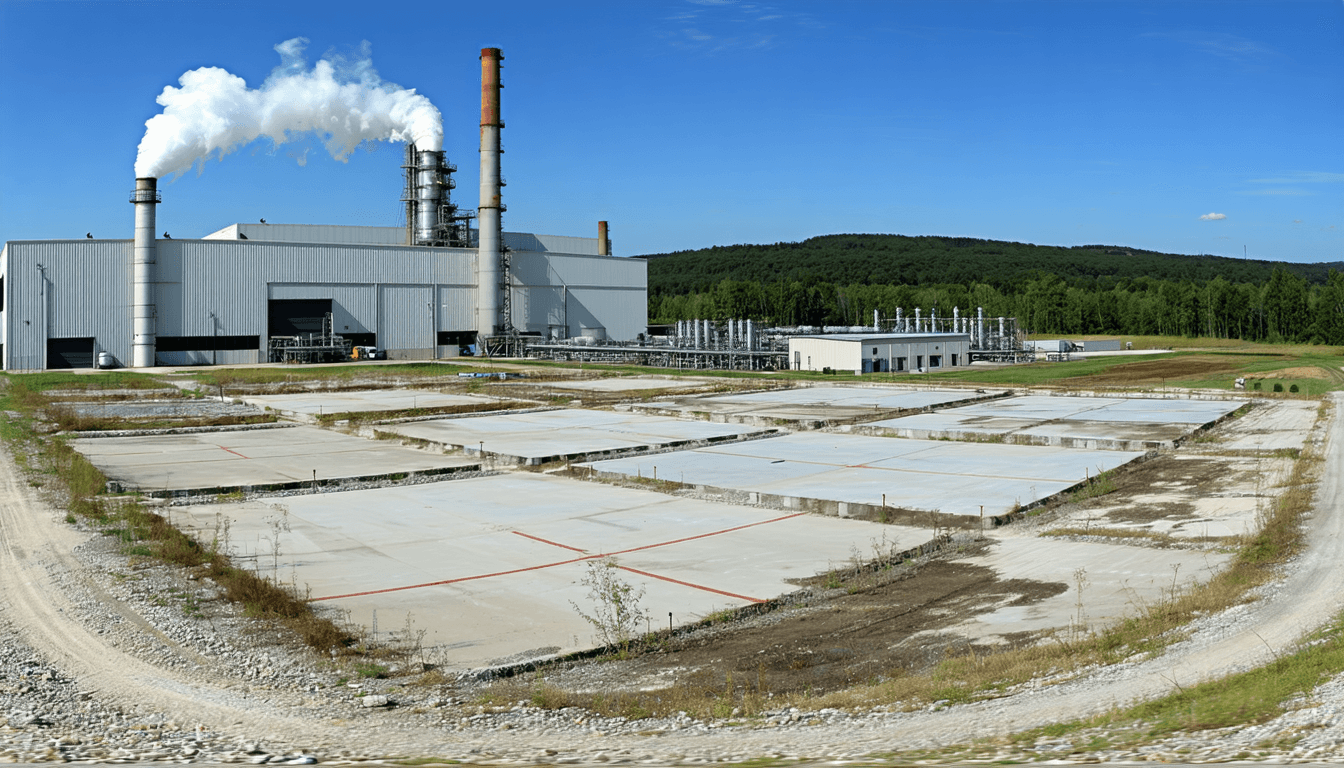
Amazon's Texas plant is permitted for 33 million tons a year and will run only simple cycle turbines. Across the sector, developers are buying speed and skipping the steam loop.
The Product Desk · Product desk
Drafted by a language model from the sources cited here and checked against its claim ledger before publication. How we use AISend a correction
What happened
- Amazon has acquired a massive off-grid power plant being built in Texas for one of its data centers that could be one of the biggest sources of greenhouse gas emissions in the US.
- Amazon's Texas power plant is permitted to emit up to 33 million tons of greenhouse gases a year.
- The project will rely solely on simple cycle turbines, which mix fuel and air in a combustion chamber to create energy, letting off a significant amount of waste heat in the process.
- Combined cycle units, generally used at on-grid power plants, add a steam turbine component that captures waste heat and turns it into more energy, so they release fewer emissions for the same amount of energy.
- At least three power plants being developed in Ohio by oil and gas company Williams for Meta will also rely on simple cycle units, according to permit applications.
Compiled by The Product DeskSomething wrong?How this is made
Why it matters
Amazon has acquired a large off-grid gas plant under construction in Texas to serve one of its data centers, a facility that WIRED reports could become one of the biggest single sources of greenhouse gas emissions in the United States [1]. The plant is permitted for up to 33 million tons of greenhouse gases a year [2], but the more portable fact for anyone planning capacity is the equipment list: it will rely solely on simple cycle turbines [3]. The distinction is unglamorous and expensive. A simple cycle turbine mixes fuel and air in a combustion chamber and lets off a significant amount of waste heat [3]. A combined cycle unit adds a steam turbine that captures that heat and converts it into more electricity, so it emits less for the same energy [4]. Combined cycle is what on-grid power plants generally use [4]. Data center developers are picking the other one. This is not one company's choice. At least three plants that Williams is developing in Ohio for Meta will use simple cycle units, according to permit applications [5]. Crusoe is building a plant with 39 simple cycle turbines on its Stargate campus in Abilene, Texas, to power a Microsoft data center [6], and the permit application for Google's Goodnight data center at another Crusoe-developed Texas site describes 20 [7] - 59 turbines across the two campuses [8]. xAI's Colossus 1 and Colossus 2 in Memphis are powered by dozens of simple cycle turbines [9]. All of these projects are permitted to release millions of tons of greenhouse gases [10]. Williams and Crusoe told WIRED their gas plants comply with local and national regulations and are fitted with emissions control technology [11]. The reason is schedule, not physics. Britt Burt, a senior vice president at Industrial Info Resources, told WIRED he did not expect developers to lean this heavily on simple cycle: "It's not the most efficient way to use a gas turbine" [12][13]. Installing a handful of simple cycle units is quicker and cheaper than waiting on the extra equipment a combined cycle plant needs, against a yearslong backlog for turbine orders and parts [14]. In Burt's words, "they're having to go with what they can get their hands on" [15]. There is a genuine operating argument alongside the procurement one. Fewer moving parts means simple cycle units start and stop faster, which suits AI training loads that demand large spikes of power [16]. Stephen Lynch, a Penn State mechanical engineering professor who directs the school's Center for Gas Turbine Research, Education, and Outreach, put it this way: "If you have a highly fluctuating load, it's better to have 30 things that can individually turn on and off than to have one giant thing that doesn't like to be turned on and off" [17]. Those spikes already carry a maintenance cost, with many operators reporting turbines breaking from the stress of cycling [18]. Simple cycle also generally needs no water [19], where Burt estimates a 250 MW combined cycle plant could use roughly 75,000 gallons an hour [20]; Amazon's permit application specifically cites simple cycle's lack of water requirement [21]. Then the bill arrives. Permitted emissions on gas plants usually run well above actual emissions [22], but even at half its permit the Amazon plant would out-emit 78 average-sized US natural gas plants, according to the EPA [23] - which implies an average plant under about 212,000 tons a year [24]. Amazon spokesperson Heather Callahan said the Texas plant provides "on-site generation that won't raise electricity costs for Texas families," that the site will include solar and battery storage, and that the company remains committed to net-zero emissions by 2040 [25].