ProductNot yet confirmed elsewhere1 publisher3 min readPublished
Carrier gatekeeping keeps three of the world's top five phone makers off the US test bench
Xiaomi and Oppo together ship 23 percent of the world's phones and neither reaches a US carrier shelf, so a device matrix drawn from American analytics omits the hardware most users hold, at the prices they actually pay.
The Product Desk
What happened
- Counterpoint Research ranked Xiaomi, Oppo and Vivo third, fourth and fifth in global smartphone shipments for Q2 2026, and none of the three has a meaningful official presence in US retail.
- Engadget attributes that gap to carrier gatekeeping, geopolitical friction and business models that do not fit the way phones are sold in America, rather than to anything about the phones.
- No US ban covers these brands, but trade restrictions and targeted actions against Chinese tech firms sit alongside carrier control of a large share of American handset sales.
- Oppo's only indirect route to US buyers ran through OnePlus, and Engadget reports that brand is now exiting both North America and Europe.
Why it matters
- constraint A device matrix assembled from US traffic is calibrated on the most expensive slice of the global hardware field, so power, upload and camera assumptions come from the sample least likely to resemble the next million users.
- decision Getting these handsets onto a test bench becomes a procurement decision with a line item, made through importers at import prices, instead of a phone someone picks up on a carrier plan.
- exposure As OnePlus withdraws from North America, teams lose the last shelf-level way to hold an Oppo-family device, so the blind spot gets more expensive to close rather than cheaper.
- precedent Because the gate is trade policy and carrier distribution rather than product quality, the field US teams see stays narrow on its own, and waiting for the market to widen it means waiting on things no product roadmap controls.
Walk into a Verizon or AT&T store and the shelf is predictable: iPhone, Galaxy, maybe a Pixel or a Motorola [6]. That shelf is also, in practice, where a lot of US device matrices come from, because the phones a team can buy on a corporate card in an afternoon are the phones that get tested.
The share numbers show what that leaves out. Xiaomi takes 12 percent of global shipments on 6 percent of global phone revenue, and Oppo takes 11 percent of shipments on 7 percent of revenue [3][4]. Divide revenue share by unit share and you get 0.50 for Xiaomi and 0.64 for Oppo [14], meaning both sell well under the world's average selling price. So the missing field is not a premium curiosity. It is the mid-priced phone carrying flagship hardware, which is the exact segment US distribution economics screen out: Xiaomi's stated reason for staying away is carrier certification cost plus political risk [3], and Oppo points to distribution costs and geopolitical friction [4].
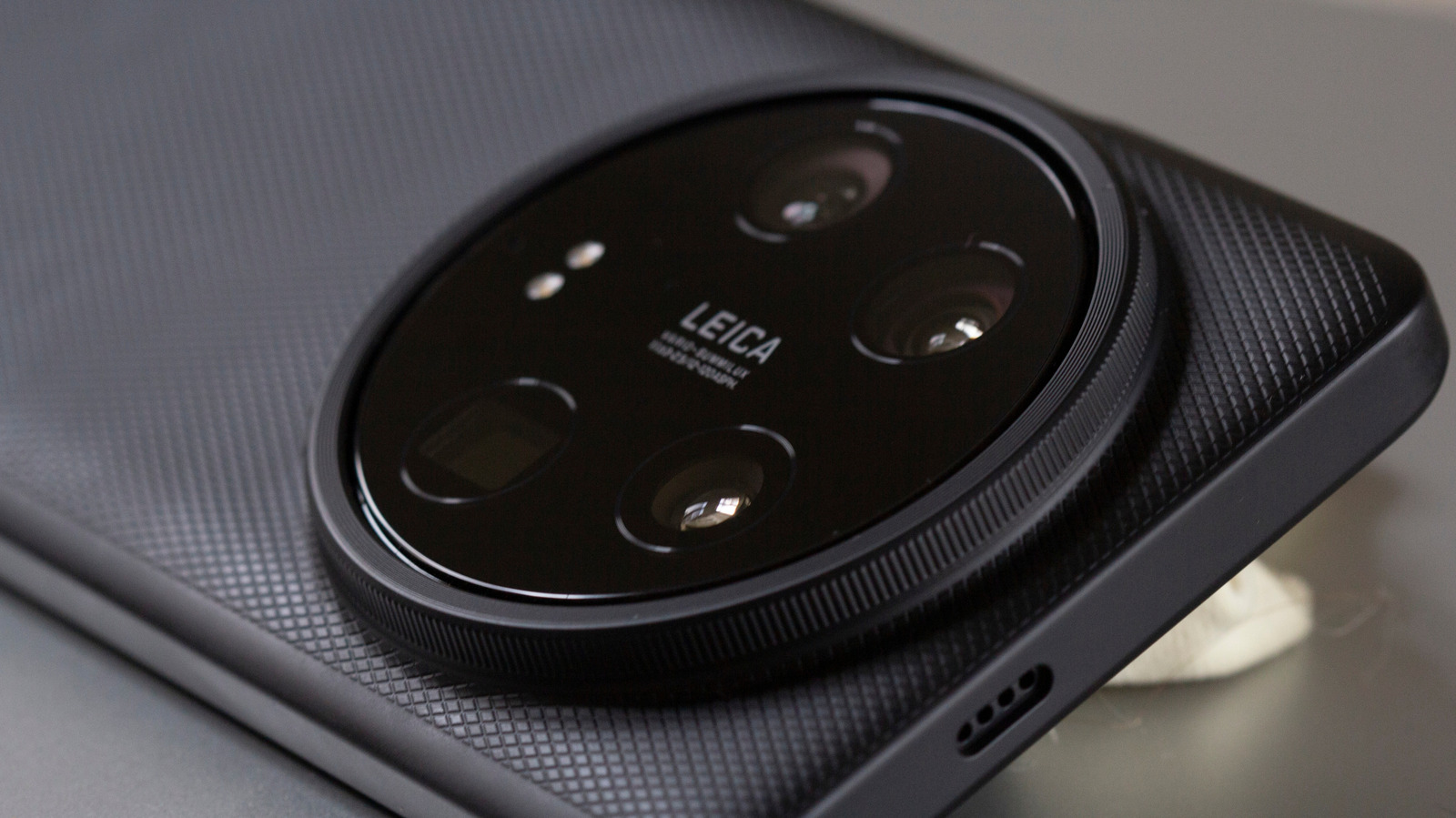
Those mid-price phones carry hardware the US shelf does not stock. Oppo's Find X9 Ultra and Vivo's X300 Ultra both charge at 100W [7][8], while Engadget puts most US flagships at around 65W [9], so the phones sold everywhere else clear the American ceiling by roughly 1.5x [15]. A Poco X8 Pro at about $360 pairs a 6500mAh battery with the same 100W [10]. Charge rate is not a spec-sheet vanity number for anyone designing a background sync, an upload queue or a long capture session. A user who tops up for a few minutes at the door behaves differently from one who docks overnight, and that behavior does not show up in a market where the hardware caps at 65W.
The camera side works the same way. Xiaomi's 17 Ultra pairs a 50MP 1-inch main sensor with a 200MP telephoto, and Engadget's reviewer says it out-shoots Samsung's S26 Ultra [16]. If your product ingests images, the sensor upstream of your uploader is part of your spec whether you picked it or not.
Two questions settle it before the spec is signed. Does the value of the feature depend on hardware the US field caps, such as charge rate or telephoto reach? And do most of the users you answer for sit outside the US? A no to the first makes the narrow bench harmless, and you can stop there. A yes to both means the bench is wrong, and the fix is cheap: $360 for the Poco, or roughly $855 for an Honor 600 through an Amazon importer [10][11]. That is less than the cost of the retro where someone asks why retention in your biggest non-US market does not track retention at home.
What to watch
- Whether Counterpoint's next quarterly ranking still shows three of the top five vendors with no US carrier deal.
- Whether OnePlus's exit from North America and Europe leaves importers as the only route to Oppo-family hardware.
- Whether any US flagship ships above the roughly 65W charging ceiling Engadget describes.
Clarity's read
What the record supports and how the coverage leans. The claims behind it follow.
Reality
- Evidence32
- Adoption47
- Hype gap+29
- Incentives58
- Confidence40
Claim ledger
Ranked by verification strength, evidence, and original report placement.
- [1]
Counterpoint Research ranked Xiaomi, Oppo and Vivo third, fourth and fifth in global smartphone shipments in Q2 2026, and the three have no meaningful official presence in US stores.
- [2]
Engadget attributes the near-total absence of three of the world's top five smartphone makers from US retail to carrier gatekeeping, geopolitical friction and business models that do not align with how phones are sold in America.
- [3]
Xiaomi holds about 6 percent of global smartphone revenue and 12 percent of shipment volume; it is not banned in the US but chose not to sell there to avoid the high cost of carrier certification and potential political risk.
- [4]
Oppo was the world's fourth-largest smartphone vendor at the end of Q2 2026 with 7 percent of global revenue share and 11 percent of all shipped devices; it faces no official ban and declined US entry citing commercial strategy, heavy carrier distribution costs and geopolitical friction.
- [5]
Oppo previously had an indirect US presence through OnePlus, and that brand is now exiting North America and Europe.
- [6]
The US carrier market is dominated by Apple, Samsung, Google and Motorola; in a Verizon or AT&T store the choices are iPhone, Samsung Galaxy, and maybe a Google Pixel or a Motorola.
- [7]
Oppo's Find X9 Ultra flagship includes an industry-first Penta Camera System, 100W fast charging and IP68/IP69 water resistance.
- [8]
Vivo's X300 Ultra has 100W fast charging and a 144Hz 2K AMOLED screen.
- [9]
Most US flagship phones top out at around 65W charging.
- [10]
Xiaomi's Poco X8 Pro offers a 6500mAh battery with 100W charging for around $360 on Amazon.
- [11]
The Honor 600 features a 200MP main camera and sells for roughly $855 through an importer on Amazon.
- [12]
None of these brands is officially banned in the US, but political tensions, trade restrictions and targeted actions against Chinese tech firms have created a challenging environment, and carriers control a large share of US smartphone sales.
- [13]
Xiaomi and Oppo together account for 23 percent of global smartphone shipments.
- [14]
Xiaomi's revenue share is half its shipment share (index 0.50) and Oppo's is about 0.64, so both sell below the global average selling price per unit.
- [15]
The 100W charging on the Oppo and Vivo flagships is about 1.5 times the roughly 65W ceiling on most US flagships, a gap of 35W.
- [16]
Xiaomi's 17 Ultra carries a 50MP 1-inch primary camera sensor with a 200MP telephoto sensor, 90W charging and an IP69 rating, and Engadget says it delivers better pictures than Samsung's S26 Ultra.
Sources
1 independent publisher whose own reporting we read for this story.
- engadget.comThe most popular Android phone brands rarely sold in the US
1 article · August 27, 2026
Topics and entities
Follow any of these and your For You feed starts watching them — no settings page required.