Ukrainian drone crews report Starshield links dropping above 160 km/h without warning
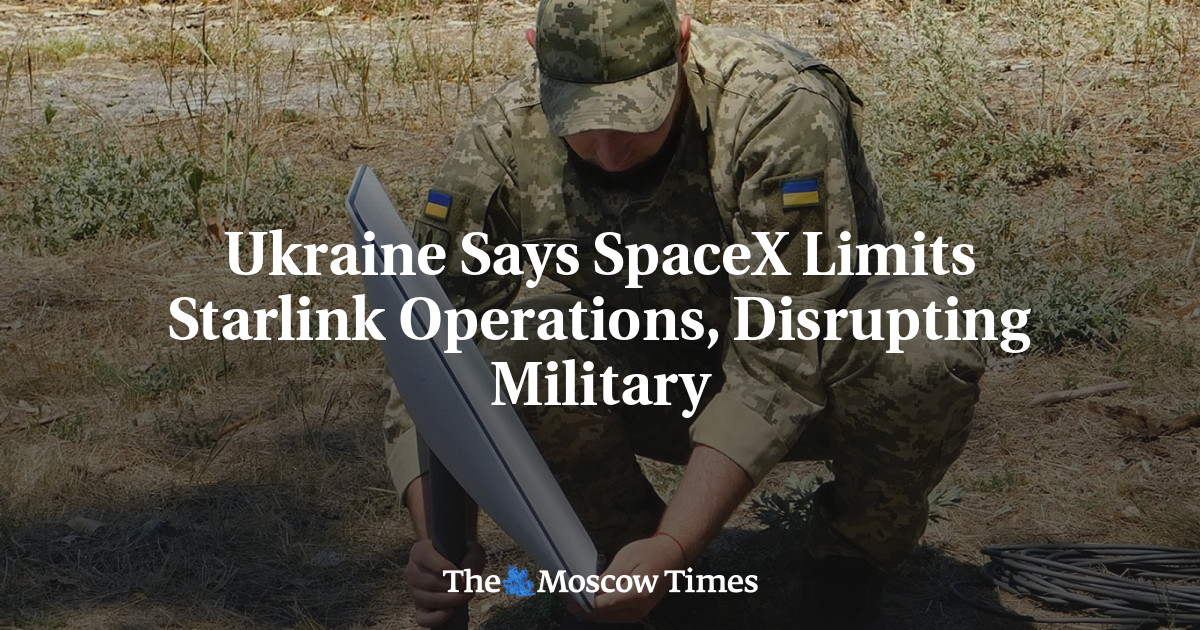
Ukrainian drone operators say Starshield links drop above roughly 160 km/h, a limit that aborted several missions on the night of 14 October. SpaceX has not explained it, so crews cannot tell whether it will hold.
The Engineer · Build desk
What happened
- Presidential tech adviser Serhii Beskrestnov said SpaceX set a speed limit on Starshield military terminals, with links starting to fail once they moved faster than 100 mph.
- Ukrainska Pravda cited four front-line sources and video of two drones that lost their connection after gaining speed.
- SpaceX's public help page lists support for ordinary Starlink plans in motion at up to 100 mph.
- That night Ukraine also got no partner warning of the first Russian ballistic wave, its second such lapse in a week, though nothing public ties the two events together.
Why it matters
- exposure Crews flying fast platforms on Starshield depend on a ceiling they did not set and were not told about.
- cost The Defense Forces paid for the change in aborted missions, and the vendor has not said whether it will repeat.
- decision Planners must decide whether to keep tasking platforms above 160 km/h on a link whose terms for the military package are not published.
The threshold is a familiar number. A hundred miles an hour is about 161 km/h [13], so the figure Ukrainian operators cite and the figure SpaceX publishes for ordinary Starlink plans are the same limit in two units. The help page does not say whether conditions for Ukraine's military package were changed on 14 October, or who decided [8].
A help page listing support up to 100 mph is a specification, and links dropping above 100 mph is behaviour seen in the field. If the military package carries the same documented ceiling, then anything flown faster was running on undocumented headroom, and the change is enforcement. If the package had a higher documented figure, the change is a new restriction. The Ukrainian military called it new [1], but the reporting leaves open which of the two applies.
The cap bites where Starshield is needed. According to mezha.net, it is the protected military package required for, among other things, high-speed drone platforms [6].
The evidence is one named source plus corroboration of uneven size. Beskrestnov said the Defense Forces got no warning [4]. Mezha.net writes that the report is confirmed by his statement, by Ukrainian military testimony and by Reuters correspondents [10]. The video evidence covers two drones [5]. That is enough to establish that links failed after acceleration. It is a small sample for pinning down a threshold.
Motive is a separate question, and the record is weaker there. Sergii Sternenko suggested SpaceX may have acted at the request of the Trump administration, and Beskrestnov tied the change to the current political situation [14]. Mezha.net says there is no public evidence for that version, and neither the White House nor SpaceX has confirmed it [15].
The single-vendor argument does not need a motive. An aborted mission costs the same whatever the cause. The record supports the dependence: a link whose behaviour past a speed can change with no notice to the user [4].
In our view the design response is narrow. A platform that cruises above 160 km/h needs a link check at speed before each tasking, and a second path for when the first one refuses it. The check is cheap, though the second path needs hardware.
What to watch
- Whether SpaceX publishes the speed terms for the Starshield military package.
- Whether more Ukrainian units report link loss, and at what recorded speeds, beyond the two drones on video.
- Whether Ukrainian and US officials establish a cause for the missed ballistic warning, and whether it connects to the cap.
Clarity's read
What the record supports and how the coverage leans. The claims behind it follow.
Reality
- Evidence55
- Adoption
- Insufficient
- Hype gap−5
- Incentives
- Insufficient
- Confidence55
Claim ledger
Ranked by verification strength, evidence, and original report placement.
- [1]
Overnight into 14 October, Ukrainian military reported a new speed restriction on Starshield, introduced without notice, that caused several missions to be aborted.
- [2]
Drone operators recorded loss of Starshield connectivity at speeds above 160 km/h on the night of 14 October.
- [3]
Serhii 'Flash' Beskrestnov, a freelance presidential adviser on technology, said SpaceX set a speed limit for terminals of the Starshield military package; connection began dropping when moving faster than 100 miles per hour, about 160 km/h.
- [4]
Beskrestnov said the Defense Forces received no warning of the change, and several missions were aborted as a result.
- [5]
Ukrainska Pravda cited four front-line interlocutors and video of two drones that lost connection after gaining speed.
- [6]
Starshield is a protected military satellite communications package needed, among other uses, for high-speed drone platforms.
- [7]
According to the company's public help page, ordinary Starlink plans support operation in motion at up to 100 miles per hour.
- [8]
The public help page does not explain whether the terms of the Ukrainian military package were changed on 14 October or who made such a decision.
- [9]
SpaceX has not published an explanation of the reported change to the military service.
- [10]
Mezha.net writes that the report of the new restriction is confirmed by the presidential adviser's statement, testimony of Ukrainian military and Reuters correspondents, while SpaceX's motive remains unknown.
- [11]
On the same night, Ukraine did not receive advance notice from partners of the first wave of Russian ballistic missiles, the second such lapse within a week.
- [12]
There is no public evidence that the delayed ballistic warning and the Starshield restriction were parts of one decision.
- [13]
100 miles per hour is about 161 km/h.
- [14]
Serhiy Sternenko suggested SpaceX could have imposed the limit at the request of Donald Trump's administration; Beskrestnov also linked the change to the current political situation.
- [15]
There is no public evidence for the version that the limit was imposed at the administration's request, and neither the White House nor SpaceX has confirmed it.
Get this ledger inside ChatGPT. Ask about any of our stories and the answer brings its figure, each claim’s verdict and the sources. Free, no account.
Sources
1 independent publisher whose own reporting we read for this story.
- mezha.netУкраїну вдруге не попередили про першу хвилю балістики, а Starshield обмежили без сповіщення
1 article · October 14, 2026
Topics and entities
Follow any of these and your For You feed starts watching them — no settings page required.
Topics
- Military DronesFollow
- Starlink and Starshield in UkraineFollow