Science2 publishers3 min readPublished
Blood-cancer patients who ate more sugar on antibiotics lost more gut microbiome diversity
Memorial Sloan Kettering researchers found each extra 100g of sugary food on antibiotics went with an average 24% bigger gut-diversity drop in 158 patients. Mouse experiments point to sugar feeding a pathogen bloom, though the patient result is an association drawn from hospital meal logs.
The Scientist · Science desk
What happened
- The patients spent weeks in hospital having chemotherapy before a stem-cell infusion, and each took at least one antibiotic to prevent infection.
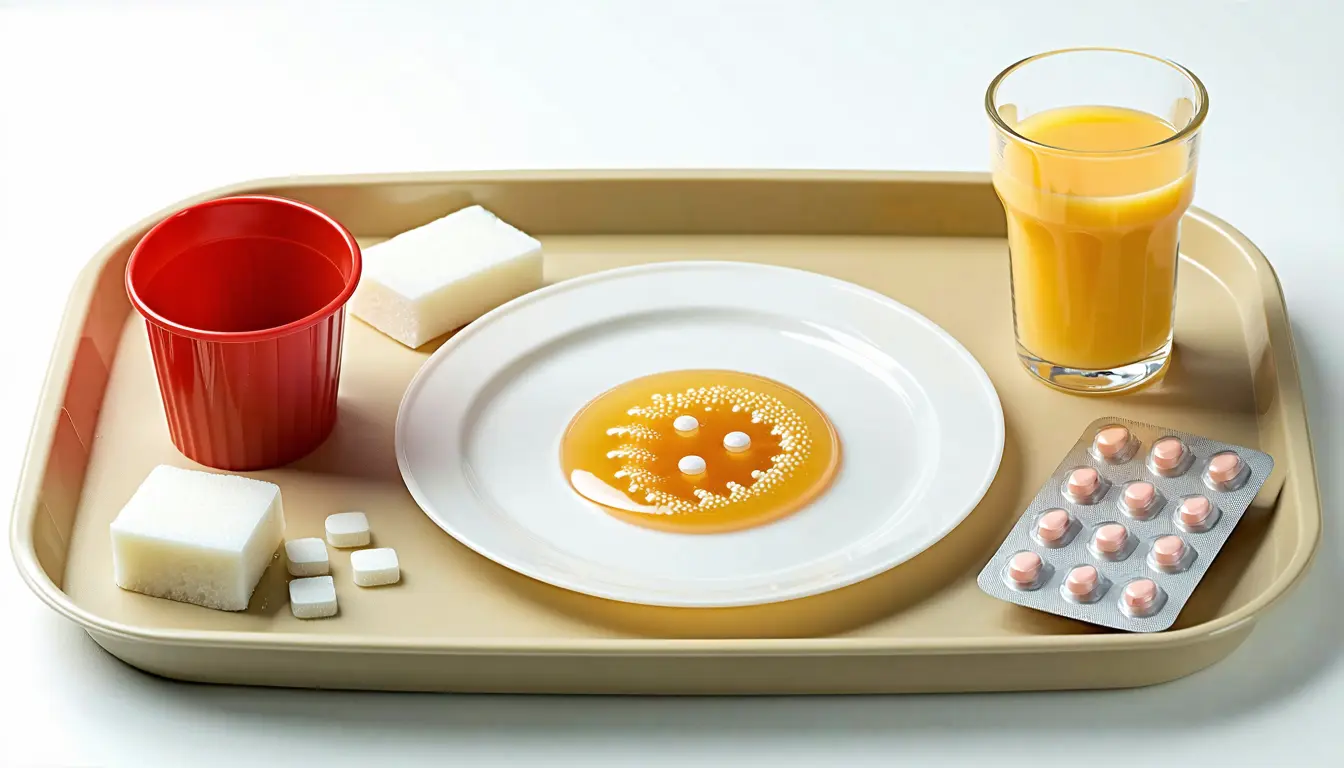
- Questionnaires sent out on every meal tray logged more than 40,000 food items, which the team matched against stool samples.
- Eating sugary food while on antibiotics also went with higher counts of Enterococcus faecium, a bacterium that can cause severe hospital-acquired infections.
Compiled by The ScientistSomething wrong?How this is made
Why it matters
- decision Transplant teams that suggest milkshakes or smoothies to keep patients' calories up now have a reason, Peled says, to reconsider that advice while antibiotics are running.
- constraint Until a trial assigns transplant patients a low-sugar diet, the case for changing hospital menus rests on meal-log correlations in people and a causal result in mice.
- cost A trial would be cheap to run on the ward where this study ran, since the kitchen already logs every tray and the intervention is a menu change.
The 24 per cent is a relative number. It measures how much larger the antibiotic-linked fall in diversity was for each extra 100 grams of high-sugar food or drink eaten in the 48 hours before a stool sample [7]. A hundred grams is about one large milkshake [7]. The underlying fall varied from person to person [7]. The New Scientist report does not give its size, so the absolute diversity lost per milkshake cannot be worked out from the published account.
The exposure records are what make the study unusual. The tray logs come to more than 250 items per patient on average [1], collected from 12 days before transplant to 49 days after [4]. New Scientist says that level of detail is rarely possible in nutrition research [5]. "Suppose a patient ate half a lasagna. We know the recipe and the standard serving size and the nutritional information of each ingredient," Peled said [6]. "I think this is the closest anyone has ever come to precisely recording everything that goes in and linking it to what comes out." [6]
Precise records still produce an association. Patients who ate more sugary food may have differed in other ways that affect the gut, and a correlation across meal logs cannot exclude that. The mouse work adds a comparison the ward could not: the same sugary diet with and without the antibiotic. Mice on high sugar alone kept their bacterial diversity [12]. With biapenem added, the Enterococcus count roughly doubled again between day three and day six [2]. A commercial fruit smoothie high in fructose produced similar effects in mice, Peled said [13].
Jonas Schluter of NYU Langone Health, a member of the team, said antibiotics leave "last man standing" strains that are not necessarily the most beneficial [9]. "They have survived the assault and then we are feeding them with rocket fuel," he said [9]. Nicola Segata at the University of Trento said, "It makes sense that potential pathogens are boosted by sugar." [10] In his account, sugar can favour pathogens that cannot break down fibre, while the beneficial bacteria competing with them go without the fibre they need to recover [10].
The case for diet as protection rests on two further steps. Greater gut diversity has been linked to better survival in people with cancer [15], and that link is also a correlation. The reported work does not include a trial that assigned patients a low-sugar diet and followed what happened. Peled called limiting sugar "very feasible, likely to be very low toxicity" [17] and extended the idea past the hospital. "Many of us are motivated to find ways to protect the microbiome when we or our children are prescribed antibiotics. Limiting the intake of sugary foods offers a potential way to do that," he said [16].
I think the ward case is the strong one. These patients had their immune systems knocked out by chemotherapy and spent weeks in hospital, each taking at least one antibiotic [2]. Healthy adults and children on a short outpatient course were not in the study [1]. For them, the evidence here is a mouse result plus an extrapolation from transplant wards.
What to watch
- A randomised trial assigning transplant patients a low-sugar diet during antibiotics, with diversity and infection rates as outcomes.
- Whether the full paper reports the absolute size of the antibiotic-linked diversity drop and a confidence interval around the 24 per cent figure.
- Whether the sugar effect shows up in outpatients on short antibiotic courses, the group Peled's broader advice addresses.