Invest2 publishersIndependently confirmed3 min readPublished
Sequoia leads a $30 million seed for Catalyst's AI agents that trade for retail investors
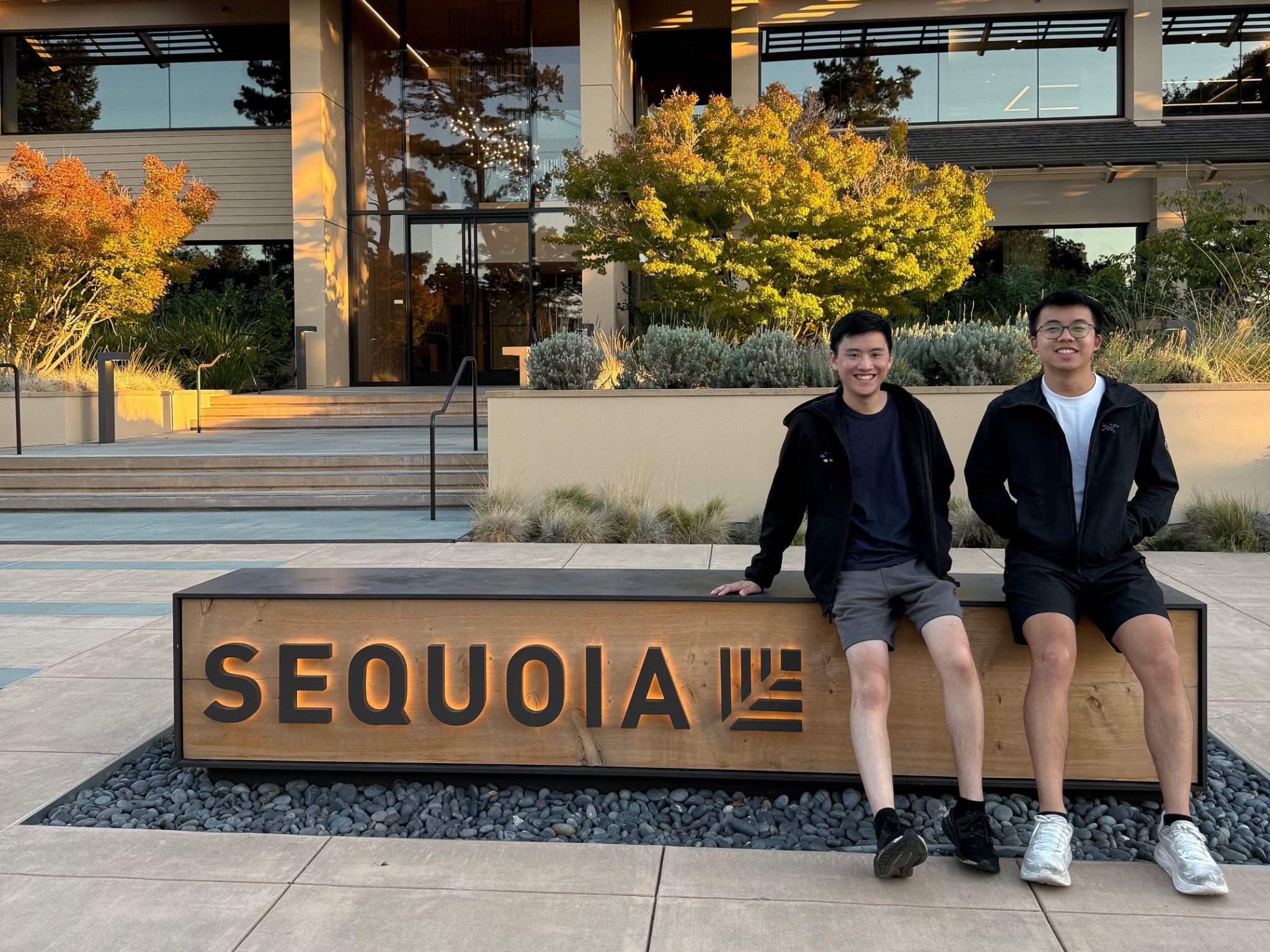
Sequoia led a $30 million seed round in Catalyst, a startup founded in 2025 to build AI trading agents for retail investors. How closely users check each agent-built trade before it runs will decide how much of the investing judgement sits with software.
The Investor · Invest desk
What happened
- Jump Trading, Peak XV, Lux Capital, AntiFund, Coinbase and Premji Invest joined Sequoia in the round.
- Catalyst's agents turn a user's plain-language goal into a trading strategy and then execute it, but only after a human accepts.
- Catalyst opened a waitlist in March 2026 and closed the round on Oct. 8, about seven months later, according to Crypto Briefing.
Compiled by The InvestorSomething wrong?How this is made
Why it matters
- exposure If confirming becomes the reflex tap Crypto Briefing describes, the agent is in effect choosing the trade, and responsibility for whether it suited the investor falls on whoever stands behind the order.
- contradiction Fortune calls the pilot users power traders and Crypto Briefing calls them high-frequency traders; under either label, the pilot volume shows little about demand from the everyday investors the round targets.
- precedent Coinbase's check makes exchange routing of agent-built orders a plausible next step, Crypto Briefing argues, though neither company has announced an integration.
"The point of Catalyst is to move everybody up the curve in terms of sophistication, allowing traders to explore a thesis they have, understand the range of instruments they can set up to actually get exposure to that thesis, cost-optimize, and then execute exactly when that event happens," Sequoia partner George Robson told Fortune [13]. That last clause is hard to square with Crypto Briefing's account of the product, in which every step that moves money depends on the user confirming it [6]. An order that waits for someone to open an app and tap does not fill at the moment of an event unless that person was already watching.
If confirmation stays per order, the product is research attached to an order ticket, and an order goes out only as fast as the user taps. Approval could instead move up to the strategy, closer to what cofounder Dylan Iskandar [3] described. Iskandar said the idea "is that people will simply state an intent, and we have our agents to figure out everything end to end" [12]. A third outcome is that the product stays with the heavy traders it was tested on and never reaches the everyday investor in the pitch.
Robson's sentence describes the second version, or rather, it describes an agent that already makes the timing call; the per-step confirmation in Crypto Briefing's account describes the first [13][6]. I think the $30 million [1] is a bet on the second. Instrument choice, cost optimization and event-timed execution are the parts a retail user cannot easily do alone, and each is a judgement someone will eventually be asked to defend to a supervisor. Neither report names the firm that executes the orders or says how the company is paid.
The company's operating claim is its pilot: hundreds of millions in trading volume over a couple of weeks, by its own account [7]. Fortune's headline put the period at two weeks [8]. At the low end, $200 million over 14 days is about $14 million a day [19].
Zheng raised the gambling comparison himself [15]. "We're not here to build a casino," he said [15]. He also said, "Can we make investing safely just as fun as sports gambling? I think we can." [16] The other safeguard he described is a set of user education tools that explain safety and risks in a way personalized to each user [18].
This view is wrong if the company, as it lets people off its waitlist [14], shows that users routinely reject or edit what its agents propose. That would make the confirmation a real review and the product a well-funded order ticket. As evidence that venture money is moving toward retail trading agents, one seed round is one data point about what Sequoia chose to buy [1].
What to watch
- Whether Catalyst names the broker that executes and holds its users' trades, and what it charges per order or per account.
- User counts and trading volume once the product opens beyond the waitlist, set against the pilot's power-trader volume.
- Any announced order-routing integration between Catalyst and Coinbase.
Clarity's read
What the record supports and how the coverage leans. The claims behind it follow.
Reality
- Evidence45
- Adoption15
- Hype gap+35
- Incentives70
- Confidence55
Claim ledger
Ranked by verification strength, evidence, and original report placement.
- [1]
Sequoia led Catalyst's $30 million seed round.
ReportedSupportedSource: Fortune, exclusively reported2 sources— create a free account to open themView cited source - [2]
Catalyst, a startup founded in 2025, closed a $30 million seed round led by Sequoia Capital to build AI trading agents aimed at retail investors.
ReportedSupportedSource: Crypto Briefing2 sources— create a free account to open themView cited source - [3]
Catalyst is a startup building retail trading-focused agents, cofounded in 2025 by Justin Zheng and Dylan Iskandar.
- [4]
Other investors in the round included Jump Trading, Peak XV, Lux Capital, AntiFund, Coinbase and Premji Invest.
- [5]
Catalyst's agents turn natural language into trading strategy and then execute that strategy; a human in the loop has to accept.
- [6]
Every step that moves money depends on the user confirming it.
ReportedSupportedSource: Crypto Briefing2 sources— create a free account to open themView cited source - [7]
Catalyst has run a pilot that the company says generated hundreds of millions in trading volume over a couple of weeks; the pilot focused on power traders.
ReportedSupportedSource: Fortune, citing the company2 sources— create a free account to open themView cited source - [8]
Fortune's headline said Catalyst says a pilot generated hundreds of millions in trading volume over two weeks.
ReportedSupportedSource: Fortune headline2 sources— create a free account to open themView cited source - [9]
Catalyst ran its initial testing with high-frequency traders before pointing the product at a wider audience.
ReportedSupportedSource: Crypto Briefing2 sources— create a free account to open themView cited source - [10]
Catalyst first went public with its plans in March 2026, launching a waitlist; the seed round closed on October 8, 2026, about seven months later.
ReportedSupportedSource: Crypto Briefing2 sources— create a free account to open themView cited source - [11]
The user-approval requirement is Catalyst's main answer to misuse concerns; whether retail investors meaningfully review each AI recommendation, or simply tap 'confirm' like they accept app terms of service, is the open question.
ReportedSupportedSource: Crypto Briefing2 sources— create a free account to open themView cited source - [12]
the idea "is that people will simply state an intent, and we have our agents to figure out everything end to end"
- [13]
"The point of Catalyst is to move everybody up the curve in terms of sophistication, allowing traders to explore a thesis they have, understand the range of instruments they can set up to actually get exposure to that thesis, cost-optimize, and then execute exactly when that event happens."
- [14]
People are being let off Catalyst's waitlist and the product is expected to be widely available in time.
- [15]
"We're not here to build a casino,"
- [16]
"Can we make investing safely just as fun as sports gambling? I think we can."
- [17]
Coinbase's check suggests interest in how agents could eventually route orders, though neither company has announced any integration.
- [18]
Zheng said Catalyst is building user education tools that explain safety and risks in a way that makes sense and is very personalized to each user.
- [19]
At the low end of the company's claim, the pilot implies about $14 million of trading volume a day.
Sources
2 independent publishers whose own reporting we read for this story.
- cryptobriefing.comCatalyst raises $30M from Sequoia to build AI trading agents for retail investors
1 article · October 8, 2026
- fortune.comSequoia-backed Catalyst raises $30 million to build AI trading agents for everyday investors
2 articles · October 8, 2026
Topics and entities
Follow any of these and your For You feed starts watching them — no settings page required.
Topics
- Retail InvestingFollow
- Venture CapitalFollow
- AI trading agentsFollow
Entities
- Peak XVFollow
- AntiFundFollow
- Jump TradingFollow
- Premji InvestFollow
- Lux CapitalFollow
- Dylan IskandarFollow
- CatalystFollow
- Justin ZhengFollow
- George RobsonFollow
- CoinbaseFollow
- Sequoia CapitalFollow