Science1 publisher3 min readPublished
Trace lead in ink makes writing stand out in X-ray scans of papyrus burned on purpose
Douglas Seiler's team found lead-bearing ink absorbed up to 25 times more X-rays than charred papyrus, in test scrolls they wrote and burned themselves. How much that helps at Herculaneum depends on how many of the library's scrolls used lead ink, and nobody has counted yet.
The Scientist · Science desk
What happened
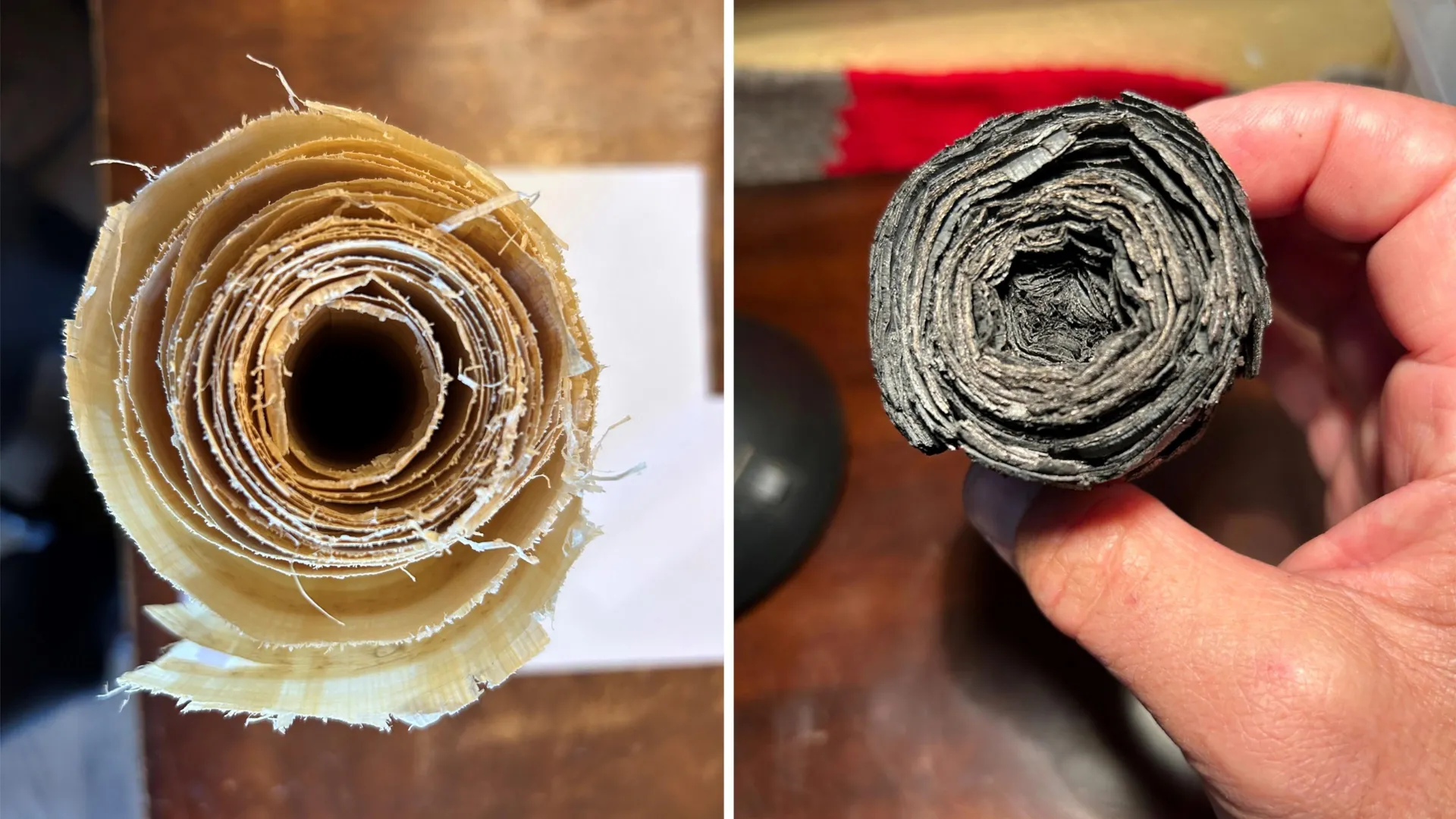
- Douglas Seiler, a Berkeley SETI affiliate, sealed rolled, inscribed papyrus in a container and burned it in a furnace until it carbonized, to mimic the Vesuvius eruption.
- In a PLOS ONE paper published Sept. 16, Seiler and collaborators report that even extremely small amounts of lead made characters in the burned scrolls detectable by X-ray CT.
- A relatively inexpensive handheld X-ray fluorescence scanner readily detected lead-based ink in a burned scroll, which suggests a screening step before CT imaging.
- Of the few Herculaneum scrolls virtually opened and deciphered so far, none had its ink tested for lead beforehand.
Compiled by The ScientistSomething wrong?How this is made
Why it matters
- decision The people who hold the scrolls could now rank the collection by ink chemistry before committing CT time, provided the handheld scanner reads ancient material as well as it read the test scroll.
- constraint Only scrolls with lead in the ink stand to gain. For carbon ink on carbon papyrus, the low-contrast problem Seiler describes stays as hard as it was.
- constraint The evidence comes from modern papyrus burned in a furnace. The 25-fold contrast has to be shown again on real Vesuvian material before anyone plans a reading programme around it.
Seiler's replicas come with an answer key. High school students copied passages from "Star Wars," the Bible and "The Outer Limits" onto papyrus from Egypt, using Egyptian reed pens and traditional Japanese lampblack ink [1]. Anyone reading the scans can check each character against what was actually written. A furnace burn of modern materials tests whether a lead signal survives carbonization. It does not reproduce a library buried under volcanic ash [9] or the nearly 2,000 years that followed [2].
Seiler reasoned that lead would absorb X-rays far more strongly than carbonized papyrus [13]. Software that virtually flattens the rolled sheets could then pick out the writing [13]. Lampblack is carbon, and so is burned papyrus. "They're having problems reading a lot of them because of the low contrast of carbon ink on carbon paper," Seiler said [2].
The 25-fold figure is a maximum. Lead absorbed "as much as" 25 times more X-rays than the burned papyrus around it [4], and the typical contrast across the test characters may be lower. The release does not give the lead concentrations tested or how contrast varied from letter to letter. Until it does, "extremely small amounts" [3] cannot be turned into a detection threshold to compare with real ink.
The replicas show that lead ink would stand out. Whether Herculaneum's scrolls contain it is a separate question. The surviving library holds about 1,800 items [12], and no one has yet searched it systematically for lead-based ink [7]. The release points to at least one earlier detection, in a fragment left over from the early attempts to open the scrolls physically [8]. "With lead in the ink, you would get a huge friggin' signature, so you really need to be looking for scrolls with lead in them," Seiler said [1].
I think the handheld result matters more to the collection than the CT contrast does. If the scanner reads ancient material the way it read the burned test scroll [5], ink chemistry becomes the first sort: screen the collection cheaply, then send the scrolls that test positive for lead to CT. That condition matters, because the detection was part of the replica study. Seiler puts the next step in the hands of whoever controls access. "We're relatively certain that if they start searching for lead, or they let us search for lead, it will help this whole process," he said [3].
The scrolls were discovered in 1752, and early attempts to unwind them often reduced them to ash until Italian authorities stopped the practice [10]. Every scroll that was successfully opened contained writing previously unknown to scholars, many of them works by the Epicurean philosopher Philodemus [11].
What to watch
- Whether the institutions holding the Herculaneum scrolls permit a systematic handheld XRF survey for lead ink, and what share of scrolls test positive.
- A CT scan of a real lead-positive scroll or fragment, which would show whether replica-level contrast survives nearly 2,000 years of aging.
- The lead concentrations reported in the PLOS ONE paper, set against any measured lead levels in genuine Herculaneum ink.