Product1 distinct publisher3 min readPublished
Compliant Technologies had sold a few pairs to jail staff before the ICE award. Omaha's largest district has since persuaded one police department to stop carrying the shock gloves in its hallways, having no power to require it.
The Product Desk · Product desk

Compiled by The Product DeskSomething wrong?How this is made
The lever available to Omaha Public Schools was a request. A district does not sign the purchase order for a school resource officer's equipment and cannot rewrite an outside department's use-of-force policy, so it asks and waits to see who answers. Three other large metro districts with Omaha school resource officers in their buildings took no action at all [9]. Count venues rather than departments and the request bought one changed carry policy against at least four districts where Monday morning looks the same [10]. The one change is also not written down: it has not been made official, and it covers only the Omaha department [7].
The federal buy did not change the hardware. According to Techdirt, Compliant Technologies' reference list beforehand was a handful of clients buying a few pairs for prison guards and jail staff [2], which is a narrow and legible use case: a confined space where an officer would rather not carry a baton, Taser or canister that a stronger person can take away [3]. A no-bid award with a ceiling in the tens of millions [1] sets a spending limit. It does not establish that the device behaves the way its rationale claims in any setting other than the one it was designed around. To the next municipal buyer, a federal customer at that ceiling reads as validation, and validation becomes a line on a spec sheet that gets cited, not re-tested.
The Omaha figures deserve to be read exactly as stated, because they are the only figures anyone has. The mayor and police chief said in a joint statement Monday that the gloves were used twice in the last school year, one of those in a program for students with learning deficits [5]. That is a frequency count. It carries nothing about what would otherwise have been used, or what happened to the student afterward. The same statement calls the device "the safest use-of-force option in the rare times when it is used" [6] without naming the option it is safer than. Rarity is being asked to do the work an outcome record would normally do, and the product's own name, Generated Low Output Voltage Emitters [11], is doing a share of it too.
The design rationale for the gloves stayed in the jail, built around a confined space and an officer who would rather not carry a weapon a stronger person could take away. The hardware traveled with the officer into a hallway, where nobody rewrote the conditions of use for a building full of minors.
For anyone hosting another agency's officers, the cut worth making is between purchase control and venue control. Omaha's schools have the venue and none of the purchase, which leaves persuasion, and persuasion becomes durable only when two things are on paper. First, which populations the device may not be used on, in the hosting agreement rather than in departmental discretion. Second, who receives the record of each activation, and how many days after it happens. Until a district can answer both, the vendor's customer list is its equipment policy.
Ranked by verification strength, evidence, and original report placement.
The suburban Bellevue police department, which patrols two Omaha schools and the large Bellevue district, said its officers will continue carrying the gloves.
Three other large school districts in the metro area that have Omaha school resource officers assigned to their buildings have not taken action to stop police from using the devices.
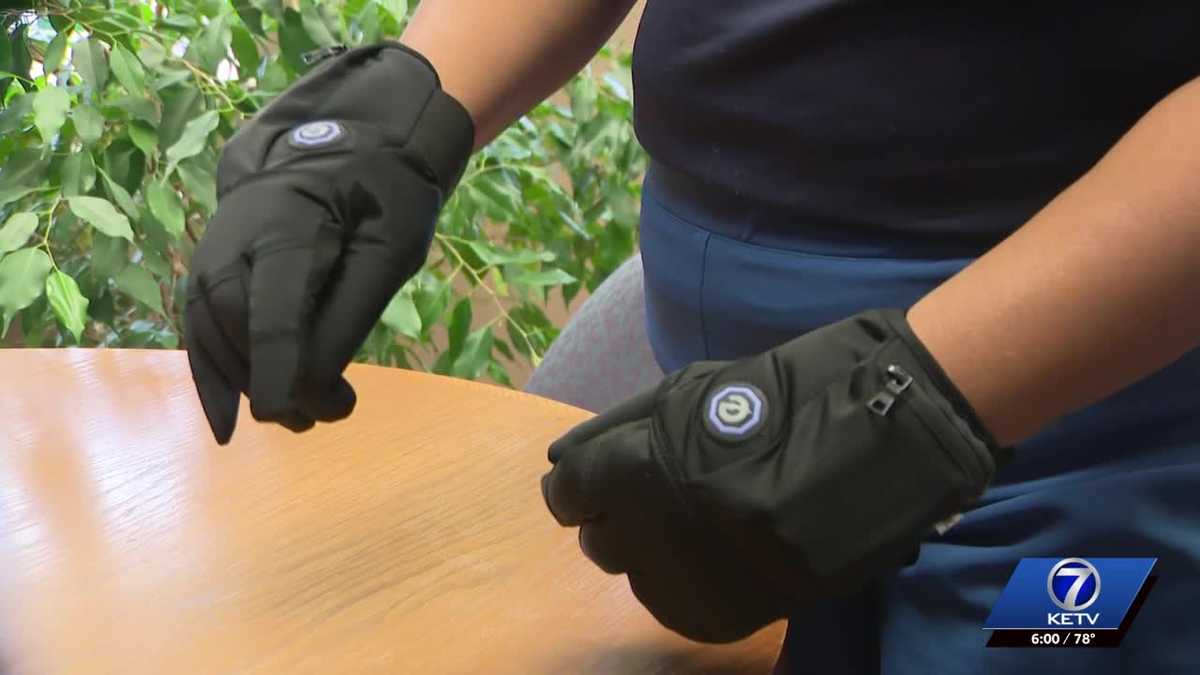
Compliant Technologies landed a no-bid contract with ICE worth up to $20 million.
Omaha police agreed this week to stop carrying gloves that can deliver electric shocks to students in the halls of Nebraska's largest public school district.
The Omaha mayor and police chief said in a joint statement Monday that the gloves were used twice in the last school year, including in a program for students with learning deficits.
The joint statement said: "We believe it is the safest use-of-force option in the rare times when it is used."
Distinct publishers with included, body-backed reporting in this cluster.
1 article · August 28, 2026
Follow any of these and your For You feed starts watching them — no settings page required.
product
From Omaha students to ICE: the shock glove sold as camera-proof force1 distinct publisher
product
ICE Buys A Camera For Every Officer, And A Release Rule That Defaults To No1 distinct publisher
product
Hundreds of database-abuse allegations at CBP, and the logs caught every one of them1 distinct publisher
product
Cinemas, classrooms and ICE: smart glasses now need a venue-policy contingency1 distinct publisher
Evidence-backed comparisons of source perspectives and observed adoption signals. Read the methodology
Which Builder, Operator, and Investor concerns the observed source mix emphasized—not a truth score.
Evidence, demonstrated adoption, hype gap, incentives, and confidence are assessed independently, each on its own current evidence. How these are measured.
Quotes stand in for documents
The sturdy parts of this story are all quotations — the joint statement, the two-use count, the Bellevue refusal — and Techdirt is transparently passing along someone else's local reporting without naming it or linking the contract. Nothing traceable sits behind the $20 million ceiling or behind the claim that the company had only sold a few pairs to jails, and no one asked Compliant Technologies or the districts' policy files anything.
Narrow footprint, one large ceiling
Counted honestly, deployment is small: a handful of jails, two recorded uses across an Omaha school year, and officers still carrying the gloves in at least four metro districts. What makes the number more than trivial is the federal award — a ceiling, not a shipment — sitting above a vendor that until now sold in pairs.
Heat above the record
The underlying facts are modest and the prose is not. Techdirt is right that the agreement is unofficial and jurisdictionally leaky — it says so plainly — but 'open season on students' is a long way from two documented uses, and treating a $20 million contract ceiling as a windfall assumes orders no one has shown. The single genuinely alarming detail, a shock device used inside a program for students with learning deficits, is strong enough that the surrounding volume works against it.
Everyone quoted has a stake
Read the speakers: a vendor whose obscurity ended with a federal award and whose selling point is that the shocks leave no burn or contact marks; a mayor and chief defending, after backlash, a tool their officers used twice; a suburban district spokeswoman citing a 'great relationship' with the police force she is being asked to constrain. Techdirt names all of this, and carries its own incentive to write the angriest available version of it.
Directionally solid, specifically shaky
We would stand behind the shape of this: a district asked, one department agreed unofficially, the neighbours did not, and a small vendor now has a federal contract. We would not stand behind any particular number in it. One publisher, no primary documents, no vendor or district-policy response, and a factual spine borrowed from reporting we cannot see.