Build1 publisher3 min readPublished
The FCC closed the border on imported robots, so RoboStore is becoming a factory
Robo Inc. launched 13 days after covered foreign robots lost their path to equipment authorization. Long Island production is scheduled for January 2027.
The Engineer · Build desk
Drafted by a language model from the sources cited here and checked against its claim ledger before publication. How we use AISend a correction
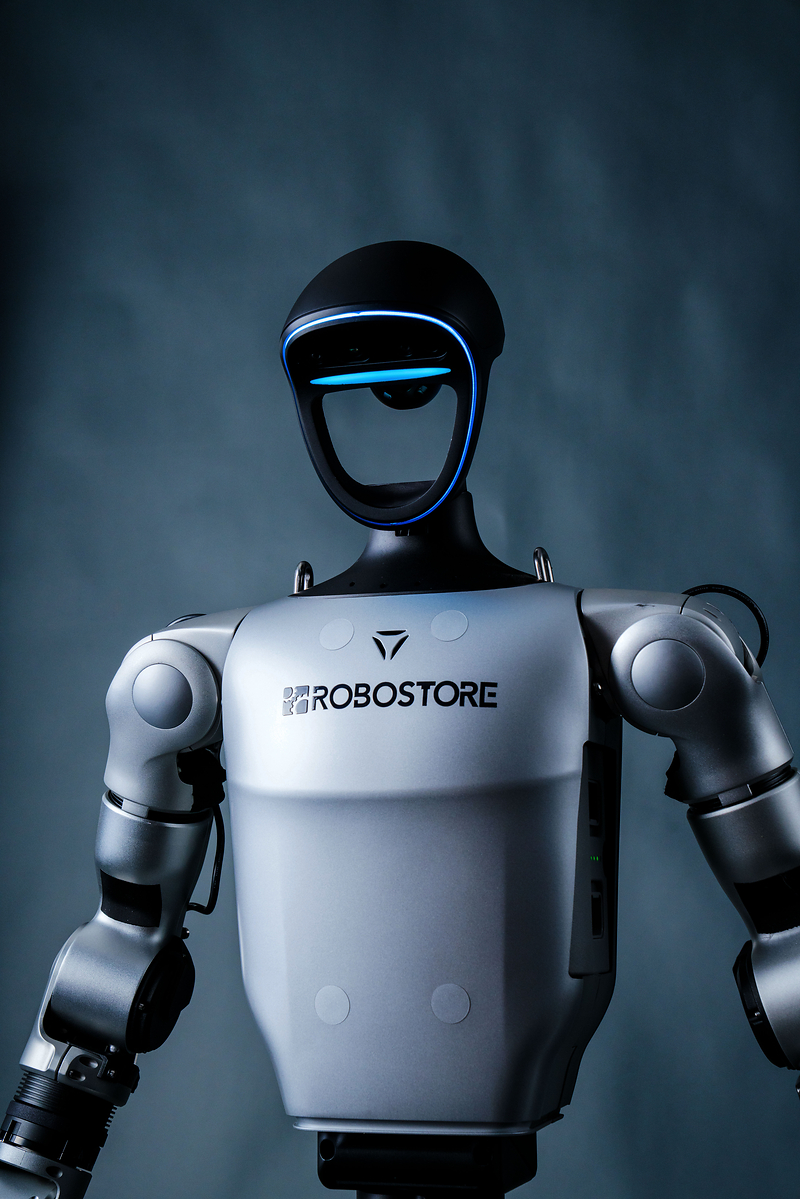
What happened
- RoboStore launched Robo Inc. on August 10, according to the company announcement, 13 days after the FCC added foreign-produced advanced robotic devices to its Covered List.
- The new FCC restrictions generally prevent new covered models from receiving the equipment authorization required for importation and sale in the US.
- The rule accelerated a plan Haggerty told Ars Technica had already been forming for roughly a year; RoboStore's customers bought relatively affordable Unitree platforms and then asked his team to make them useful in laboratories, warehouses and other environments. Distribution brought the sale, while integration, repairs, software and application work showed where a larger business could sit.
- RoboStore served as Unitree's US distributor, selling developer-oriented humanoids and quadrupeds alongside demonstrations, training, repairs and technical support.
- RoboStore's sales page describes the Unitree G1 as a developer-oriented platform rather than a fully capable household assistant.
Compiled by The EngineerSomething wrong?How this is made
Why it matters
The Federal Communications Commission added foreign-produced advanced robotic devices to its Covered List, a designation that generally prevents new covered models from receiving the equipment authorization required for importation and sale in the US [2]. Thirteen days later, on August 10, RoboStore launched a manufacturing arm called Robo Inc., according to the company announcement [1]. The chokepoint sits at the border, which means the import-and-resell business that supplied American labs with affordable hardware has no legal path forward: you cannot integrate a machine you cannot lawfully land.
RoboStore had been Unitree's US distributor, selling developer-oriented humanoids and quadrupeds alongside demonstrations, training, repairs and technical support [4]. Its own sales page describes the Unitree G1 as a developer platform rather than a fully capable household assistant [5], which is a more honest description than most of that category gets. The company says it sold and deployed over 1,500 robots and worked with Cisco, OpenAI, Nvidia and more than 150 universities [6]; a separate Robo Inc. announcement put the customer or organization count at roughly 4,500 and named Harvard, MIT, Amazon and Nvidia [7]. Both sets of figures come from Haggerty and Robo Inc., and independently reported sales data is unavailable [8]. They also do not sit easily together, since 1,500 robots across 4,500 organizations works out to about one machine for every three customers [21], so the two counts are measuring different things.
Haggerty told Ars Technica the pivot had been forming for roughly a year before the rule accelerated it [3]. That is credible on the economics: distribution brought the sale, while integration, repairs, software and application work were where the durable margin was [3]. RoboStore has stopped its Unitree distribution operation while continuing to supply parts, repairs and upgrades for machines already in the field, Ars reported [9]. Robo Inc. plans a 66,000-square-foot Long Island facility with localized robot production scheduled to begin in January 2027 [10], combining engineering, software, assembly, security reviews, testing, service and customer support on one site [11].
The hard part is the bill of materials. Robo Inc. calls itself hardware-agnostic and intends to source platforms and components globally [12], and Haggerty has acknowledged that cutting Chinese suppliers out entirely is impractical, because batteries, aluminum structures and other parts already benefit from China's scale in electric vehicles and industrial manufacturing [13]. "There are some pieces that are already dialed in," he told a report carried by The Star [14]. The plan is to import components where the economics demand it, then do assembly, software integration, data localization and application work domestically [15]. Under Sidley Austin's analysis of the FCC action, whether a device counts as foreign-produced can turn on the share of component cost attributable to foreign parts [16]. So the compliance question migrates from a customs declaration to a cost accounting exercise, and the parts hardest to re-source are the ones that move the ratio most.
The founder's background is procurement, not perception stacks: drone photography sold to real-estate agents in high school, then Bitcoin mining, then roughly $100,000 of crypto earnings put into Defender Safety, according to Inc. [17]. Defender sold construction safety gear and ranked 43rd on the 2023 Inc. 5000 on three-year revenue growth of 8,983% [18].
Watch the January 2027 date, and watch for a stated foreign-content threshold. Robo Inc. is a test of whether local assembly, software and service can carry a US robotics industry before the component supply chain catches up [19].