ScienceNot yet confirmed elsewhere1 publisher2 min readPublished
Nature Food authors propose a land-grant university consortium to counter cyberattacks on US agriculture
Researchers in Nature Food urge a national cybersecurity consortium of land-grant universities for US agriculture, after workshops with over 150 stakeholders. The case rests on testimony, and the farm testbeds they propose would be where that exposure gets measured.
The Scientist · Science desk
What happened
- Iowa State University coordinated the effort, with Washington State, UC Davis, Virginia Tech, North Carolina A&T and the food-data standards group IC-FOODS taking part.
- The proposed Agriculture Cybersecurity Consortium would rest on three pillars: multidisciplinary research, research infrastructure and testbeds, and education and workforce development.
- Research priorities include simpler verification of users and devices, safeguards built into equipment and software, and shared records that make unauthorized changes easier to spot.
- Test sites could be run by land-grant universities, USDA Agricultural Research Service facilities, regional irrigation districts and industry groups, with government support.
Compiled by The ScientistSomething wrong?How this is made
Why it matters
- exposure Farms folding AI and digitised data into daily work are taking on security risks that, by Hasan's account of the workshops, many people in the sector underestimate.
- decision Federal and state agencies are being asked to back university-led research and test sites before any budget or timeline for the consortium has been published.
- cost Much of the farm-level teaching would fall to Extension educators, who would have to carry equipment and network protection into their farm-focused instruction.
The figure of more than 150 is a count of participants. The Nature Food recommendation [1] draws its risk picture from three regional workshops and their follow-up sessions [2]. The phys.org account describes the threat to American agriculture as growing [19] but does not report incident counts, losses or attack rates. What the workshops produced is a description of the gap. "In our discussions with ag-tech vendors, growers and state agencies, we noted a lack of clear understanding of cybersecurity vulnerabilities and a lack of platforms and tools to conduct vulnerability assessments in digital agricultural systems," said Monowar Hasan, an assistant professor at Washington State University whose lab studies cyber-physical systems security [5][6]. "This is primarily due to misconceptions about cyber threats and adversarial capabilities among agricultural stakeholders," he said [7].
The case for urgency rests on adoption. "With increased digitization of agricultural data and increased adoption of AI into daily workflows, it has become all the more important to provide cybersecurity guarantees in agriculture," said Ananth Kalyanaraman, director of WSU's School of Electrical Engineering and Computer Science and of the AgAID AI Institute [4]. AI also tops the defence agenda. The first research priority on the list is using AI and other emerging technologies to detect, prevent and respond to cyberattacks [10].
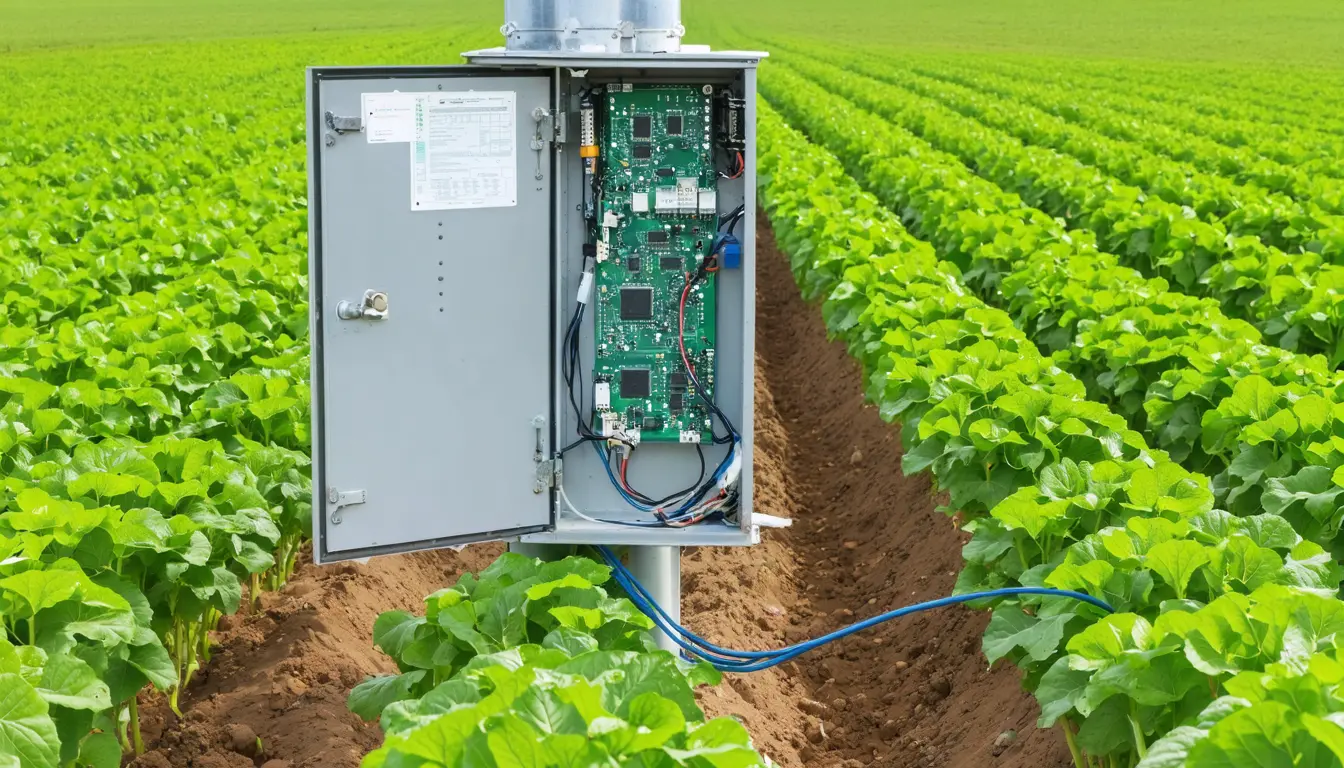
I think the testbed pillar is the one to judge the consortium by, provided the sites run equipment that farms actually use. A sector that lacks tools for vulnerability assessment cannot yet say how exposed it is. A test site is where that exposure could be measured. One listed priority is building realistic farm testing environments to assess risks and understand what attackers can do [12]. The authors specify real-world agricultural equipment and environments, and say expanded facilities would support research, hands-on training, public demonstrations and evidence-based policies and standards [14].
Hands-on exercises could let participants practise responding to a cyberattack while keeping operations running [17]. The consortium would be national and spread across regions, built on partnerships with farms, cooperatives, agribusiness, cybersecurity businesses, government, NGOs and academia [3]. Hasan put the stakes beyond the farm. The consortium "will help bridge this gap and improve the cybersecurity posture of the critical agricultural sector, which also has national security implications," he said [18].
What to watch
- Whether USDA or another federal agency commits funding to an Agriculture Cybersecurity Consortium, and at what scale.
- Whether the first test sites at land-grant campuses or ARS facilities publish vulnerability assessments of farm equipment and software in common use.
- Whether incident data on cyberattacks against US farms and food systems is released to put a number on the threat the authors describe as growing.
Clarity's read
What the record supports and how the coverage leans. The claims behind it follow.
Reality
- Evidence35
- Adoption
- Insufficient
- Hype gap+20
- Incentives60
- Confidence40
Claim ledger
Ranked by verification strength, evidence, and original report placement.
- [1]
Washington State University researchers are helping lead a call, published in Nature Food, for a national consortium of land-grant universities to study and combat cyberattacks against American agriculture and food systems.
- [2]
The recommendation follows three regionally coordinated workshops and follow-up sessions involving more than 150 stakeholders and participants.
- [3]
The co-authors urged creation of a national, geographically distributed Agriculture Cybersecurity Consortium (ACC) based on partnerships with farms, cooperatives, agribusiness, cybersecurity businesses, government, NGOs and academia.
- [4]
"With increased digitization of agricultural data and increased adoption of AI into daily workflows, it has become all the more important to provide cybersecurity guarantees in agriculture," said Ananth Kalyanaraman, professor and director of the WSU School of Electrical Engineering and Computer Science and director of the AgAID AI Institute for Transforming Workforce & Decision Support.
- [5]
Monowar Hasan, an assistant professor in WSU's School of Electrical Engineering and Computer Science whose Cyber-Physical Systems Security Research Lab focuses on cybersecurity, said the workshops revealed that many people underestimate the cybersecurity risks in agriculture.
- [6]
"In our discussions with ag-tech vendors, growers and state agencies, we noted a lack of clear understanding of cybersecurity vulnerabilities and a lack of platforms and tools to conduct vulnerability assessments in digital agricultural systems," Hasan said.
- [7]
"This is primarily due to misconceptions about cyber threats and adversarial capabilities among agricultural stakeholders."
- [8]
The effort was coordinated by Iowa State University and included researchers from WSU, the University of California, Davis, Virginia Tech, North Carolina A&T University and IC-FOODS, an independent organization that connects food data through shared definitions and standards.
- [9]
The recommendation calls for the ACC to focus on three pillars: multidisciplinary research and development; research infrastructures and testbeds; and educational programs and workforce development.
- [10]
The first listed research priority is using AI and other emerging technologies to detect, prevent and respond to cyberattacks.
- [11]
Other research priorities include simpler, more efficient ways to verify users and devices; finding security flaws and building safeguards into equipment and software; and shared digital records that make unauthorized changes easier to detect.
- [12]
A listed priority is developing realistic farm testing environments to assess risks and understand attackers' capabilities.
- [13]
Land-grant and other research universities would conduct much of the research with support from federal and state government agencies, alongside additional industry research.
- [14]
The ACC could bring university researchers, industry experts and other partners together to test cybersecurity solutions using real-world agricultural equipment and environments; expanding these facilities would support research, hands-on training for students and professionals, public demonstrations, and evidence-based policies and standards.
- [15]
Land-grant universities, USDA Agricultural Research Service facilities, regional irrigation districts and industry groups could develop and operate the test sites with government support and possibly industry partnerships.
- [16]
Extension educators could deliver practical, farm-focused instruction on protecting equipment and networks.
- [17]
Hands-on exercises could help participants practice responding to cyberattacks while keeping operations running.
- [18]
"Our collaborative interdisciplinary ag-cybersecurity consortium will help bridge this gap and improve the cybersecurity posture of the critical agricultural sector, which also has national security implications."
- [19]
The threat of cyberattacks against American agriculture and food systems is growing.
Sources
1 independent publisher whose own reporting we read for this story.
- phys.orgResearchers call for national consortium to battle agriculture cyber threats
1 article · October 9, 2026
Topics and entities
Follow any of these and your For You feed starts watching them — no settings page required.
Topics
- Operational technology securityFollow
- Critical infrastructure securityFollow
- Agricultural cybersecurityFollow
Entities
- Washington State UniversityFollow
- Iowa State UniversityFollow
- University of California, DavisFollow
- Virginia TechFollow
- North Carolina A&T State UniversityFollow
- IC-FOODSFollow
- Nature FoodFollow
- USDA Agricultural Research ServiceFollow
- AgAID AI Institute for Transforming Workforce & Decision SupportFollow
- Ananth KalyanaramanFollow
- Monowar HasanFollow
- Lav KhotFollow