Science1 publisher2 min readPublished
Two studies put permafrost's added warming at a quarter degree Celsius by 2100
Two studies project that carbon leaking from thawing Arctic permafrost will add about a quarter degree Celsius of warming by 2100, beyond fossil fuels. Permafrost researchers Sue Natali and Gustaf Hugelius said the UN's 2.6C outlook for the century leaves that extra out.
The Scientist · Science desk
Drafted by a language model from the sources cited here and checked against its claim ledger before publication. How we use AISend a correction
What happened
- Permafrost still holds about three times as much carbon as the atmosphere now contains, laid down over thousands of years as dead plants and animals.
- The Arctic is warming four times faster than the rest of the globe, letting that long-frozen material decay into methane and carbon dioxide.
- The Arctic flipped a few years ago from absorbing more carbon than it released to venting more, and Columbia ecologist Duncan Menge said it now adds to the problem.
- A September study co-authored by Sue Natali put the rise in warming from thaw, fires and wetland and lake changes together at 20% by the end of the century.
Compiled by The ScientistSomething wrong?How this is made
Why it matters
- contradiction Weaver's 'small amount' and Schuur's 'tipping point' describe the same thaw, so how urgent it looks depends on whether you ask about warming by 2100 or about how long the release lasts.
- cost If the release keeps running as Schuur expects, warming on the scale of the US or Europe has to be offset by deeper fossil-fuel cuts to hold any given temperature limit.
- decision Forecasters must choose whether headline projections include warming-induced emissions; by Natali's estimate, leaving them out misses a 20% rise in the century's warming.
A frozen store that large makes it tempting to assume most of it is headed for the atmosphere soon. The projections for this century are much smaller. Against the 2.6C the UN projects without policy changes [9], the quarter degree from the two studies is roughly a tenth more [1]. Over the century, scientists said, that is about as much warming as the United States or the whole of Europe would cause [13].
Andrew Weaver, a University of Victoria climate scientist, first calculated the half-degree Fahrenheit figure in a 2012 study [11]. He described it as a small amount, not grounds for scenarios of doom, but something "that we're going to have to deal with" on top of everything else [10].
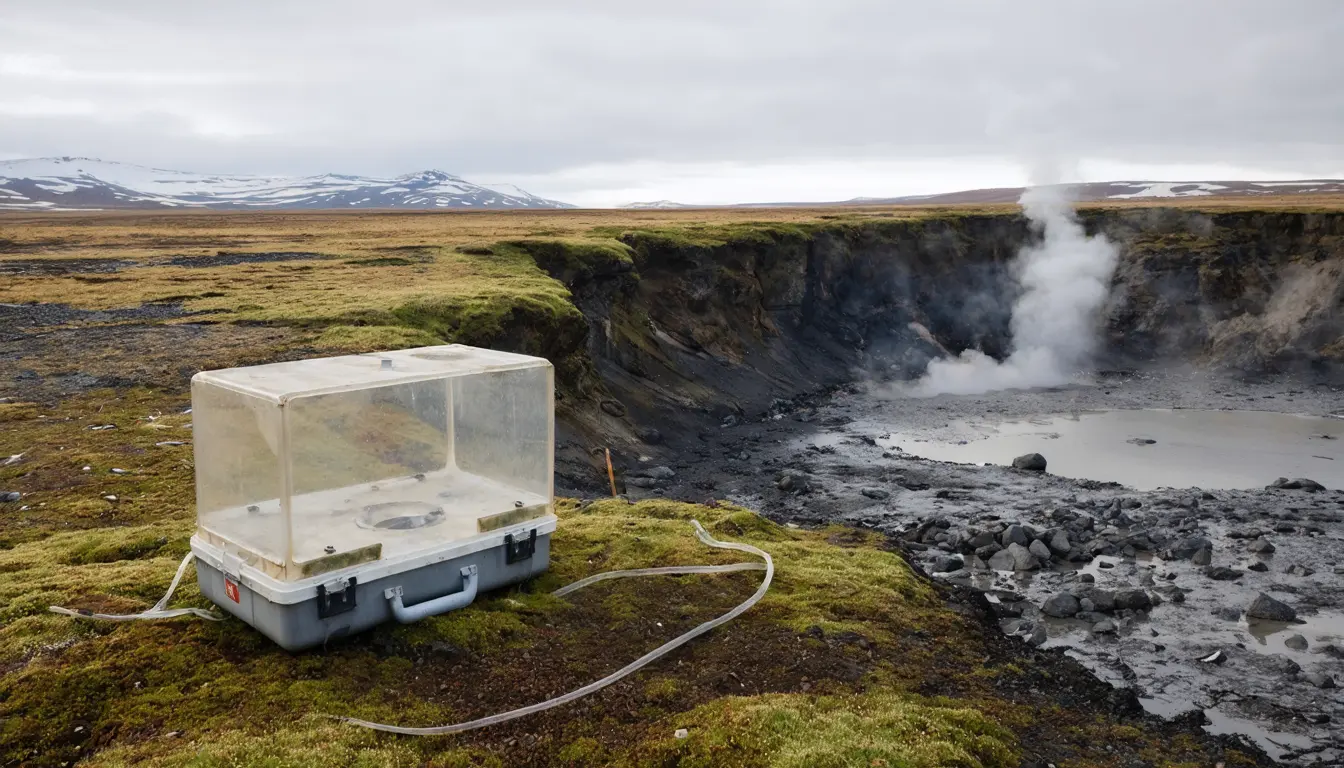
Ted Schuur, an ecologist at Northern Arizona University, is more worried about duration. Walking the edges of Smith Lake in Alaska, he watched methane bubbles rise out of the muck [6]. "Once you start leaking this carbon out, there's so much in the ground that it's not going to shut off," he said [3]. He called it one of climate change's scary tipping points [14]. "Essentially every year is setting a permafrost record," he said [4].
The two men are answering different questions. Weaver's figure is a size at a date, and both projections stop at the end of the century [1]. Schuur's is a claim about whether the release keeps going once it starts. A release that does not switch off can still add only a quarter degree this century. In the report, Schuur's statement is his judgement; the article does not include the measurements behind it, such as emission rates from Smith Lake or how they have changed from year to year.
Gustaf Hugelius, a permafrost expert at Stockholm University, used an image that fits both readings. "The permafrost system is really like a sleeping giant," he said [12].
What to watch
- Whether future UN warming projections add the few tenths of a degree from permafrost that Natali and Hugelius say are currently left out.
- Published emission rates from thaw sites such as Smith Lake, the evidence needed to test Schuur's view that the release will not stop once started.
- Follow-up work that separates permafrost from fires and wetland and lake changes within the 20% rise estimated in Natali's September study.