ScienceNot yet confirmed elsewhere1 publisher2 min readPublished
EHU paper device turns color in about 10 minutes when a drink contains scopolamine
University of the Basque Country researchers led by Lourdes Basabe-Desmonts built a paper test that flags scopolamine in drinks in about 10 minutes. They call it a laboratory-level prototype whose detection ranges and color changes still need optimizing.
The Scientist · Science desk
What happened
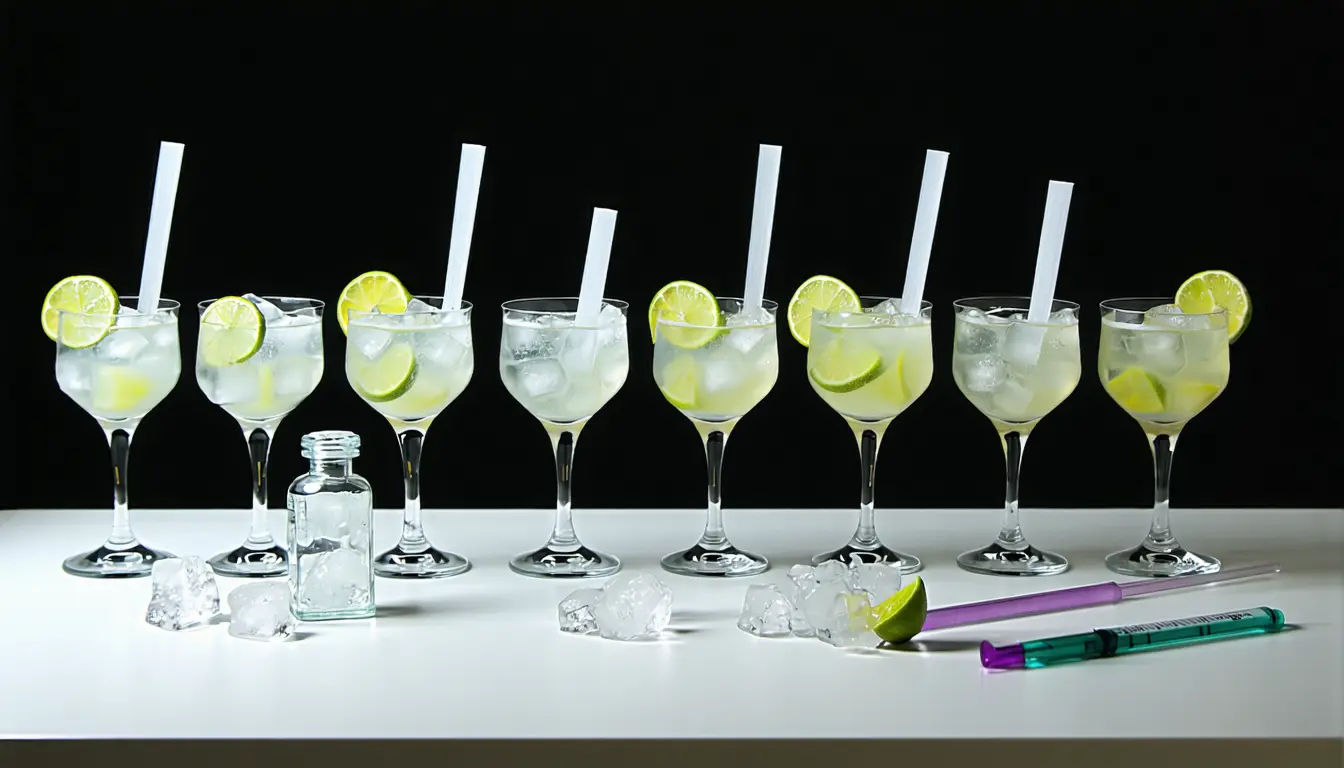
- Users dip the device in a sample for a few seconds, and a reaction on its paper support produces a color change that can be read by eye without any detector.
- The device is designed to test pharmaceuticals and plant extracts as well as beverages, and the study is published in the journal Talanta.
- Scopolamine has strong amnesic and sedative effects and no color, odor or taste, so a person cannot notice it in what they swallow.
- Instrument methods detect the drug with high sensitivity and specificity but need laboratory conditions and extensive sample preparation.
Why it matters
- capability A first check of drinks, medicines or plant material can now be run where the sample is found, with the instrument lab kept for confirmation.
- constraint The drug cannot be noticed by taste or smell, so a false negative from a color test leaves the drinker with no second warning.
- precedent With a benzodiazepine device already built in the same format, a single test covering several drug classes is the group's stated goal, and its accuracy will have to be shown for each drug separately.
The design moves a color-forming reaction off the bench and onto paper. In the group's description, microfluidics shrinks or simplifies a laboratory process so the sample does not need to be handled at all. According to the release, that makes a preliminary analysis possible on site [14]. "Microfluidic technology opens the door to a type of analysis that was impossible before," said Isabel Poves, a predoctoral researcher with the group and the study's lead author [13][12].
The phys.org account does not report a detection limit, which beverages were tested, how many samples were run, or how often the device changed color with no scopolamine present. A drink test depends on those numbers. A visible color reaction reads yes above some concentration and no below it, so a drink spiked under that threshold comes back clean. The researchers say the prototype "can be refined according to user needs" [8].
Poves said the device "will help prevent drug-facilitated assault, because more important than detecting it after the fact is trying to prevent it from happening in the first place" [15]. I think that aim fits this drug. Few methods exist for detecting it quickly on site [7]. Prevention also puts the weight on the negative result. Someone who dips the device and sees no change will keep drinking. Its false-negative rate at the doses used in real assaults will decide whether it helps drinkers or only investigators. Until that is published, I would treat a positive as a reason to stop and send the sample for instrument analysis, the method with the established sensitivity and specificity [6].
The scopolamine device is one piece of a larger project. The group has already built a device for benzodiazepines in beverages with the same characteristics [9]. The project's aim is to detect as many drugs as possible with one device by building known color reactions into a single design [10]. "We are trying to adapt the colorimetric chemical reactions to microfluidic technology in order to simplify this type of detection, to lower costs, automate the process and, in particular, to be able to see with the naked eye a color change indicating that a beverage has been adulterated," said Basabe-Desmonts [11]. The release adds that existing smartphone apps that analyze color accurately could later read the result [16].
What to watch
- Whether the Talanta paper reports a detection limit and a false-positive rate across different beverages, and how those compare with doses used in assaults.
- Testing by people outside the lab, the user feedback the researchers say will guide refinement of the prototype.
- A combined multi-drug device from the group, or validation of smartphone apps reading the color result.
Clarity's read
What the record supports and how the coverage leans. The claims behind it follow.
Reality
- Evidence35
- Adoption2
- Hype gap+30
- Incentives45
- Confidence40
Claim ledger
Ranked by verification strength, evidence, and original report placement.
- [1]
The Microfluidics Cluster EHU research group, led by Ikerbasque research professor Lourdes Basabe-Desmonts, has developed a self-powered, microfluidic paper-based device for the rapid detection of scopolamine in pharmaceuticals, plant extracts and beverages.
ReportedSupportedSource: phys.org report on University of the Basque Country researchView cited source - [2]
The work is published in the journal Talanta: Isabel Poves-Ruiz et al, 'A microfluidic paper-based device for on-site colorimetric detection of scopolamine in beverages, pharmaceuticals, and plant extracts', Talanta (2027).
- [3]
"The device is immersed in the sample for a few seconds, and after around 10 minutes the result can be seen with the naked eye, without the need for any other type of detector," said Isabel Poves, lead author of the study.
- [4]
The device has a paper support on which a reaction produces a color change indicating a positive or negative result.
- [5]
Scopolamine has strong amnesic, sedative and hallucinogenic effects, combined with a lack of color, odor and taste, which prevents it from being detected when ingested.
- [6]
Detection of these drugs relies on instrumental analytical techniques that provide high sensitivity and specificity but require laboratory conditions and extensive sample preparation, making them impractical for rapid onsite analysis.
- [7]
There are still few methods available for the rapid onsite detection of scopolamine.
- [8]
The researchers said: "This is a laboratory-level prototype that can be refined according to user needs. We need to continue to improve these devices to optimize the detection ranges, color changes, etc."
- [9]
The EHU group has recently developed another device aimed at detecting benzodiazepines (e.g., diazepam) in beverages, with the same characteristics as the scopolamine device.
- [10]
The study is part of a larger project by the Microfluidics Cluster UPV/EHU group that seeks to detect as many drugs as possible using a single device, by integrating known chemical reactions used for drug detection into microfluidic technology.
- [11]
"We are trying to adapt the colorimetric chemical reactions to microfluidic technology in order to simplify this type of detection, to lower costs, automate the process and, in particular, to be able to see with the naked eye a color change indicating that a beverage has been adulterated," said Lourdes Basabe-Desmonts.
- [12]
Isabel Poves is a predoctoral researcher with the group and lead author of the study.
- [13]
"Microfluidic technology opens the door to a type of analysis that was impossible before," said Isabel Poves.
- [14]
Microfluidic technology miniaturizes or simplifies processes carried out on a larger scale in a laboratory so the sample does not need to be handled; it enables a preliminary analysis to be conducted onsite, where previously a sample had to go to a specialized laboratory.
- [15]
Isabel Poves: "this device will help prevent drug-facilitated assault, because more important than detecting it after the fact is trying to prevent it from happening in the first place. We need to be able to quickly detect whether a drink contains an adulterating substance."
ReportedInsufficientSource: Isabel Poves, quoted by phys.org2 sources— create a free account to open themView cited source - [16]
In the future, the analysis could potentially be conducted using existing smartphone applications that accurately analyze the color displayed on the device.
Sources
1 independent publisher whose own reporting we read for this story.
- phys.orgDevice detects 'Devil's Breath' in beverages in just 10 minutes
1 article · October 1, 2026
Topics and entities
Follow any of these and your For You feed starts watching them — no settings page required.
Topics
- Paper-based diagnosticsFollow
- MicrofluidicsFollow
- Drink spiking detectionFollow