US reactor uprates could add 3 to 8 GW, a fraction of the AI demand PJM expects by 2030
Constellation plans to spend more than $4.3 billion to add nearly 1 GW at 11 reactors, MIT Technology Review reported. Per kilowatt that costs more than new solar with storage or gas, and Google and Meta signed long-term purchase deals.
The Product Desk
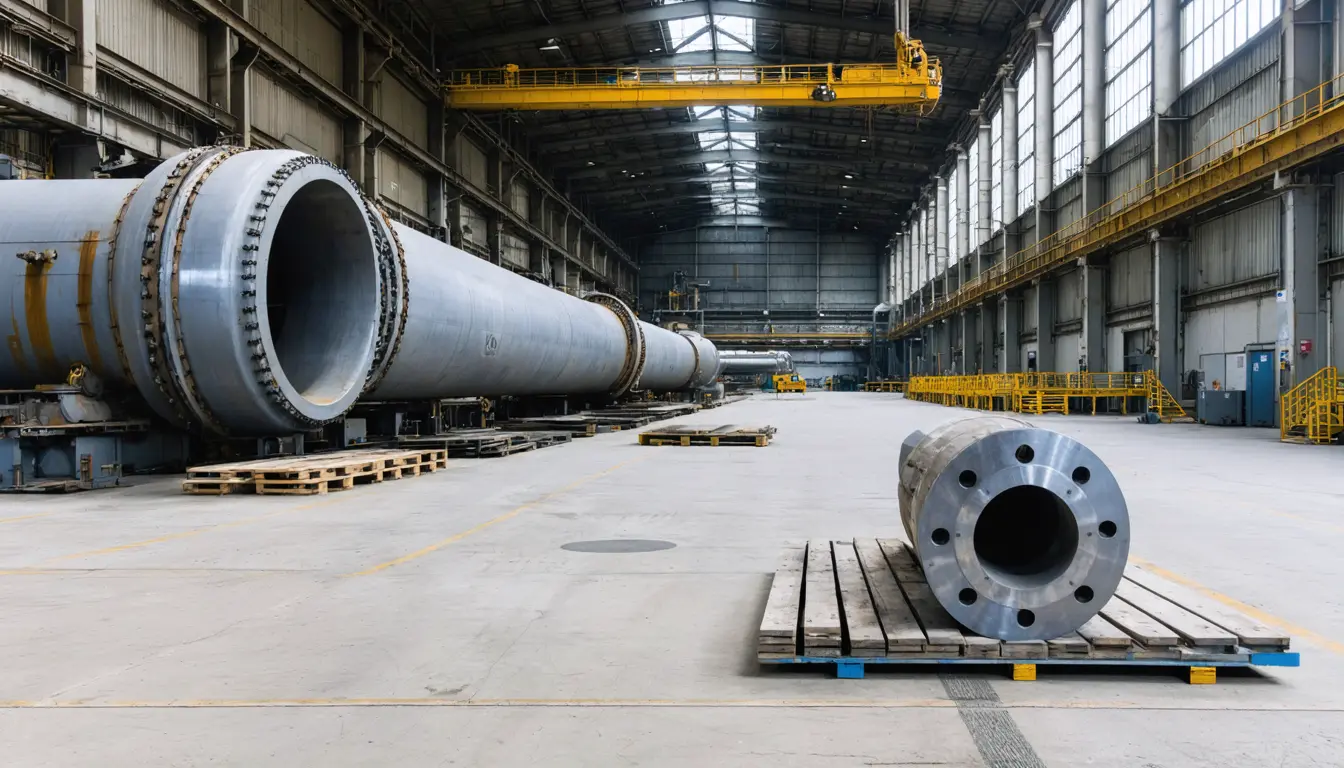
Key figures: the NRC expects applications to add 2.4 gigawatts to reactors through 2032. The US nuclear fleet has roughly 98 gigawatts of total capacity. Major uprate overhauls can boost reactor power by as much as 20%.
| Figure | Value | Note | Claim |
|---|---|---|---|
| Uprate applications NRC expects, through 2032 | 2.4 GW | 11 | |
| US fleet capacity, roughly | 98 GW | 10 | |
| Major uprate boost, up to | 20% reactor power | 13 |
What happened
- On October 5 the Department of Energy awarded Vistra a $4.2 billion loan for upgrades at three plants in Pennsylvania and Ohio that will add 433 megawatts.
- The Nuclear Regulatory Commission approved over 80 uprates between 2001 and 2010 and 33 between 2011 and 2020.
- The most recent major US uprate, at Browns Ferry in Alabama, cost $475 million and raised capacity 14% between 2018 and 2019.
- PJM, the grid operator covering much of the East Coast, expects about 30 gigawatts of additional peak demand from AI by 2030.
Why it matters
- What it costs cost Anchor buyers set the pace. A company with no comparable long-term commitment to offer starts behind Google, whose 20-year term helped get Constellation's work done.
- What it limits constraint Late buyers face a thinner pool, because a significant share of the potential uprates in the US is already accounted for.
- Who has to decide decision Developers sizing a site must decide whether uprate megawatts are a supplement or a base supply, and the national pool supports only the supplement.
- What it sets up precedent The Vistra loan shows a federal financing route for uprates that arrives alongside a named buyer in Meta.
Constellation's chief executive was direct about the price when he spoke to the New York Times. Joe Dominguez told the paper: "These are capital intensive, labor intensive projects that require a different price point than the market trades at, frankly." [5] Google's 20-year agreement to buy electricity from the plants was a major factor in making the uprates happen, MIT Technology Review reported [4].
MIT Technology Review raised the possibility that uprates could be quick, clean power for data centers [20]. Buyers signed long-term contracts, including Meta's for Vistra's output [6].
The price shows up in the cost per kilowatt. At more than $4.3 billion [3] for nearly 1 GW [1], Constellation's project works out to more than $4,300 per kilowatt [16]. MIT Technology Review reported that on a per-kilowatt basis this is cheaper than a new reactor and dearer than new utility-scale solar with storage or a combined-cycle gas plant [7]. The article did not give completion dates for the Constellation or Vistra projects, or per-kilowatt figures for the alternatives.
The pool is small. Depending on who you ask, uprates could add 3 to 8 GW to a US fleet of roughly 98 GW [10], an increase of 3.1% to 8.2% [17]. The NRC already expects applications totaling 2.4 GW through 2032 [11], which is 80% of the low end of that range and 30% of the high end [19]. Per reactor, major overhauls raise output by as much as 20% and require replacing plant equipment [13].
Against the 30 GW of AI-driven peak demand PJM expects [12], the full national range would cover 10% to 27% [18]. That assumes every uprate in the country landed in PJM territory. MIT Technology Review concluded that all possible nationwide uprates would cover just a fraction of the PJM figure [15].
We think buyers should treat uprate power as a contract to pursue early and as a supplement in the supply plan. The trade-off is price: it costs more per kilowatt than solar with storage or gas [7], and MIT Technology Review says a significant chunk of potential uprates is already accounted for [14].
The first question is whether the company can sign a long-term purchase at the different price point Dominguez described [5]. The second is whether its load is closer to Vistra's 433 MW [2] or Constellation's nearly 1 GW [1] than to anything larger.
A company that can sign, and whose load fits inside one project, can get that load from uprates if it moves early. A company that can sign but needs more than a gigawatt will get part of its supply from uprates, and MIT Technology Review says more nuclear power eventually requires building new reactors [21]. A company that cannot sign a long contract should price solar with storage and gas first [7].
What to watch
- NRC applications above the 2.4 GW expected through 2032 would point to a pool nearer 8 GW than 3 GW.
- Completion dates for the Constellation and Vistra projects would test the claim that uprates deliver power quickly.
- Other operators announcing uprates backed by a named hyperscaler buyer, as Constellation and Vistra did.
Clarity's read
What the record supports and how the coverage leans. The claims behind it follow.
Reality
- Evidence55
- Adoption35
- Hype gap0
- Incentives65
- Confidence55
Claim ledger
Ranked by verification strength, evidence, and original report placement.
- [1]
Constellation, the largest nuclear operator in the US, announced plans to add nearly a gigawatt of new capacity across 11 existing nuclear reactors at six plants.
- [2]
On October 5, the Department of Energy awarded a $4.2 billion loan to Vistra for previously announced upgrades at three plants in Pennsylvania and Ohio that will add 433 megawatts of power capacity.
- [3]
Constellation announced plans to spend more than $4.3 billion on uprates to 11 reactors.
- [4]
Google agreed to buy electricity from the Constellation plants, and the 20-year agreement was a major factor in making the uprates happen.
- [5]
Joe Dominguez, Constellation's CEO, told the New York Times: "These are capital intensive, labor intensive projects that require a different price point than the market trades at, frankly."
- [6]
Meta has signed on to buy electricity from the Vistra plants in a long-term deal.
- [7]
On a per-kilowatt basis, the Constellation project is less expensive than building a new reactor, but still more expensive than building a new utility-scale solar farm with energy storage or a combined-cycle natural-gas plant.
- [8]
The US Nuclear Regulatory Commission approved over 80 uprates between 2001 and 2010, and 33 between 2011 and 2020.
- [9]
The most recent major uprate approved in the US was for three reactors at the Browns Ferry plant in Alabama; a $475 million project expanded the plant's capacity by 14% between 2018 and 2019.
- [10]
The US nuclear fleet has roughly 98 gigawatts of total capacity, and depending on who you ask there are between three and eight additional gigawatts available from uprates.
- [11]
The NRC already expects applications to add 2.4 gigawatts of power to reactors through 2032.
- [12]
PJM, the grid operator covering much of the East Coast, expects about 30 gigawatts of additional peak demand because of AI by 2030.
- [13]
Major uprate overhauls, which can boost reactor power by as much as 20%, require replacing plant equipment.
- [14]
A significant chunk of the potential uprates in the US is already accounted for.
- [15]
All the possible nationwide nuclear uprates would cover just a fraction of PJM's expected 30 gigawatts of additional AI peak demand.
- [16]
Constellation's project costs more than $4,300 per kilowatt of added capacity.
- [17]
Uprates of 3 to 8 GW would add 3.1% to 8.2% to a roughly 98 GW fleet.
- [18]
The 3 to 8 GW uprate range equals 10% to 27% of PJM's expected 30 GW of AI-driven peak demand.
- [19]
The 2.4 GW of NRC-expected applications equals 80% of the 3 GW low end and 30% of the 8 GW high end of the uprate range.
- [20]
Pushing existing reactors to produce more could help provide more clean power for data centers, quickly.
- [21]
If the US wants more nuclear power to meet demand, eventually that will require actually building new reactors.
Get this ledger inside ChatGPT. Ask about any of our stories and the answer brings its figure, each claim’s verdict and the sources. Free, no account.
Sources
1 independent publisher whose own reporting we read for this story.
- technologyreview.comHow much more can nuclear power plants give?
1 article · October 15, 2026
Topics and entities
Follow any of these and your For You feed starts watching them — no settings page required.
Topics
- AI Data Center Power DemandFollow
- Nuclear power upratesFollow
- Power Purchase AgreementsFollow