Bessent expands secondary sanctions to isolate Iran from dollar system
Bessent scoped his threat to countries and to five sectors rather than to a list of firms, which makes locating the Iran perimeter the day job of banks, shippers and payment companies with no Iranian customers at all.
The Investor · Invest desk
What happened
- Treasury Secretary Scott Bessent on Monday laid out an intensified sanctions campaign against Iran, intended to isolate the regime further from the rest of the world.
- Bessent said any country that helps Iran will be removed from the dollar-based financial system, alongside wider use of secondary sanctions against entities and countries that engage with it.
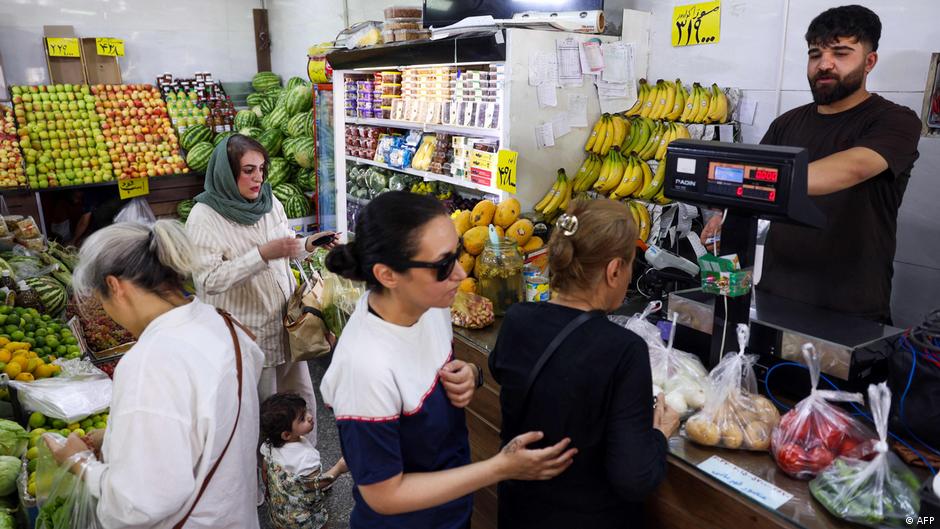
- Esfandyar Batmanghelidj of the Bourse & Bazaar Foundation said those five are lifelines for ordinary Iranians, with gold and crypto guarding savings against inflation and shipping carrying food and medicine.
Why it matters
- constraint A perimeter drawn by sector rather than by entity cannot be cleared with a list check, so approving a gold, freight or wallet payment now requires a desk to form a view on where its counterparty's counterparty sits.
- exposure The asset at risk for a third-country firm becomes its dollar access rather than its Iran revenue, so the potential loss bears no relation to the size of the business being screened.
- precedent A jurisdiction-wide exit is now the demonstrated response, and correspondent lines closed that way are slow and expensive to reopen even if the policy softens.
- contradiction Fortune's sources do not agree on whom the five sectors squeeze, and if the shipping channel really is how food and medicine arrive, de-risking removes the humanitarian flow along with the front companies.
The load-bearing word is countries. Attaching removal from the dollar-based financial system to any country that helps Iran [2], rather than to a named firm, produces an obligation no screening system resolves with a lookup, and the five sectors named, digital assets, technology, gold, aviation and shipping [3], are categories rather than counterparties. Treasury did not respond to Fortune's request for comment [5], so until designations arrive the perimeter is wherever the person approving the payment decides it is, and that person is not in Washington.
The cheap way to draw it is wide. The United Arab Emirates shut down all trade and transactions with Iran earlier in the month [17], which was before Monday's announcement [4], and the ordering is the useful part: the wholesale exit came first, the country-level threat came after. A correspondent bank weighing a modest Iran-adjacent fee against the chance of being the test case for the removal Bessent described is weighing a variance calculation rather than a cost-benefit exercise, and variance says close the corridor.
The Iranian side of that corridor is worth less every month regardless. Inflation is above 80% with some food staples up 100% [10], which puts the staples basket at least 20 points ahead of the headline [15], and the rial has lost a further 30% of its value this year [11], so an importer needs about 1.43 units of local currency where 1 bought the same dollar before, roughly 43% more [16]. The IMF in April put this year's contraction at 6.1%, the worst in decades [12], and a labour ministry official counted more than a million jobs lost by late May [13]. The marginal deterrent, then, is doing its work on intermediaries rather than on Iranian buyers, who have been priced out by the exchange rate already.
Which is the resource-allocation point. The administration has pivoted away from all-out war toward economic warfare [8], moving the escalation off a military budget and onto somebody else's compliance budget, and the expansion of secondary sanctions to entities and countries [1] is how that transfer happens.
This is probably wrong, but I read the vagueness as the product rather than a gap to be filled later. Or rather, the more interesting version: ambiguity is what makes a threat cheap to issue and expensive to test. Treasury could prove this reading wrong: publish named designations with an ownership test, plus general licences covering the food and medicine that Esfandyar Batmanghelidj of the Bourse & Bazaar Foundation says arrive by ship [9], and the screening surface stays close to where it already was. Beyond that lie two other paths: a deal, since Iran's chief negotiator Mohammad Bagher Ghalibaf has said publicly that the country will not endure without financial circulation [14]; or nothing, if the experts who expect this regime to outwait hardship are right [7], in which case third-country firms carry permanent overhead that buys no policy.
What would falsify the read: three months out, no jurisdiction removed from dollar clearing, no ownership test published, and Iran files still cleared against the same entity list as before. That would price the threat at zero, and correctly.
What to watch
- Whether Treasury publishes an ownership or control test defining when a foreign firm counts as engaging with Iran.
- Whether general licences appear for the food, medicine and civil aviation flows sitting inside the five named sectors.
- Whether a second Gulf jurisdiction follows the UAE with a blanket cutoff instead of case-by-case screening.
Clarity's read
What the record supports and how the coverage leans. The claims behind it follow.
Reality
- Evidence62
- Adoption25
- Hype gap+45
- Incentives55
- Confidence60
Perspective Coverage
3 publishers- Builder
- Builder 12%
- Operator
- Operator 41%
- Investor
- Investor 47%
Claim ledger
Ranked by verification strength, evidence, and original report placement.
- [1]
The U.S. will expand its use of secondary sanctions against entities and countries that engage with Iran.
- [2]
Bessent said any country that helps Iran will be removed from the dollar-based financial system.
- [3]
Bessent targeted five of Iran's "most vital lifelines": digital assets, technology, gold, aviation, and shipping.
- [4]
Treasury Secretary Scott Bessent laid out plans for an "economic D-Day" against Iran on Monday, seeking to further isolate the regime from the rest of the world.
- [5]
The Treasury Department did not respond to Fortune's request for comment.
- [6]
Cryptocurrencies, technology and front companies in shipping are also ways the Iranian regime skirts Western sanctions and continues earning revenue.
- [7]
Experts have cautioned that Iran's repressive regime is unlikely to be swayed by the suffering of ordinary citizens and is prepared to wait out economic hardship longer than Americans can endure high gas prices.
- [8]
The Trump administration has pivoted away from resuming all-out war, hoping economic warfare will accomplish what bombs and missiles could not.
- [9]
Esfandyar Batmanghelidj, founder and CEO of the Bourse & Bazaar Foundation, said the five targeted sectors are lifelines for the Iranian people rather than the regime: digital assets and gold are how ordinary Iranians protect savings from inflation, technology keeps Iranians connected, aviation keeps families connected across borders, and shipping is how essential goods including food and medicine reach Iran.
- [10]
Iranian inflation has soared above 80%, with prices for certain food staples up 100%.
- [11]
Iran's currency, which collapsed and triggered nationwide protests late last year, has lost a further 30% of its value this year.
- [12]
The International Monetary Fund said in April that Iran's economy will shrink 6.1% this year, the worst contraction in decades.
- [13]
An Iranian labor ministry official estimated that more than 1 million jobs had been lost by late May.
- [14]
Parliamentary speaker and Iran's chief negotiator Mohammad Bagher Ghalibaf said while visiting Iraq earlier this month: "No matter how strong we are militarily, if the people are hungry and we do not have financial circulation, economic growth and domestic production, we will not endure."
- [15]
Food staples rising 100% while headline inflation runs above 80% puts the staples figure at least 20 percentage points ahead of the headline rate.
- [16]
A 30% loss of currency value implies an importer needs about 1.43 units of local currency where 1 unit previously bought the same amount of hard currency, roughly 43% more.
- [17]
The United Arab Emirates shut down all trade and transactions with Iran earlier this month, cutting off a vital route for engagement with the global economy.
Sources
3 independent publishers whose own reporting we read for this story.
- cryptobriefing.comDonald Trump faces sanctions conundrum over Iran amid China risks
3 articles · September 1, 2026
- fortune.comNew U.S. sanctions will hit ordinary Iranians hard. That may be the whole point as the crashing economy stirs fresh protests
2 articles · August 30, 2026
- scmp.comWill US threats over Iran be the last straw for Beijing?
1 article · August 30, 2026
Topics and entities
Follow any of these and your For You feed starts watching them — no settings page required.
Topics
Entities
- Scott BessentFollow
- Bank MelliFollow
- Bourse & Bazaar FoundationFollow
- Esfandyar BatmanghelidjFollow
- Alex ZerdenFollow
- International Monetary FundFollow
- Banque MisrFollow
- Mahan AirFollow
- Operation Economic OutcastFollow
- Financial Crimes Enforcement NetworkFollow
- Mohammad Bagher GhalibafFollow
- US Department of the TreasuryFollow