Science1 publisher2 min readPublished
Trinity's free Geabaire tool gives non-speaking autistic children a voice built on Irish grammar
Trinity College Dublin released Geabaire, a free Irish speech-generating aid for non-speaking autistic children, as 24 Irish-medium autism classes open. Children in those classes can now use a voice aid that speaks the language their school teaches in.
The Scientist · Science desk
Drafted by a language model from the sources cited here and checked against its claim ledger before publication. How we use AISend a correction
What happened
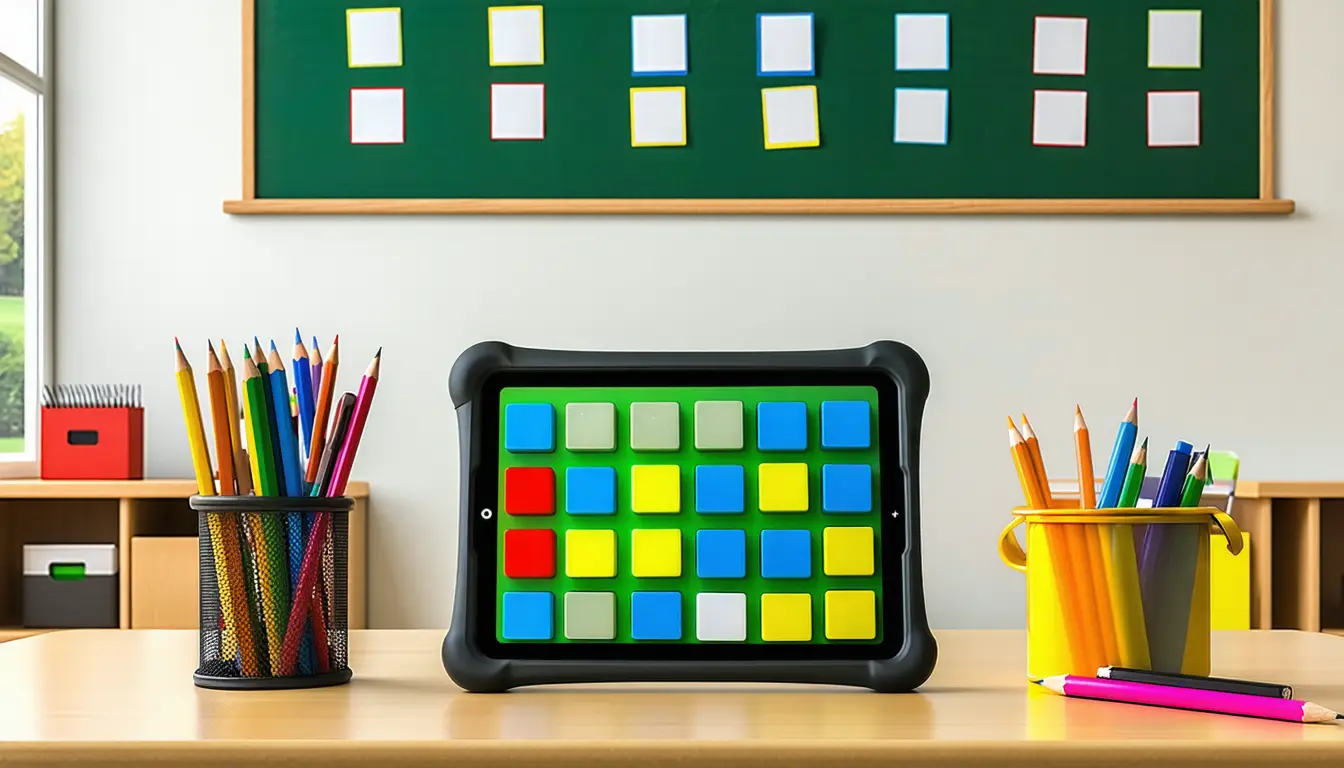
- Geabaire lets non-speaking or minimally speaking children build Irish words and sentences from symbols for synthetic voices to speak aloud.
- The project began when Julia Cummins, mother of two minimally speaking autistic children, asked Trinity's ABAIR researchers for an Irish version of a speech-generating app.
- Cummins says her family first tried adapting an English-language system and soon found it could not accommodate Irish adequately.
Compiled by The ScientistSomething wrong?How this is made
Why it matters
- cost Because schools and families pay nothing for it, the cost of an Irish-language voice aid no longer falls on the household of a non-speaking child starting Irish-medium school.
- decision Families of non-speaking children no longer have to weigh the advice Ní Chiaráin says they too often get, to change their home language because no adequate tool exists.
- precedent Communities speaking other minority languages can now commission AAC with a working example of a system designed from the ground up for a minority EU language.
The case for building from scratch comes from the family that started the project [6]. "Our daughter could hear Irish all around her, but the English-language communication tool she used could not speak it for her," Cummins said [7]. "Irish has its own grammar, word order, idioms and dialects," she said. "We needed a communication system designed around the structures of Irish and its dialects from the outset." [9][10] In a symbol-based aid, the software assembles the sentence that the synthetic voice speaks [1], so those differences have to be handled by the software. Phys.org's report describes Geabaire as the first robust symbol-based communication support tool designed specifically for Irish, built with a deep understanding of the language's structure and dialects [4].
One family's failed adaptation supports the design choice but is thin grounds for claims about outcomes. Emily Barnes, an assistant professor in Trinity's School of Education who co-leads the project [5], said: "Initial research shows how Geabaire is essential to accessing the curriculum and building friendships for children who use AAC." [13] Testing "essential" needs a comparison, for instance with children using an English-language aid in the same classrooms. Without one, the value of an Irish-built tool can't be separated from the value of having any working voice aid at all. The report does not describe that research, its sample, or what the children were compared with.
The service side is easier to check. The tool is free to users and their families as well as to schools [3]. "Access to Irish-medium education is just the first step," Barnes said [14]. Neasa Ni Chiarain, an assistant professor in the School of Linguistic, Speech and Communication Sciences who leads the project with Barnes at Trinity's ABAIR initiative [5], said: "Geabaire ensures that children with complex communication needs can engage from day one of their educational journey." [16]
I think the case for designing around a language's own grammar is well made for Irish, where a family tried the English route first and it did not work [8]. For other languages it is still a proposal. Cummins's PhD is designed to test it, by asking which principles from Geabaire's development transfer to other minoritized and morphologically complex languages [11].
What to watch
- Publication of the initial research Barnes cites, with a sample size and a comparison group, would give Geabaire its first measurable effect size.
- Uptake counts from the 24 new autism classes in gaelscoileanna would show whether free availability turned into daily classroom use.
- An AAC project for another minority or morphologically complex language adopting principles from Cummins's PhD would test the transfer claim.