Science1 publisher2 min readPublished
Sixteen weeks of a banned fungicide left soil bacteria resistant to three antibiotics
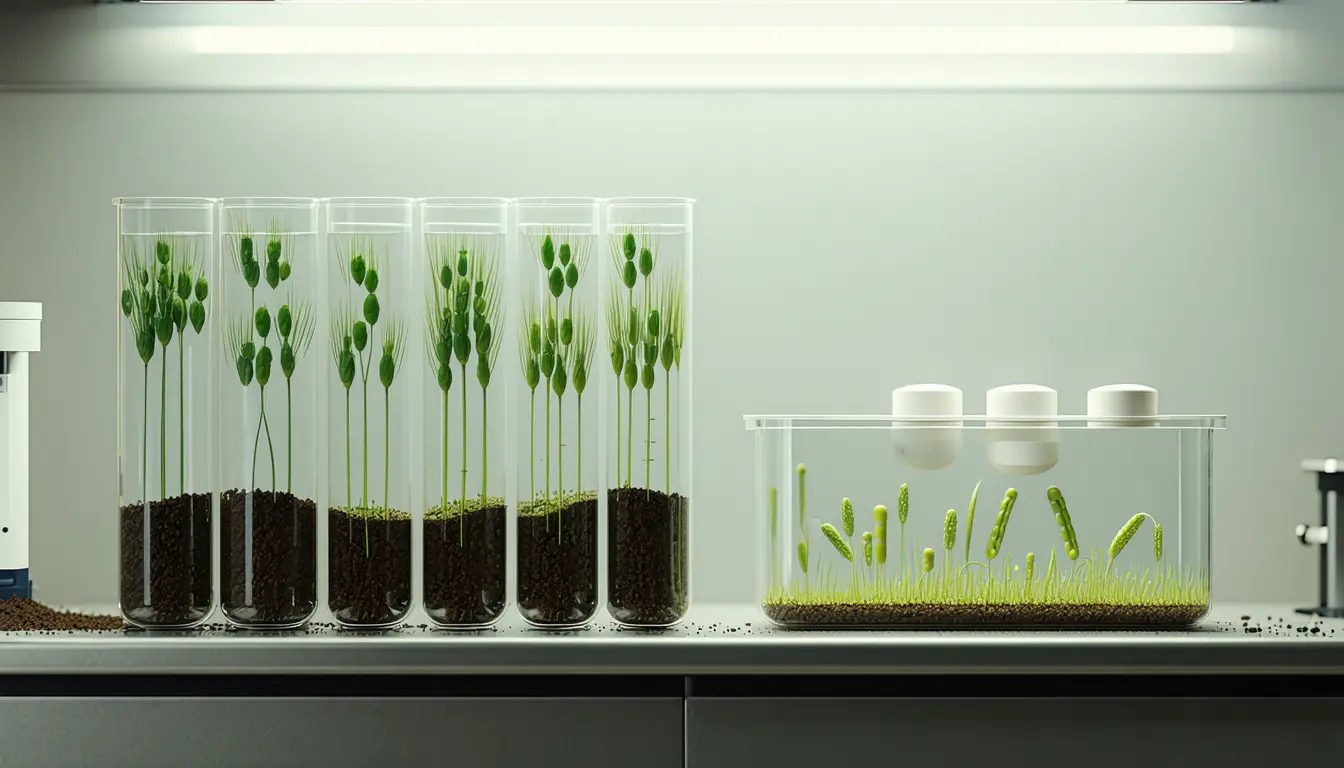
Two Trinity College Dublin studies ran soil microbial communities for 16 weeks under a fungicide, under warming, and under both. One paper reports antibiotic resistance in the exposed bacteria; the other reports weaker barley.
The Scientist · Science desk
What happened
- In controlled laboratory experiments, Trinity College Dublin scientists exposed soil communities to Fubol Gold, a common fungicide formulation, under varying conditions for 16 weeks.
- Genome comparisons picked up increased fungicide resistance in the exposed communities as early as the fourth week of that exposure.
- The same exposure co-selected resistance to three antibiotics: chloramphenicol, sulphatriad and nalidixic acid.
- In the companion study, warming plus fungicide caused a major loss of microbial activity and cut the community's ability to process different carbon sources, while fungicide alone did little to some soil-function measures.
- Barley plants grown in the soils that received both stressors ended up with reduced biomass.
Compiled by The ScientistSomething wrong?How this is made
Why it matters
- constraint Prescribing rules and hospital stewardship reach antibiotics. If field chemistry supplies part of the selection pressure, some of the levers that bound resistance sit with pesticide approval and soil management.
- contradiction phys.org frames the first paper as refuting the idea that antibiotic misuse is nearly the sole driver of resistance. But the design as described compares fungicide with no fungicide and never against antibiotic use, so it adds a candidate driver without ranking it against the known one.
- decision A single-stressor screen would have cleared this fungicide on several soil-function measures. That is an argument for combined-stressor designs, which cost more to run.
- capability Selection was already visible in the genomes at week four. A co-selection screen for other formulations therefore sits within a month of bench time.
The phrase in the first paper's title is "De Novo" [16]. Resistance that evolves inside an experiment is a different claim from resistance that was sitting in the soil already. The timing in the Evolutionary Applications paper fits the first reading: the genome signal was there a quarter of the way through the run [17][2].
What this does not tell you is whether any of it reaches a human pathogen. The published account of both studies covers soil microbial communities and barley plants, and reports no test of transfer into clinical isolates or human infections [20]. The three antibiotics are described by the researchers as broad-spectrum drugs used against eye, urinary tract and intestinal infections [7].
Siobhan O'Brien of Trinity's School of Genetics and Microbiology [19] made the wider claim plainly. "We tend to automatically link the misuse and overuse of antibiotics to the growing antimicrobial resistance crisis, and while that's not wrong, this work suggests our use of fungicides in agricultural settings is also very important in driving that resistance," she said [12].
The formulation matters for how far the result travels. Fubol Gold is now banned in Ireland and the EU, was common before that, and is likely still present in soils there [4]. The source names no other fungicide used in either experiment [24]. The open question is whether a product a grower can buy this season co-selects the same three resistances.
On the second paper, in The ISME Journal, O'Brien's point was about how the stressors were studied [8]. "Similarly, we tend to think of climate change and agricultural chemicals as presenting separate problems and then study these factors independently from each other. But in reality, soils experience these pressures at the same time, and this new research shows that the combined effects can be much more damaging than we might expect," she said [13]. She said that study also found "evidence that the effects of environmental stress could persist even after plants were returned to normal growing conditions" [14].
The announcement carries no effect sizes for either result: no percentage loss of microbial activity, no barley biomass figure, no replicate counts [21]. That is the usual gap between a press summary and a methods section, and it is the difference between knowing the direction of an effect and knowing its size. The scientists say the findings underline the need to factor in how agricultural fungicides can drive multidrug resistance in bacteria that pose a genuine risk to human health, and to consider how multiple environmental pressures interact when predicting the future health and resilience of soils under climate change scenarios [18].
What to watch
- Whether the same co-selection appears with fungicide formulations currently approved in the EU, not only with the withdrawn Fubol Gold.
- Whether any follow-up traces the selected mutations or resistance genes from soil bacteria into clinical isolates.
- The effect sizes and replicate counts in the two full papers, which the announcement does not give.