Science1 publisher3 min readPublished
Goddard workers say the center that built Roman could not build another one now
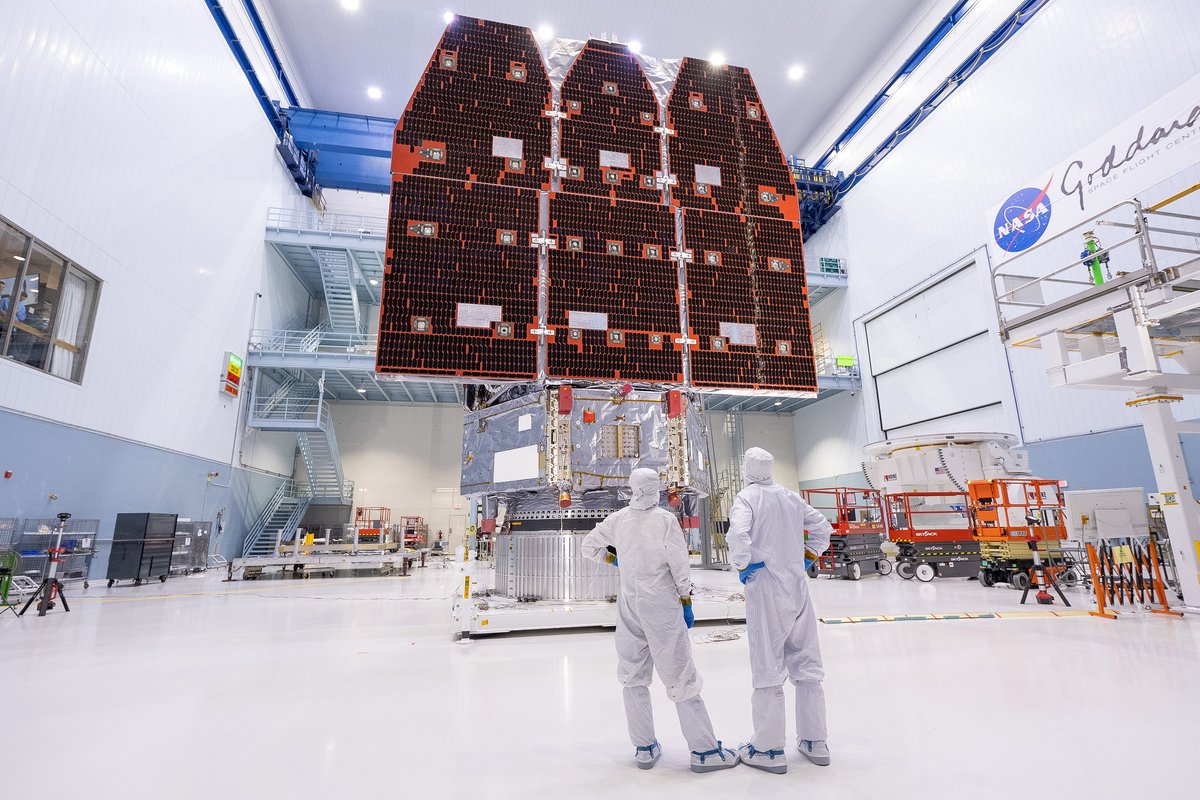
Ten current and former staff told Scientific American that NASA's Goddard Space Flight Center no longer has the people or the equipment to build a telescope like Roman. NASA says flagship missions remain a core Goddard capability.
The Scientist · Science desk
What happened
- The $4.3-billion Nancy Grace Roman Space Telescope launched in late August and is cruising toward its final orbit about a million miles from Earth, with first images expected by the end of the year.
- Goddard's personnel fell 40 percent between March 2020 and January 2025, from 10,000 federal workers and contractors to 6,000, and managers have since hired back 600.
- A Government Accountability Office report dated July 23 found NASA had lost a fifth of its civil servant workforce in a year, affecting more than two dozen major projects.
- NASA administrator Jared Isaacman dismissed that report on X as dated news designed to needlessly elevate people's blood pressure.
Compiled by The ScientistSomething wrong?How this is made
Why it matters
- constraint Rehiring 600 covers about 15 percent of the departures, so restoring in-house build capacity at Goddard runs through both staffing and reopening shuttered labs, on timescales nobody in the account puts a number on.
- decision A program office weighing an in-house Goddard build now has to ask which specific test and technology labs are running, because a lab described as shut down may or may not still have its equipment.
- contradiction The center's management and its departed engineers disagree about buildability, and no capability test appears on either side of the argument. Mission planners are left holding a staff account on one side and an official assertion on the other.
- precedent Congress has restored most of the proposed science money without restoring the people, so the binding limit on the next flagship is hiring speed and lab restarts.
The two headcount figures carrying this story count different things, and neither is a measurement of engineering capacity. One is federal workers and contractors at a single center [4]. The other is civil servants across the whole agency over a single year [8]. They are not interchangeable.
The window on the Goddard figure matters. Scientific American gives it as March 2020 to January 2025, and says the period included U.S. DOGE Service layoffs and several rounds of early retirements in 2025 [4][5]. Those 2025 retirements sit outside the stated end date. The article does not break the 40 percent down by year, so how much is recent and how much is five years of ordinary churn cannot be recovered from the published numbers.
The rehiring is small against the departures. About 4,000 people left, and 600 have come back [20][6]. That puts the center near 6,600, roughly a third below where it started, and the returns cover about 15 percent of the losses [21][22].
Headcount is a proxy, and the claim the workers are making is about capability. Roman launched in late August and is cruising toward an orbit about a million miles out [1]. It was designed and built at Goddard before these reductions [2], so the launch does not test whether the center could start that work again. For the equipment half of the claim the record has this: NASA shut down several testing and technology development labs and broke up engineering teams [7]. One engineer who left in April, after seven years mostly on Roman, said their work ended when their lab was abruptly closed in November 2025 [14]. Scientific American does not say what happened to the hardware in those labs.
NASA officials dispute the conclusion that Goddard cannot build telescopes like Roman now or later [13]. "Conceiving, designing, developing, integrating and operating flagship missions of discovery are core capabilities of the Goddard Space Flight Center," a Goddard spokesperson told Scientific American [12]. The engineer, who asked to remain anonymous for fear of reprisal, said: "It's hard to fathom how management can be so out of touch with what the workforce wants and needs" [15].
The reporting rests on interviews with 10 current and former Goddard workers and several independent space policy experts [17]. Ten accounts from a workforce of thousands put the experience on the record without showing how common it is. The GAO is the wider instrument, and its July report says: "The civil servant departures have left NASA's workforce out of balance with NASA's programmatic needs" [9]. It counted 14 space exploration missions proposed for cancellation or delay across Goddard, Marshall and the Jet Propulsion Laboratory [10]. Congress has rejected most of the White House's proposed science funding cuts [18], while the agency's direction is set by a goal of landing American astronauts on the moon by 2028 [19].
What to watch
- Whether NASA names which testing and technology development labs at Goddard have reopened, and whether their equipment was retained.
- Where the next astrophysics flagship start is assigned: an in-house Goddard build, or a contractor-led one.
- Whether a follow-up GAO count covers contractors as well as civil servants, making the center-level and agency-level figures comparable.