Science1 publisher2 min readPublished
NASA selects three PRISM payloads to scout ice, lava tubes and hazards for Moon Base
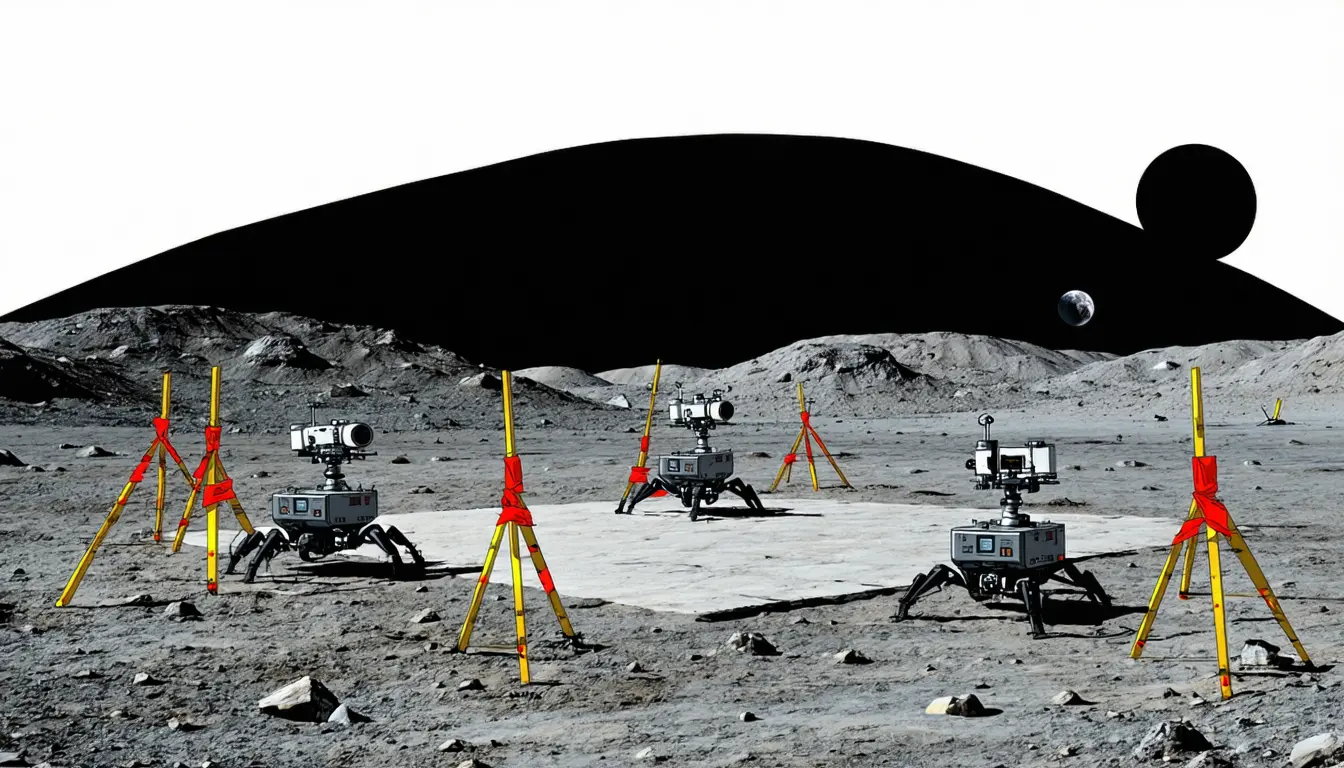
NASA selected three PRISM science payloads to fly on commercial CLPS landers and survey lunar ice, a possible lava tube and surface hazards for Moon Base. Their findings are meant to shape where and how crews live at an outpost NASA is already planning.
The Scientist · Science desk
What happened
- GIMLI will scan beneath the Marius Hills Pit to learn whether it leads into a large underground lava tube.
- DISCO will make what NASA calls the first direct, on-the-ground measurements of ice hidden in lunar micro-cold traps.
- LEMS-SP, an autonomous south-pole station, will count falling micrometeoroids, track volatiles in the Moon's thin outer gas layer and listen for moonquakes with a short-period seismometer.
- The investigations are led by Mehdi Benna of UMBC, Nathaniel Putzig of the Planetary Science Institute and Ariel Deutsch of NASA's Ames Research Center.
Compiled by The ScientistSomething wrong?How this is made
Why it matters
- decision Habitat planners face a fork at Marius Hills: design around a natural shielded void if GIMLI finds one, or look elsewhere for radiation and thermal protection if it does not.
- capability Ground-measured ice locations and amounts would let NASA develop its ice-to-resource technology against data taken inside the micro-cold traps themselves.
- exposure If LEMS-SP flies early enough, the risk that micrometeoroids and moonquakes pose to Moon Base hardware gets a measured baseline before that hardware is placed.
GIMLI is the most tightly framed experiment of the three: one yes-or-no question, asked at one site [5]. If the pit does open into a tube, NASA says, the finding could shift future habitat planning, because a lava tube would offer thermal stability and shielding from ionizing radiation and micrometeoroid bombardment [6]. A negative scan is still a result. The payload's second purpose is to improve understanding of the Moon's volcanic processes, and that holds whatever lies under Marius Hills [5].
For DISCO, what planners need is a quantity. The payload is meant to pinpoint where ice exists and how much of it is there [8]. It will also measure how rocket exhaust disturbs the ground and how stable the surface is for mobility [8]. Those are engineering measurements, and NASA ties them to designing safe surface operations [9].
LEMS-SP is designed as a long-term monitoring station [4]. That suits a hazard monitor. Infrequent impacts and quakes tend to show up only in a long record, so a short deployment would say little about how often they happen. NASA's own wording is careful: the station "could deliver" the hazard assessments needed to keep Moon Base hardware physically safe [4].
Nicky Fox, associate administrator of NASA's Science Mission Directorate, put the ordering in plain terms. "NASA Science is building the ultimate interplanetary survival guide to ensure that science goes first to the lunar surface to provide our future astronaut crews with the vital information, resources, and safety precautions needed ahead of time to survive the night on the Moon," she said [11]. Brad Bailey, director of the directorate's Exploration Science Strategy Integration Office, said each selection "strengthens our ability to deliver ambitious, transformative science to the lunar surface" [13].
In this account, science first means going first within a program NASA has already started. The release presents the payloads as groundwork for building "humanity's first lunar outpost, Moon Base" [1]. Fox linked that outpost to "preparation for sending the first astronauts to Mars" [12]. The three investigations can inform where and how crews would live. In the release, the decision to build the base is taken as settled before any of them fly.
The release does not include launch dates, lander assignments or costs for the three payloads [15]. For a science-first plan, timing matters most. The data can guide habitat design only if they arrive before the designs are settled. NASA says it is increasing its cadence of lunar missions to build Moon Base [14].
What to watch
- NASA assigning CLPS landers and delivery dates to LEMS-SP, GIMLI and DISCO.
- GIMLI's subsurface scan showing whether a large lava tube lies beneath the Marius Hills Pit.
- DISCO's first ground-measured ice amounts from lunar micro-cold traps.