Meta's Muse Spark Open now deploys to your own SageMaker endpoint in BF16 or NVFP4
Meta's Muse Spark Open, an 816B-parameter coding model, is now on SageMaker JumpStart in BF16 and 4-bit NVFP4 variants. The NVFP4 build needs roughly a quarter of the memory, and memory capacity decides which instance you rent.
The Engineer · Build desk
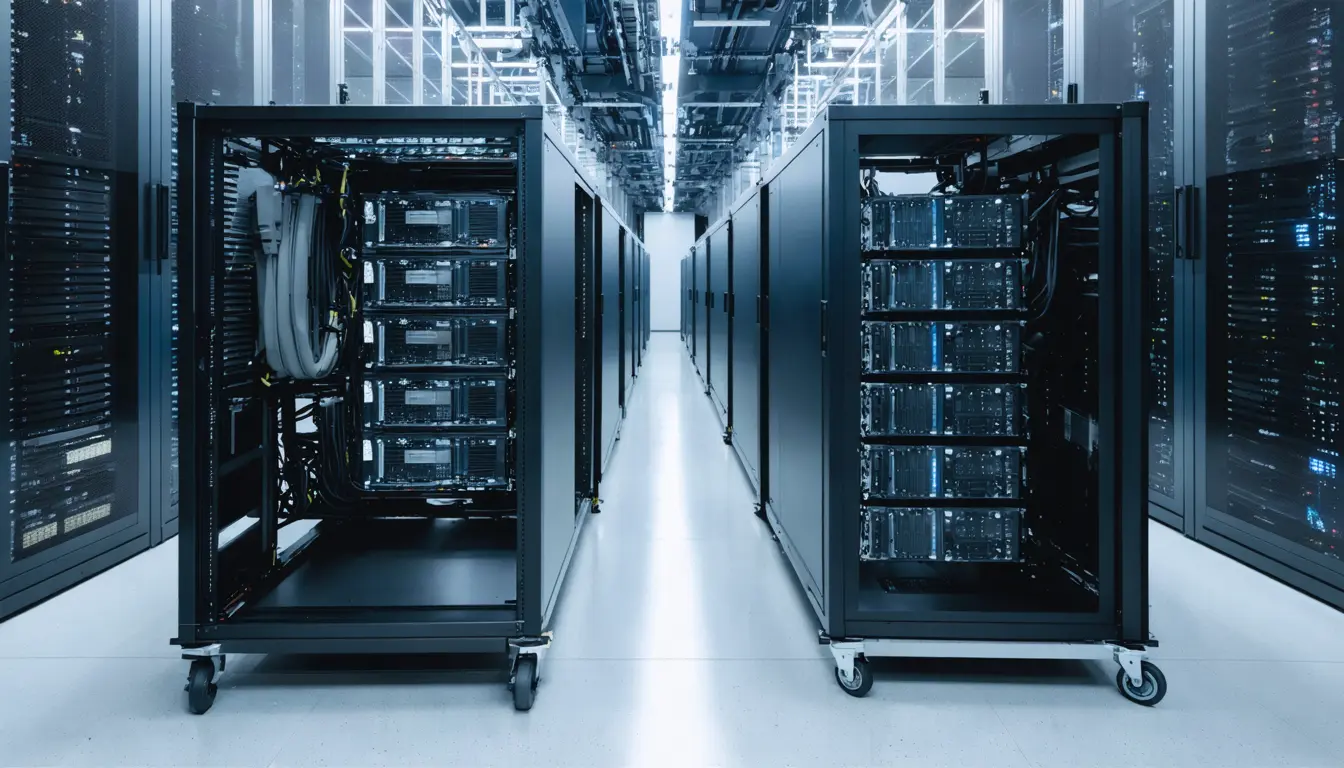
Key figures: serving Muse Spark Open needs GPU memory for all 816 billion parameters; 42 billion parameters are active for each token; the NVFP4 variant stores weights in a 4-bit format that needs roughly a quarter of the memory of the BF16 weights.
| Figure | Value | Note | Claim |
|---|---|---|---|
| Parameters GPU memory must hold to serve the model | 816 billion | 5 | |
| Active per token | 42 billion | 3 | |
| NVFP4 weight format | 4 bit | needs roughly a quarter of BF16 memory | 6 |
What happened
- The model is a mixture-of-experts design in which 42 billion of its 816 billion parameters are active for each token.
- On SageMaker the NVFP4 variant runs on ml.p5e.48xlarge, and the BF16 variant runs on ml.p6-b300.48xlarge.
- The context window is 1 million tokens, which the post says is enough to take in a whole project with its dependencies and legacy code.
- Meta releases the weights under the Muse Model License, which includes the Muse Spark Usage Policy.
Why it matters
- What it limits constraint Sparse activation cuts compute per token but not the memory needed to hold the weights, so even a trial means renting a p5e or p6-b300 class instance.
- Who has to decide decision Teams sizing for cost are told to start on NVFP4, which makes a same-task comparison against BF16 on their own repositories the first test to run.
- Who's exposed exposure Code and prompts are processed on infrastructure the customer configures, so a security review can inspect the account's VPC, KMS key and isolation settings directly.
Sparse activation cuts compute per token. It does not cut the footprint. Of the 816 billion parameters, 42 billion are active for each token [3], about 5.1% [17]. AWS's post says sparse activation keeps per-token compute low, but serving still needs enough GPU memory to hold all 816 billion parameters, so the instance choice comes down to memory capacity [5].
Quantization is the lever on memory. The NVFP4 build stores weights in NVIDIA's 4-bit floating point format and needs roughly a quarter of the memory of the BF16 weights [6]. The post tells readers to try NVFP4 first when sizing for cost, then adds a caveat: "Evaluate it on your own workloads to confirm the quality fits your use case." [16]
The post, published on aws.amazon.com, does not include a quality comparison between the two variants, hourly prices, or the context length tested on either instance. In our view, the first test is a same-task run of both builds on your own repositories. Until a long-context request has completed on the instance you picked, 1 million tokens [2] is the model's ceiling and not a tested figure. "Trial" is also relative: the smaller build still lands on an ml.p5e.48xlarge [7].
AWS says you can deploy in a few steps without managing the serving infrastructure yourself [15]. You still choose the instance type and scaling limits, and you pin the model version, so the model changes only when you redeploy [9]. Pinning matters for evaluation, because the build you tested is the build that answers until you redeploy. The endpoint can sit in your own VPC, with its storage volume encrypted under a KMS key and network isolation turned on [8]. Deployment goes through the JumpStart model catalog in the SageMaker console or the SageMaker Python SDK [4].
Agent work needs more than the endpoint. Meta says the model plans, acts, observes the result and corrects itself over long horizons, and that it was trained to browse the web, coordinate subagents and operate computers [11]. On SageMaker, the post says, your application or agent framework provides the tools, browser and computer-use environment that the model calls [10]. The endpoint also returns the model's reasoning alongside the answer, so you can follow what an agent is doing and why [12].
What to watch
- A published quality comparison of the NVFP4 and BF16 builds on coding tasks, which the AWS post leaves to the customer to run.
- Per-hour pricing for ml.p5e.48xlarge and ml.p6-b300.48xlarge, set against what a realistic trial would cost.
- The terms of the Muse Model License and the Muse Spark Usage Policy for commercial use.
Clarity's read
What the record supports and how the coverage leans. The claims behind it follow.
Reality
- Evidence35
- Adoption
- Not scored
- Hype gap+15
- Incentives
- Not scored
- Confidence70
Claim ledger
Ranked by verification strength, evidence, and original report placement.
- [1]
Muse Spark Open, Meta's coding-optimized open-weight model, is available in Amazon SageMaker JumpStart, with BF16 and NVFP4 quantized variants named Muse-Spark-Open-816B-A42B and Muse-Spark-Open-816B-A42B-NVFP4.
- [2]
The model supports a context window of 1 million tokens, which the post says lets it take in a whole project, including dependencies, legacy code and thousands of files, without splitting a task into smaller pieces.
- [3]
Muse Spark Open uses a mixture-of-experts architecture with 816 billion total parameters, of which 42 billion are active for each token.
- [4]
Customers can deploy the model from the SageMaker JumpStart model catalog in the SageMaker console or with the SageMaker Python SDK.
- [5]
Sparse activation keeps per-token compute low, but serving still requires enough GPU memory to hold all 816 billion parameters, so the instance choice comes down to memory capacity.
- [6]
The NVFP4 variant stores weights in NVIDIA's 4-bit floating point format, which needs roughly a quarter of the memory of the BF16 weights.
- [7]
On SageMaker AI the NVFP4 variant runs on ml.p5e.48xlarge and the BF16 variant runs on ml.p6-b300.48xlarge.
- [8]
The endpoint runs in the customer's AWS account; it can be attached to the customer's own Amazon VPC, its storage volume can be encrypted with an AWS KMS key, and network isolation can be turned on for the container.
- [9]
The customer chooses the instance type and scaling limits and pins the model version, so the model only changes when they redeploy.
- [10]
On SageMaker AI, the customer's application or agent framework provides the tools, browser and computer-use environment that the model calls.
- [11]
Meta says the model plans, acts, observes the result and corrects itself over long horizons, and Meta trained it to browse the web, coordinate subagents and operate computers across desktop, mobile and browser environments.
- [12]
Muse Spark Open is a reasoning model, and the SageMaker AI endpoint returns its reasoning alongside the answer, so the customer can follow what an agent is doing and why.
- [13]
Meta releases the weights under the Muse Model License, which includes the Muse Spark Usage Policy.
- [14]
Muse Spark Open accepts text, images, documents, audio and audio-video as input and returns text.
- [15]
The model can be deployed to a SageMaker AI endpoint in the customer's own AWS account in a few steps, without managing the serving infrastructure yourself.
- [16]
The post says NVFP4 is the variant to try first when you size for cost, and advises: "Evaluate it on your own workloads to confirm the quality fits your use case."
- [17]
About 5.1% of the model's parameters are active for each token.
Get this ledger inside ChatGPT. Ask about any of our stories and the answer brings its figure, each claim’s verdict and the sources. Free, no account.
Sources
2 independent publishers whose own reporting we read for this story.
- aws.amazon.comMeta’s Muse Spark Open now available in Amazon SageMaker JumpStart
2 articles · October 15, 2026
- dev.toMeta's Muse Spark Open Model for Agentic Coding Now on AWS SageMaker JumpStart
1 article · October 15, 2026
Topics and entities
Follow any of these and your For You feed starts watching them — no settings page required.