Product2 publishers3 min readPublished
Meta trades the cameras on its Ray-Bans for three more hours of battery
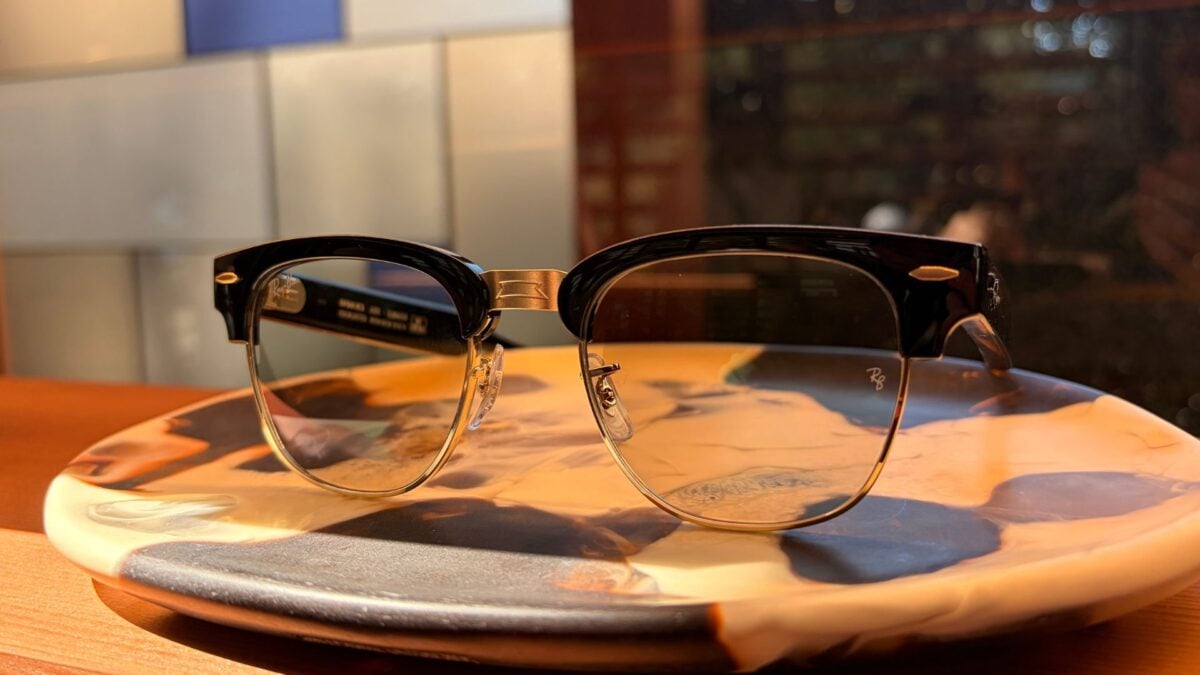
The Ray-Ban Meta Audio arrives on October 13 at $349 with 12 hours of runtime, Dolby Atmos and no camera. The microphones that most no-recording rules were written to catch are still on board.
The Product Desk · Product desk
What happened
- Meta introduced the Ray-Ban Meta Audio at its Connect hardware showcase, the first of its smart glasses to arrive with no camera on board.
- The glasses launch on October 13 at $349 in the US, £319 in the UK and AU$529 in Australia.
- Meta rates the Audio pair at up to 12 hours on a single charge, three hours more than the nine-hour maximum it quotes for the camera-equipped Ray-Ban Meta Gen 3.
Compiled by The Product DeskSomething wrong?How this is made
Why it matters
- constraint The microphones stayed, so a building whose rule covers recording devices still catches these glasses.
- cost Anyone who buys these for the hearing feature pays for the hardware twice over: the monthly fee passes the $349 purchase price inside two years, and that is before any price is set outside the US.
- decision The choice moves from which Ray-Ban to which sensor: give up visual context for Meta AI, or keep the camera and the ban risk that comes with it.
- contradiction Meta is not tying this launch to the backlash, and it is still calling the indicator light on its camera glasses unmissable, so the reading that this is a privacy concession rests on the product existing at all.
Someone will walk into an office lobby on October 13 in a pair of Ray-Bans that cannot take a picture, and the person at the desk will have to take their word for it.
Smart glasses are being banned from offices, event spaces, pubs and courtrooms, among other venues [9]. The Audio pair still captures audio of the wearer and of the people standing near them, as TechRadar noted after its briefing [14]. Whether it gets through a door depends on whether the rule there names cameras or names recording devices.
Meta itself never made that argument. According to TechRadar, its pre-Connect briefing led on battery life and left the Audio glasses unconnected to the backlash [10]; Gizmodo reported the same, that Meta never said it is making audio glasses because people are worried about cameras [11]. In that briefing Meta also pushed back on claims its specs can be used covertly, describing the recording indicator as "a light you can't miss" and pointing to improved tamper protection in recent updates [12]. TechRadar reported that Meta did not disclose whether or how it would make that indicator more obvious [13].
Meta sold runtime instead. Up to 12 hours on a charge against a nine-hour maximum for the camera-equipped Gen 3 [4], about a third more [20], and TechRadar said the figure needs day-to-day testing before it can be trusted [25]. The frames weigh 43g, six grams under the lightest Gen 2 design [5][22]. There is Dolby Atmos support, and no display at all [6][7].
The subscription is the part a buyer should price properly. Hearing Enhancement, aimed at people with mild or moderate hearing loss, costs $14.99 a month in the US or comes as part of a Meta One subscription, with pricing elsewhere still to be confirmed [16]. At that rate the feature runs to $359.76 over 24 months, more than the $349 the glasses cost [21]. Meta employees at the event told TechRadar it was the best thing they had worked on at the company [17].
For anyone enforcing a policy, the camera-free build only helps if it can be identified at the door. Gizmodo described the Audio glasses as similar to the camera model "in pretty much every other way" [19], and Meta kept the camera line running with the Ray-Ban Meta Gen 3 announced the same day [18]. The check is looking for the lens on a Clubmaster or Burbank frame that otherwise looks like every other pair [8].
For a buyer, it comes down to the rule on the door and to Meta AI. The room you need these in either prohibits cameras or prohibits recording, and that decides admission. The other half is fixed: the Audio pair cannot pass visual context to Muse [15].
What to watch
- Whether any office, venue or court that banned smart glasses rewrites its rule to admit the audio-only model.
- Whether Meta changes the recording indicator on its camera glasses, having said only that tamper protection improved.
- What Hearing Enhancement costs outside the US, and whether Meta One bundling becomes the default route to it.