ProductNot yet confirmed elsewhere1 publisher3 min readPublished
LAPD's Flock reset shows the contract, not the camera, is now the product
The department let its Flock agreement lapse over data ownership, yet 138 city cameras keep filling a cloud it cannot read. The replacement deal is a spec sheet of data terms.
The Product Desk
What happened
- LAPD let its operating agreement with Flock Safety lapse last week over unresolved questions about who owns the plate reader data and who can access it.
- 138 pole-mounted Flock cameras are still running on city property, but the department says it no longer has regular access to what they collect.
- Officials told the Police Commission on Tuesday they are negotiating a replacement agreement with more protections built in.
- Flock is one of three plate reader vendors the city uses, alongside Axon and Motorola.
Why it matters
- constraint Cutting access is not cutting collection, so the threat to walk away is weaker than it looks: the vendor's cloud keeps filling while the customer waits.
- decision Any agency renewing an ALPR deal now has specific clauses to copy, which moves the vendor comparison off detection claims and onto data handling.
- exposure Binding the vendor that attracted the scrutiny leaves the same unaddressed risk sitting with two quieter suppliers still operating in the same city.
- contradiction Flock's position is that it already complies with California's limits on federal sharing, which is hard to square with a customer letting the deal expire over exactly that question.
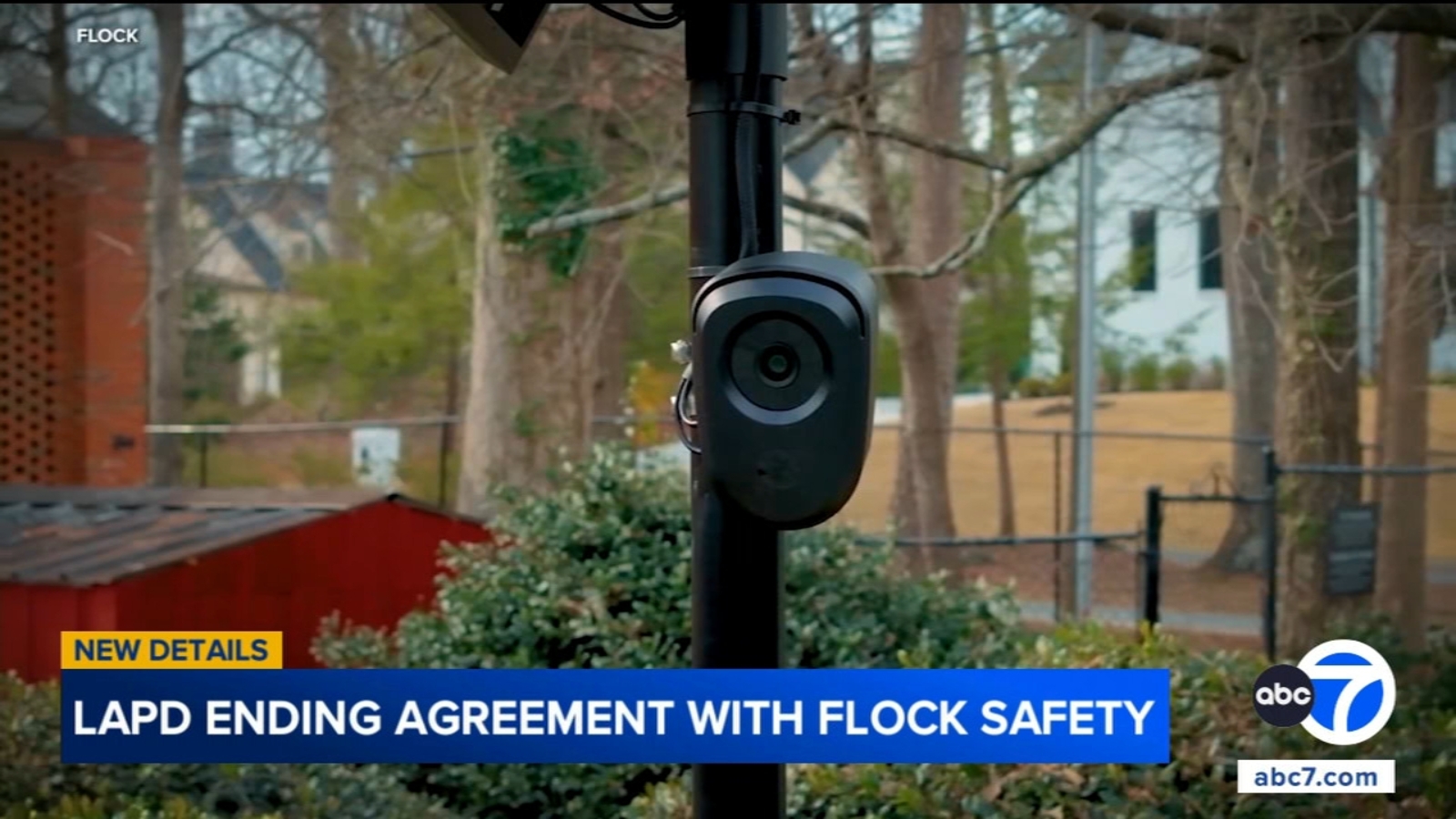
A lapsed operating agreement does not switch off a pole-mounted camera. Cmdr. Randy Goddard told the Police Commission that the images are still going into Flock's cloud and that LAPD investigators could reach them later if a new contract is finalised [9]. During the gap, the only thing the department turned off was its own reading of the feed.
The inspector general's audit gives the scale of what keeps accruing. Flock cameras scanned more than 210 million plates over two months starting last August [14], which works out to roughly 3.4 million scans a day [21]. In the same window, 337 alerts led to the recovery of a stolen vehicle [16], and 161 plates flagged as stolen turned out to be wrong, though the report says not every one of those produced a police intervention [15]. That is about one erroneous stolen-vehicle flag for every two recoveries [22].
What is being renegotiated is not the hardware or the hit rate. Under the proposed language, the LAPD would own "every image, every record, all metadata" captured on the cameras [1]. Flock would be barred from selling, publishing, disclosing or sharing that data with any outside entity, and from using it to train artificial intelligence or for other commercial purposes [2]. Any breach would have to be reported to the city in writing within 24 hours [3]. Those clauses are the differentiator now, and they exist because the criticism of Flock was about downstream sharing with state and federal agencies, which detractors link to the Trump administration's immigration enforcement [4].
The awkward part sits one line further down in the same audit. Barragan's report found the department has no formal contracts or agreements with Axon and Motorola addressing ALPR data security, privacy and access control [13], and that its existing agreements with all three vendors lack clear language on retention and third-party sharing [17]. The vendor that drew the political heat is the one that ends up contractually bound; the two that did not keep operating on nothing much.
Flock says it works with roughly 5,000 law enforcement agencies and that its technology complies with the California law limiting what can be shared with federal authorities [23]. It also sent the department its own suggested changes to the draft on Monday, according to LAPD chief information officer Dean Gialamas [10], and did not respond to the Los Angeles Times before publication [11]. Whatever survives that markup, not the press release, is the policy.
Dozens of mostly smaller agencies have simply cut Flock off [20]. Los Angeles is testing the other route: keep the tool, and make the terms carry the safeguards. Chief Jim McDonnell's line about a "valuable investigative tool" that must be handled "responsibly" [18] is being converted into contract clauses, which is where it can be enforced or quietly traded away.
What to watch
- Whether Flock's Monday redlines survive with the metadata ownership, no-AI-training and 24-hour breach clauses intact.
- Whether the LAPD signs anything with Axon and Motorola covering the data-security and access-control gaps the inspector general identified.
- Whether the inspector general reports false-flag and recovery numbers for the period when the department had no regular access to Flock data.
Clarity's read
What the record supports and how the coverage leans. The claims behind it follow.
Reality
- Evidence68
- Adoption71
- Hype gap+18
- Incentives74
- Confidence63
Claim ledger
Ranked by verification strength, evidence, and original report placement.
- [1]
Under the language in the department's proposed new contract with Flock, the LAPD would retain ownership of "every image, every record, all metadata" from data captured on the cameras.
- [2]
Goddard said Flock would not be allowed to "sell, publish, disclose or share" any of the data to any outside entity or use them to train artificial intelligence or for other commercial uses.
- [3]
Under the proposal, Flock would have to alert the city in writing within 24 hours of any data breach.
- [4]
Flock has been criticized for sharing its data with state and federal law enforcement agencies, which detractors say helps fuel the Trump administration's immigration crackdown by letting authorities track the movements of undocumented immigrants.
- [5]
The LAPD said last week it had halted its relationship with Flock Safety over concerns about how the company stores and shares data collected from automated license plate readers.
- [6]
Police officials said Tuesday they are in the process of negotiating a new deal with Flock that includes more safeguards.
- [7]
Cmdr. Randy Goddard, who runs the LAPD's information technology bureau, said the department let its previous operating agreement with Flock lapse last week because of lingering questions over who owns the data collected by the company's plate readers and who has access to it.
- [8]
The LAPD said 138 pole-mounted Flock cameras are still operating on city property, but the department no longer has regular access to the data being gathered.
- [9]
Goddard said the information is being stored in the cloud and could be obtained by LAPD investigators in the future if a new contract is finalized.
- [10]
Dean Gialamas, the LAPD's chief information officer, said Flock sent the department suggested changes to the proposed contract on Monday.
- [11]
A Flock spokesperson did not immediately respond to an inquiry from the Los Angeles Times.
- [12]
Flock is one of three vendors used by the city for automated license plate readers; the other two are Axon and Motorola.
- [13]
A report by LAPD Inspector General Matthew Barragan said the department lacks formal contracts or agreements with its two other plate reader vendors, Axon and Motorola, to address ALPR data-security, privacy and access-control requirements.
- [14]
Barragan's report said that over a two-month period starting last August, Flock cameras scanned more than 210 million license plates.
- [15]
The report said that in 161 instances a plate the system flagged as stolen turned out to be wrong, although not every one of those cases led to a police intervention.
- [16]
The report found that 337 alerts did lead to the recovery of a stolen vehicle.
- [17]
Barragan's report said there were numerous limitations in the department's existing agreements with the three companies, including a lack of clear language on how long data are retained and how they are shared with third parties or other law enforcement agencies.
- [18]
LAPD Chief Jim McDonnell told the Police Commission that Flock's plate reader technology is a "valuable investigative tool" but one that must be handled "responsibly".
- [19]
Flock operates 138 pole-mounted cameras on city property along with potentially hundreds more that are privately owned.
- [20]
Dozens of mostly smaller law enforcement agencies have severed their ties to Flock in recent months.
- [21]
More than 210 million scans across a two-month period is roughly 3.4 million plate scans a day.
- [22]
The 161 erroneous stolen-vehicle flags amount to about one wrong flag for every two alerts that recovered a stolen vehicle.
- [23]
Flock has said that it contracts with roughly 5,000 law enforcement agencies nationwide and that its technology complies with a California law that limits what information can be shared with federal authorities.
Sources
1 independent publisher whose own reporting we read for this story.
- latimes.comLAPD renegotiating deal with license plate reader company Flock Safety - Los Angeles Times
1 article · August 25, 2026
Topics and entities
Follow any of these and your For You feed starts watching them — no settings page required.
Topics
- Interagency and Federal Data SharingFollow
- Police Technology OversightFollow
- AI Training Data RestrictionsFollow
- Vendor Data GovernanceFollow
- ALPR and camera surveillanceFollow
- Public Sector ProcurementFollow