InvestNot yet confirmed elsewhere1 publisher2 min readPublished
Korean mask sheet exports up 25.8% to $414M, and the bottleneck is yield, not money
Seven-month exports reached $414.36 million, but a hydrogel line costs roughly $360,000 and needs 20 to 30 trained workers. Yield per line, not demand, is the variable worth underwriting.
The Investor · Invest desk
What happened
- Korea shipped $414.36 million of mask sheets in the first seven months, 25.8% more than a year earlier, according to the Korea Customs Service.
- Hydrogel sheets retail in North America at about $5 each, or roughly $19 for a pack of four, per the Korea IR Council.
- Domestic production has been limited to Genic, Cosmax, Encos, iCure and Jinkostec, with Cosmecca Korea recently adding a line.
- Genic has gone from eight lines in the first quarter to twelve, with three more due to run from October.
Why it matters
- constraint Three new lines cost roughly 2.7% of one quarter's projected revenue at Genic, so capital is not the cap on output; trained operators and stable yield are, and those cannot be ordered forward.
- decision Brands scaling hydrogel must pick between a queue at an experienced ODM and unproven yields at a new entrant, and that allocation decides who keeps the premium.
- precedent On Meritz's trickle-down reading, small and mid-sized ODMs win orders on availability rather than capability, which is precisely how a scarcity premium disperses.
- contradiction Grand View Research's 2030 hydrogel market of $240 million is about 58% of seven months of Korean mask sheet exports, so either that forecast is stale or hydrogel is still a thin slice of the 25.8%.
A hydrogel line costs up to about 500 million won, employs 20 to 30 workers and occupies some 30 metres of floor [8]. At the exchange rate implied by the Korea IR Council's retail prices, the equipment is about $361,000 [18][19]. Hana Securities puts Genic's third-quarter revenue at 55.5 billion won [11]. The three lines Genic intends to run from October therefore cost, at the top of that range, roughly 2.7% of one quarter's projected sales [10][20]. Whatever is rationing these masks, it is not the price of the machinery.
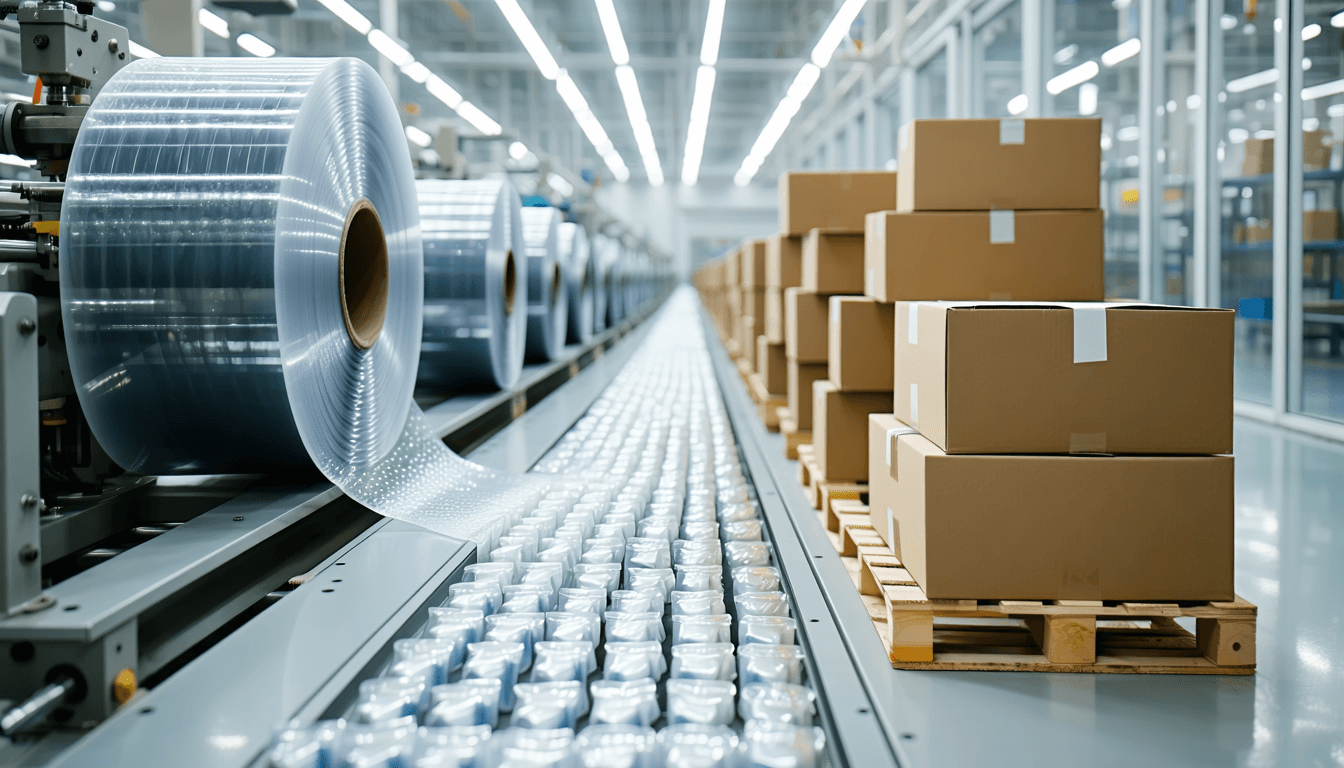
The rationing sits on the labour side. Production requires blending, high-temperature coating, cooling, moulding, punching and sealing; brand-specific sizes, shapes and folding methods put a ceiling on automation; material is lost when masks are cut to a face shape; and defect rates move with an operator's skill [7]. Capacity therefore scales with trained people and with yield, neither of which arrives on a delivery truck. Cosmax is described as still working off early yield problems as it accumulates production experience [12]. That is the informative detail here: a large ODM holding the technology entered the category below yield.
The shelf corroborates the shortage. A four-pack at about $19 works out to $4.75 a sheet against $5 for a single, a discount of 5% [5][21]. Buyers taking four units are getting almost nothing for the volume, which is not how a category prices when lines are idle.
The customs series is where the caution belongs. Seven-month exports of $414.36 million are up 25.8% [2], while July alone rose 14.1% to $60.96 million [3]. Backing July out, the first six months grew 28.1% year on year against July's 14.1% [22]. One month is not a trend, and the series does not separate hydrogel from non-woven sheets, which are only described as one driver of the growth [16], so it cannot tell you whether that print reflects a supply ceiling, a base effect or mix.
Supply is now being added by six named makers, including Cosmecca Korea's four new lines at Cheongju [9][12]. Genic alone would go from eight lines to a planned fifteen, an increase of 87.5%, implying 300 to 450 people on this product at 20 to 30 workers a line [23][24]. Demand headroom is real: Park Jong-dae of Meritz Securities puts K-beauty export growth to Europe above 40% year on year [14]. But the $5 sheet is a scarcity price, and every line that reaches stable yield works against it. The disclosure that would settle this is output per line, and no one publishes it.
What to watch
- Whether the next two monthly export prints recover toward the first-half pace or keep decelerating as new lines start up.
- Genic's third-quarter result against Hana Securities' 55.5 billion won estimate, and whether any per-line output figure is disclosed.
- Whether Cosmecca Korea's Cheongju lines and Cosmax reach yields comparable to incumbents, which would end the scarcity premium.
Clarity's read
What the record supports and how the coverage leans. The claims behind it follow.
Reality
- Evidence48
- Adoption66
- Hype gap+22
- Incentives68
- Confidence52
Claim ledger
Ranked by verification strength, evidence, and original report placement.
- [1]
Grand View Research projected the global hydrogel face mask market will grow from $116 million in 2023 to $240 million in 2030, a compound annual growth rate of 11.0%.
ReportedSupportedSource: Grand View Research2 sources— create a free account to open themView cited source - [2]
Korea's mask sheet exports totaled $414.36 million in the first seven months of the year, up 25.8% from $329.30 million a year earlier, according to the Korea Customs Service on the 25th.
- [3]
Mask sheet exports rose 14.1% year-on-year last month to $60.96 million.
- [4]
A standard sheet mask soaks essence into non-woven or cotton fabric, while a hydrogel mask is made by setting a gel formulation blended with active ingredients into a face shape; it is cited as fitting closer, feeling cooler and wearing longer, and sells at a higher price.
- [5]
According to the Korea IR Council, hydrogel mask sheets sell for about $5 (around 6,920 won) per sheet and around $19 (around 26,320 won) for a pack of four at major North American retail channels.
- [6]
Hana Securities said in a recent report that supply is failing to keep up with global demand for hydrogel mask sheets.
- [7]
Hydrogel masks must go through blending of raw materials, high-temperature coating, cooling, molding and punching, and sealing; because brands differ in size, shape and folding method there are limits to full automation, raw material is lost when cutting masks into a face shape, and defect rates vary with a worker's skill, making yield management difficult.
- [8]
Building a single hydrogel production line requires up to about 500 million won, each line is understood to employ 20 to 30 workers, and the equipment stretches about 30 meters long.
- [9]
Domestic hydrogel manufacturers are limited to Genic, Cosmax, Encos, iCure and Jinkostec, with Cosmecca Korea recently joining the market with its own production line.
- [10]
Genic increased its production lines from eight in the first quarter to 11 in the second quarter, added a 12th last month, and plans to install three more by next month and bring them online from October.
- [11]
Hana Securities projected Genic's third-quarter revenue at 55.5 billion won.
- [12]
Cosmecca Korea built four production lines at its Cheongju plant this year, and Cosmax has been improving early yield problems as it accumulates production experience while expanding eye patches and its client base using hydrogel technology.
- [13]
Park Jong-dae, an analyst at Meritz Securities, said in a report on the 19th that as K-beauty indie brands grow larger and diversify production sources, benefits are spreading even to small and mid-sized ODM firms, and that "a true trickle-down effect has begun."
- [14]
According to Park Jong-dae, K-beauty exports to Europe are growing at a rate exceeding 40% year-on-year.
- [15]
After Biodance products gained popularity overseas, Korean brands including Medicube, Anua, Mediheal, Ingredient Editor and Torriden are expanding related lineups, with US sales points widening to Sephora, Target, Costco and Walgreens.
- [16]
The hydrogel mask sheet is described as one of the products driving recent growth in Korea's mask sheet exports.
- [17]
Grand View Research's projected 2030 global hydrogel face mask market of $240 million equals about 58% of Korea's seven-month mask sheet export total.
- [18]
The won-dollar rate implied by the quoted retail prices is about 1,384 won per dollar.
- [19]
A hydrogel line costing up to 500 million won is about $361,000 at the implied rate.
- [20]
Three new lines at the top of the stated cost range total 1.5 billion won, about 2.7% of Genic's projected third-quarter revenue.
- [21]
The four-pack price implies $4.75 per sheet, 5% below the single-sheet price of $5.
- [22]
Excluding last month, the first six months of exports grew about 28.1% year on year, against 14.1% growth in the latest month.
- [23]
Genic's line count would rise from eight to a planned fifteen, an increase of 87.5%.
- [24]
Fifteen lines at 20 to 30 workers each implies 300 to 450 workers.
Sources
1 independent publisher whose own reporting we read for this story.
- en.sedaily.comKorean Hydrogel Masks Sell Out Abroad as Supply Lags Demand
1 article · August 25, 2026
Topics and entities
Follow any of these and your For You feed starts watching them — no settings page required.
Topics
Entities
- GenicFollow
- CosmaxFollow
- Cosmecca KoreaFollow
- EncosFollow
- iCureFollow
- JinkostecFollow
- Korea Customs ServiceFollow
- Hana SecuritiesFollow
- Meritz SecuritiesFollow
- Park Jong-daeFollow
- Korea IR CouncilFollow
- Grand View ResearchFollow
- BiodanceFollow
- MedicubeFollow
- AnuaFollow
- MedihealFollow
- Ingredient EditorFollow
- TorridenFollow
- SephoraFollow
- TargetFollow
- CostcoFollow
- WalgreensFollow