Invest1 publisherNot yet confirmed elsewhere3 min readPublished
Korea's SMR review standards trail the first permit filings by four years
Korea's nuclear regulator targets 2032 for SMR review standards, four years after developers such as TerraPower begin seeking construction permits. For SK Innovation's consortium, the delay comes from Seoul's rulebook and staffing, since TerraPower already holds a US construction permit.
The Investor · Invest desk
What happened
- Developers plan three SMR prereview filings in 2027 and five in 2028, according to an NSSC strategy submitted to Democratic Party lawmaker Hwang Jung-a.
- TerraPower's Natrium, which it is developing with a consortium of SK Innovation and Korea Hydro & Nuclear Power, is among the designs lined up for 2027.
- Korea's current technical standards were written for large light-water reactors, while many SMR designs are cooled by sodium or molten salt.
- A single temporary NSSC division handles all SMR licensing, and 18 of its reviewers are committed to the homegrown i-SMR.
- An OECD Nuclear Energy Agency assessment rated Korean SMR designs above average overall but low on licensing and siting.
Compiled by The InvestorSomething wrong?How this is made
Why it matters
- constraint Even if every planned hire arrives, Korea can give full review to only about two SMR designs at a time, so applicants will be handled in sequence.
- decision Developers have to choose between filing in 2027 and 2028 against unfinished standards or holding back until the 2032 rules exist.
- exposure SK Innovation and KHNP's Korean timeline for Natrium depends on regulator hires that the ministries have not yet approved.
The commission's staffing plan shows how a 2032 rulebook turns into a queue. It estimates that each reactor design needs 15 to 20 reviewers [11], and it wants 33 SMR staff in 2027 [12]. Subtract the 18 already working on the i-SMR [10] and 15 people are left for the three designs due for prereview that year [2]. Assuming a prereview needs the same headcount as a full review, that is about five per design, a third to a quarter of what the commission says each design needs [21]. The target peaks at 39 in 2029 and 2030 [12]. That covers about two designs at once [22], against nine applications planned for 2027 and 2028: eight prereviews plus the i-SMR construction permit [23].
None of those hires is secured. Talks between ministries on the staffing have been pushed back to the second half of this year [13]. The US Nuclear Regulatory Commission has turned its advanced reactor unit into a full office with 310 to 330 staff [14], roughly eight times Korea's peak target [24]. Britain's Office for Nuclear Regulation is training more than 30 inspectors for its Advanced Nuclear Technologies team while it handles six designs [16].
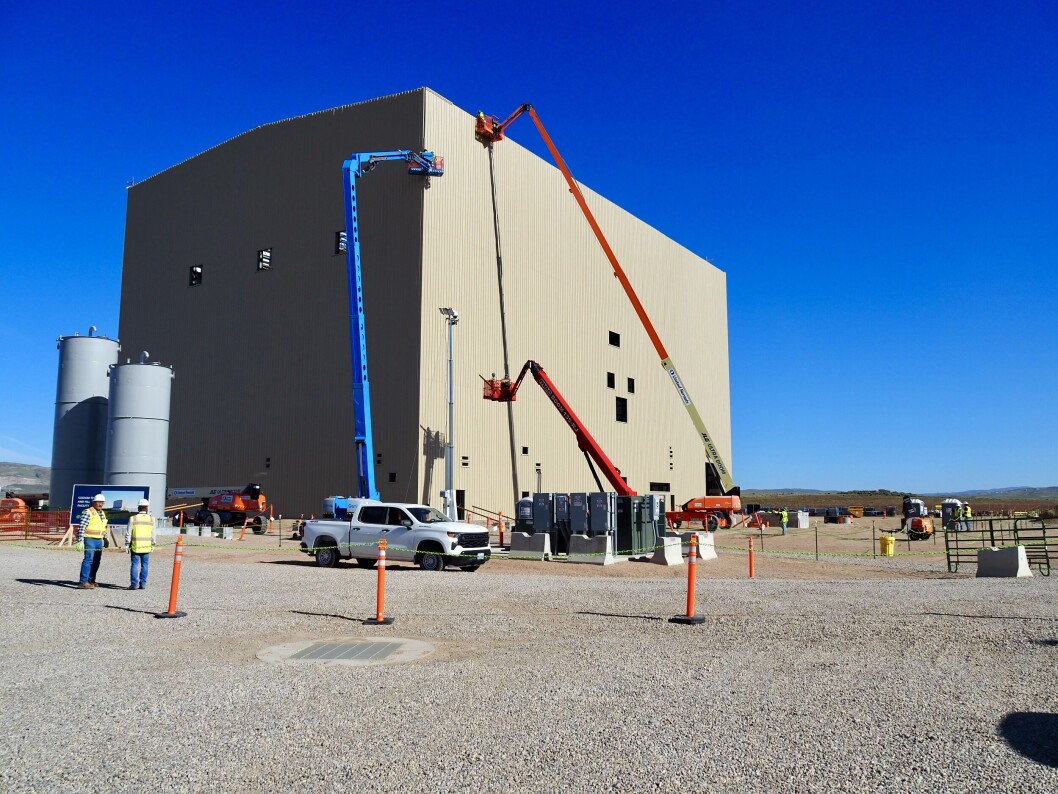
The rulebook will take longer to fix than the staffing. The commission plans a technology-inclusive, risk-informed and performance-based review method, with 2032 as the target date [7]. Companies filing for construction permits from 2028 would likely wait three to four years for it [8], and TerraPower and other developers plan to file in 2028 and 2029 [5]. In March the NRC issued TerraPower a construction permit for Kemmerer Unit 1 in Wyoming, its first approval of a commercial non-light-water reactor in more than 40 years [15].
"Our SMRs are recognized worldwide for their technology, but they are stuck at the threshold of moving on to demonstration and construction," Hwang said [19]. "To review them on time while keeping safety intact, the regulator needs the expertise and the staff so that the critical window for commercializing SMRs is not lost." [20]
The calendar could break three ways. If the staffing talks deliver, the 2027 filings could proceed before final standards exist, because a prereview is a check of documents for what an application still needs [3]. Alternatively, the commission could finish the i-SMR first and take other designs in turn, as its current allocation of reviewers already implies [10]. The third possibility is that the 2032 target slips.
I'd expect the second, and its cost falls on non-light-water entrants. TerraPower's US permit was for that kind of reactor [15], and that kind is the hardest to fit into a rulebook written for light-water plants [6]. The counter-case is that prereview is paperwork and the permit filings come a year or two later [2][5], so a staffing deal this year could narrow the gap to whatever interim review the commission can run. This view would be wrong if a signed agreement for the 33 staff and a published interim route for non-light-water designs both arrive before the 2028 filings. The reporting does not include what SK Innovation or Korea Hydro & Nuclear Power has committed to the venture [4], so the cost of a three-to-four-year wait cannot yet be put in won.
What to watch
- Whether the three 2027 prereview applications, Natrium included, are filed on schedule or held until standards exist.
- Whether the NSSC's small modular reactor safety division moves from a temporary body to a permanent one.
- Any disclosure by SK Innovation or KHNP of its financial commitment to the Natrium venture, the figure needed to price the wait.
Clarity's read
What the record supports and how the coverage leans. The claims behind it follow.
Reality
- Evidence55
- Adoption10
- Hype gap+10
- Incentives45
- Confidence50
Claim ledger
Ranked by verification strength, evidence, and original report placement.
- [1]
Korea's nuclear regulator won't have SMR review standards in place until 2032, four years after SMR developers plan to start seeking construction permits.
- [2]
Korean and foreign developers plan to file three SMR prereview applications in 2027 and five in 2028, according to a regulatory strategy the Nuclear Safety and Security Commission submitted to Democratic Party Rep. Hwang Jung-a.
- [3]
In a prereview, a developer submits documents before applying for a construction permit, and the regulator checks what needs to be supplemented.
- [4]
The three designs lined up for 2027 prereview include the Natrium reactor of US developer TerraPower, which is working with a consortium of SK Innovation and Korea Hydro & Nuclear Power.
- [5]
A construction permit application for the homegrown i-SMR is set for 2028; TerraPower and other developers plan to apply for construction permits in 2028 and 2029.
- [6]
Korea's current nuclear technical standards were written for large light-water reactors; many SMRs are non-light-water designs cooled by sodium or molten salt, which makes the existing standards hard to apply.
- [7]
The commission plans to develop tailored technical standards and a technology-inclusive, risk-informed and performance-based review methodology, with a target date of 2032.
- [8]
Companies that apply for construction permits from 2028 would likely have to wait three to four years for review standards to be in place.
- [9]
Only one unit at the NSSC handles SMR licensing and standards: the small modular reactor safety division, a temporary body.
- [10]
18 NSSC reviewers are tied up with the domestic i-SMR alone, leaving the commission little capacity to review other designs.
- [12]
By the commission's own estimate, its SMR staff needs to reach 33 in 2027, 37 in 2028 and 39 in 2029 and 2030.
- [13]
Interministerial talks on securing the SMR staff have been pushed back to the second half of this year.
- [14]
The US Nuclear Regulatory Commission has elevated its advanced reactor unit to a full office with 310 to 330 staff.
- [15]
The NRC issued a construction permit for TerraPower's Kemmerer Unit 1 in Wyoming in March, its first approval of a commercial non-light-water reactor in more than 40 years.
- [16]
Britain's Office for Nuclear Regulation is handling six reactor designs on a separate track and training more than 30 inspectors for its Advanced Nuclear Technologies team.
- [17]
In an OECD Nuclear Energy Agency assessment, the i-SMR scored 22 points and SMART100 scored 19, above the overall average of 17.38.
- [18]
The Korean designs scored low on licensing and siting in the OECD Nuclear Energy Agency assessment, taken as a sign the regulatory system lags the technology.
- [19]
"Our SMRs are recognized worldwide for their technology, but they are stuck at the threshold of moving on to demonstration and construction."
- [20]
"To review them on time while keeping safety intact, the regulator needs the expertise and the staff so that the critical window for commercializing SMRs is not lost."
- [21]
After the 18 i-SMR reviewers, the 2027 staffing target of 33 leaves 15 reviewers for three prereview designs, about five per design, one third to one quarter of the 15 to 20 needed per design (assuming the 18 count within the 33 and prereviews need full headcount).
- [22]
The peak staffing target of 39 covers about two designs reviewed simultaneously at 15 to 20 reviewers each.
- [23]
Nine applications are planned for 2027 and 2028: three prereviews in 2027, five in 2028, and the i-SMR construction permit application in 2028.
- [24]
The NRC's advanced reactor office staff of 310 to 330 is roughly eight times the NSSC's peak SMR staffing target of 39.
Sources
1 independent publisher whose own reporting we read for this story.
- koreajoongangdaily.comKorea's SMR push: Top tier tech hits regulatory bottleneck
1 article · October 6, 2026
Topics and entities
Follow any of these and your For You feed starts watching them — no settings page required.
Topics
- Advanced non-light-water reactorsFollow
- Nuclear regulationFollow
- Small Modular ReactorsFollow
Entities
- Nuclear Safety and Security CommissionFollow
- TerraPowerFollow
- NatriumFollow
- SK InnovationFollow
- Korea Hydro & Nuclear PowerFollow
- i-SMRFollow
- SMART100Follow
- US Nuclear Regulatory CommissionFollow
- Kemmerer Unit 1Follow
- Office for Nuclear RegulationFollow
- OECD Nuclear Energy AgencyFollow
- Hwang Jung-aFollow
- Democratic Party of KoreaFollow