Invest1 distinct publisher3 min readPublished
Warsh declined to give a rate path and traders extracted one anyway, pushing the CME September contract past even money. The move is small in rate space and still moves the burden of proof onto anyone positioned for cuts.
The Investor · Invest desk

invest
Bitcoin's close under the 200-week line is a sizing input, not a forecast2 distinct publishers
invest
Treasury is managing $40 trillion by routing around its own bond market1 distinct publisher
invest
Bessent said the toolkit is big. Yields went up anyway.1 distinct publisher
invest
Ethereum's record was set at Jackson Hole, which makes ETH the geared bet on Fed cuts1 distinct publisher
Compiled by The InvestorSomething wrong?How this is made
Convert the probability into rates before deciding how large Friday was. A 55.7% chance of a 25 basis point move carries about 13.9 basis points of expected September policy [19], and Thursday's implied 35.7% carried 8.9 [18], so the entire Jackson Hole repricing comes to roughly five basis points at a single meeting [20]: twenty points of headline probability translated into just five basis points of money.
The shape of the distribution is what an allocator actually funds, and that is where the day did its work: the CME contract still leaves 44.3% on no move in September [22], Kalshi has the 25 basis point hike at 48% rather than 55.7%, a 7.7-point disagreement between two venues on the same question [21], and Kalshi's own book had almost 70% on no change before he spoke [7], which puts any move at roughly 30% beforehand and makes the 48% an 18-point swing [24]. Both venues moved the same way, but they still don't agree on how far.
The mechanism matters more than the print. Warsh gave no path and said so, telling the room he was "committed to a discipline, not to a decision" and declining to supply data points that would force the committee's hand [11], then refusing the label itself: call it an outline, call it a trail map, but not forward guidance [12]. What did the damage was a burden-of-proof sentence. Summer's better-than-expected readings, he said, "do not tell me that underlying trends have meaningfully improved" [2], and the Fed must be confident inflation is moving to target "clearly and at sufficient speed. Otherwise, we have work to do" [3]. Inflation has run above 2% for five years [16], and under that formulation the data has to earn a hold rather than earn a hike.
Quieter, and more load-bearing: he attributed less vigorous hiring to a labor force no longer growing at the same rate rather than to weakening demand, and named AI as one reason growth has held up while households and firms keep spending [13]. If softer payrolls are a supply story, a weak jobs print stops being an easing trigger, which removes the labor-mandate leg that a lot of duration books quietly assume they own.
So the allocation question is not direction. Heather Long of Navy Federal Credit Union reads the same speech as an opened door with a later date, saying a hike probably will not arrive in September but will by October or December [6], and the honest version of my view is that the September contract at better than even is the least interesting instrument in the chain, because the timing is the coin flip and the direction is the cheaper bet. Equities are not paying for it yet, with the S&P 500 down 0.25% on Friday to 7,711.76 against a week that still closed up 0.5% [14], about a third of the week's advance given back [25], and the Dow off 9.45 points [15]. Gold slipped under $4,500 an ounce [9] and the two-year, at its highest since late July [8], is doing the funding.
This is probably wrong in one specific way. If "discipline" turns out to mean symmetry, he will decline to be pushed into a hike by exactly the standard he used to decline a cut, the September 16 meeting [5] passes without one, and Friday's 20 points were tone-reading priced at 25 basis points a contract [4]. I would rather own that mistake than a book built on a Fed that is finished.
Ranked by verification strength, evidence, and original report placement.
CME Group data showed traders pushing the chance of a September increase to 55.7%, roughly 20 percentage points higher than Thursday.
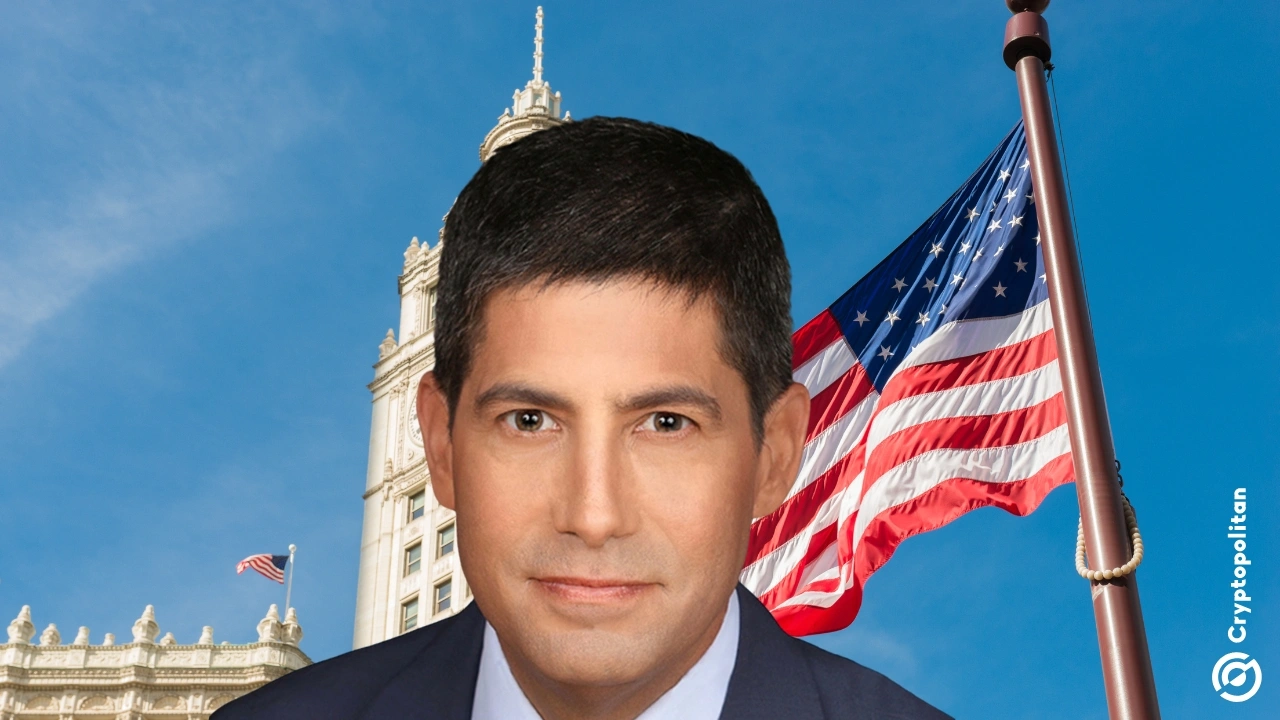
Trump-appointed Federal Reserve Chairman Kevin Warsh said during his Friday appearance at Jackson Hole that interest rates could be hiked this year if inflation refuses to settle down fast enough.
Warsh said: "While this summer's [inflation] readings were better than expected, they do not tell me that underlying trends have meaningfully improved."
Warsh said: "We must be confident that underlying inflation is moving to our objective, clearly and at sufficient speed. Otherwise, we have work to do. That's our job, our mandate and our charge to keep."
Heather Long, chief economist at Navy Federal Credit Union, said Warsh had "opened the door to a Fed rate hike. A hike probably won't come in September, but it will by October or December."
Distinct publishers with included, body-backed reporting in this cluster.
1 article · August 28, 2026
Follow any of these and your For You feed starts watching them — no settings page required.
Evidence-backed comparisons of source perspectives and observed adoption signals. Read the methodology
Which Builder, Operator, and Investor concerns the observed source mix emphasized—not a truth score.
Evidence, demonstrated adoption, hype gap, incentives, and confidence are assessed independently, each on its own current evidence. How these are measured.
Quotes verbatim, market prints unsourced
The speech itself is well handled — five distinct Warsh quotes, including the title of the address and the phrase he used to refuse a rate path — and those read as transcript-faithful. The market layer is weaker: 55.7%, 48%, "highest since late July", $200 million of liquidations all appear without a provider, a contract name or a timestamp. Reconciling the two prediction-market swings against each other is the strongest verification available, and it is verification of arithmetic, not of the underlying data.
No adoption axis in a policy speech
Nothing here is deployed, shipped or licensed. The nearest thing to uptake is trader positioning, and that is a snapshot from one Friday afternoon on two venues that disagree — not evidence of anything being taken up over time. Scoring it would mean inventing a measurement the reporting does not contain.
Four asset classes sliding over five basis points
Overstated, but modestly and mostly by framing rather than by false claims. Warsh explicitly declined to commit to a decision, and Cryptopolitan's own numbers imply about five basis points of expected September tightening; the piece nonetheless stacks stocks, bonds, gold and bitcoin into a single slide narrative and titles itself on a hike that may not come. The bitcoin paragraph is where the gap widens most — a $3,000 hour with $200 million of longs liquidated describes leverage, not a repricing of the policy rate.
Crypto desk framing, hawkish speaker, rate-quoting economist
Three incentives are visible in the text. Cryptopolitan sells crypto news, closes with a newsletter pitch and a trading disclaimer, and leads the market section with bitcoin — the hour of drawdown is the piece's most saleable fact. A new chairman under a Trump appointment has reason to sound uncompromising on inflation at his first Jackson Hole. And the one outside expert quoted is a chief economist at a credit union, an institution whose deposit and lending business rides on the rate call she is making. None of that makes the reporting wrong; it does explain the emphasis.
Arithmetic holds, sourcing does not
Confidence sits low because everything rests on one publisher and no primary document. What lifts it off the floor is that the numbers behave: the CME and Kalshi swings imply each other, the complement probabilities are coherent, and the daily and weekly index moves reconcile. What holds it down is that a speech of this profile should be checkable against a transcript and a wire account, and neither is present, so a transcription error or a stale odds screenshot would pass through undetected.