Product1 publisher3 min readPublished
Apple prices the 1TB iPhone 18 Pro $300 above last year's model
The base iPhone 18 Pro and Pro Max each went up $100, but the increase steepens up the storage ladder, and the fleet buyer specifying next year's refresh is now buying a phone that no longer sits at the top of Apple's range.
The Product Desk · Product desk
What happened
- According to MacRumors, the iPhone 18 Pro starts at $1,199 and the iPhone 18 Pro Max at $1,299, each $100 above the equivalent iPhone 17 Pro model.
- The increases get steeper up the storage ladder, and a 1TB iPhone 18 Pro now costs $300 more than a 1TB iPhone 17 Pro did last year.
- A Pro Max configured with 2TB reaches $2,499, and 2TB is offered on the smaller Pro model for the first time across the same four storage tiers.
Compiled by The Product DeskSomething wrong?How this is made
Why it matters
- cost The tier a fleet actually issues sets the cost: at 1TB, a hundred-device refresh absorbs $30,000 more than the same order last year.
- decision Buyers who used 'Pro' as internal shorthand for top-of-line now have to specify a model, because something more expensive sits above it in the catalogue.
- constraint A US organisation can standardise on one model name and still end up with two radios, and the large phone drops a band the smaller one supports.
- precedent The increases are concentrated on storage, so the advertised starting figure tells a fleet buyer less each year about what a refresh will actually cost.
The handset line in next year's budget is a single cell, and whoever fills it in has to pick a storage tier before the number means anything. A hundred devices at 1TB run $30,000 above the same order a year ago [1]. The increase at that tier is $200 steeper than the increase on the base configuration [3].
MacRumors' guide sets the new prices against the equivalent iPhone 17 Pro models [20]. That makes the documented run of increases one year long.
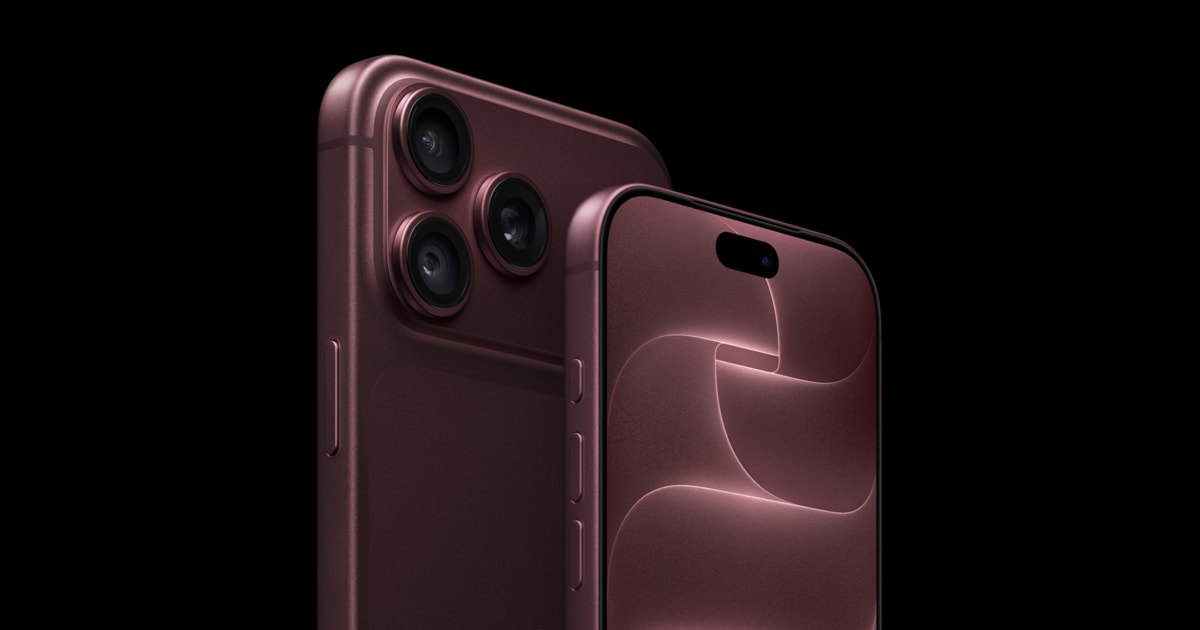
The Pro is also no longer the top of the range. With the foldable iPhone Duo above them, the two Pro models are not the most expensive iPhones Apple sells, though MacRumors calls them the most fully-featured traditional iPhones available [4].
Between the two Pro models the guide counts eight differences [5], and cameras are not among them, since the variable aperture Fusion Main camera and the new manual Pro controls are on both [6]. Both measure 0.34 inches thick [7]. What separates them is size and endurance. The Pro Max gained six hours of video playback over the 17 Pro Max and the smaller Pro gained three, so the larger model's lead grew from six hours to nine [8][9]. It weighs 249 grams, more than any Pro Max before it, on a 6.9-inch display [10].
A US fleet has a second split to handle. Apple lists its own C2 modem in the iPhone 18 Pro in every country, while the Pro Max uses the C2 only outside the United States, and US units of the larger phone contain a Qualcomm modem that iOS code points to as the Snapdragon X80 [14]. The band listings differ as well: the US Pro supports LTE Band 106 and the US Pro Max does not [15]. Apple says the C2 is faster and more energy efficient than the C1X while adding AI-driven improvements to cellular quality and reliability [16]. MacRumors says real-world comparisons will not be possible until reviewers test both radios on the same networks [17].
Apple does not advertise battery capacities, European energy labels confirm the figures for models that keep a SIM tray, and the eSIM-only versions sold in the United States have slightly larger cells that Apple has not disclosed [18]. A US buyer comparing battery life is working from Apple's video playback hours.
So the useful sort is by how long a user goes between chargers, with the screen on. Those people get the Pro Max for the nine extra hours [9]; everyone else takes the smaller Pro, because the chip and the camera system are identical [6]. MacRumors puts the screen-size call down to personal preference given that the models share everything else [19]. Then pick the storage tier. That is where the money moved this year [3]. The $100 size premium holds at every tier [11], so a fleet that lands on 2TB is choosing between a $2,399 Pro and a $2,499 Pro Max [2][12].
What to watch
- Reviewer tests of Apple's C2 against the Snapdragon X80 on the same networks. Until that happens the US Pro Max radio difference goes unpriced.
- Whether Apple publishes battery capacities for the eSIM-only units sold in the United States, or European-style labels appear for them.
- Where the foldable iPhone Duo lands on price, and whether it pulls budget away from the Pro as the default fleet spec.