Insurers cannot write $10bn of cover for data center GPUs, Parametrix CEO says
Parametrix CEO Jonathan Hatzor says the insurance market cannot provide $10bn of property cover for a data center's GPUs. S&P Global Ratings says demand could generate $10bn in new premiums in 2026, yet owners must price what insurers will not carry.
The Product Desk
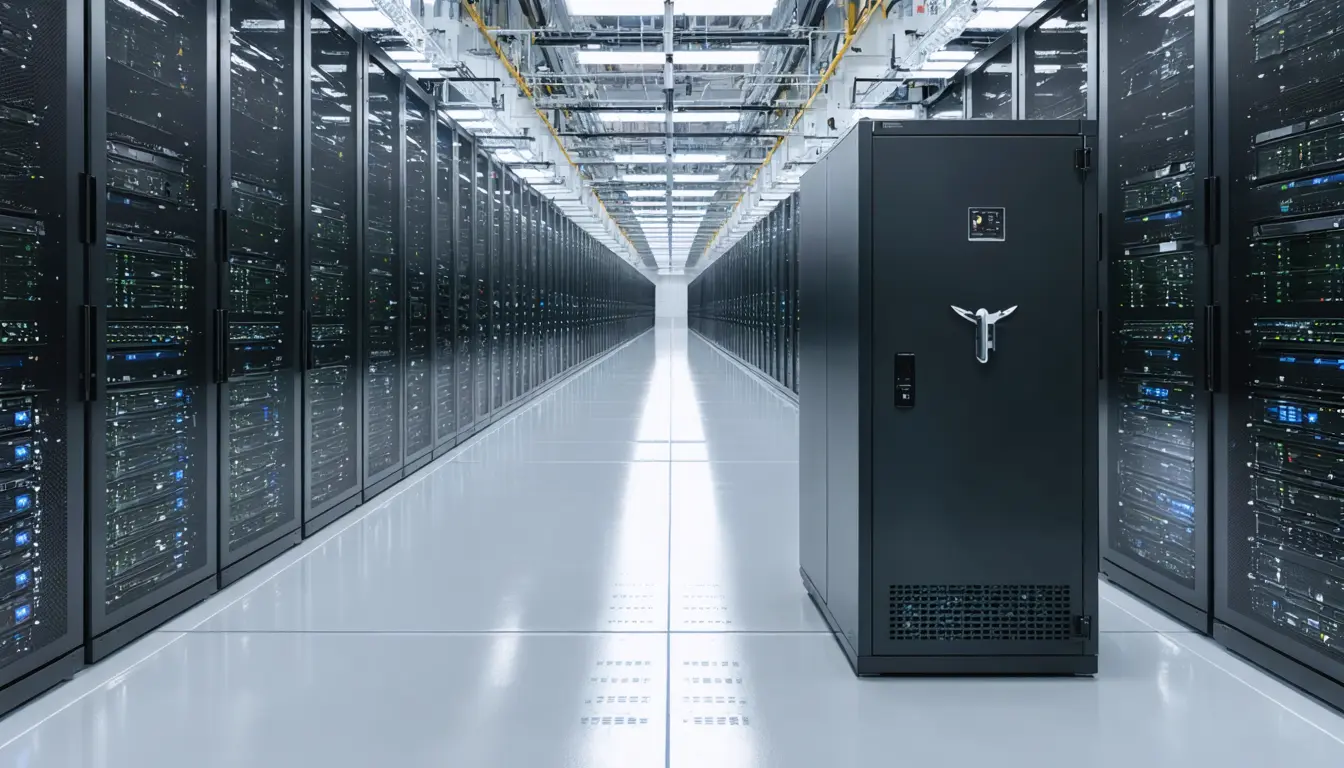
Three figures: S&P's Delpuech estimates an insurable data center asset base of over $2 trillion and average annual investments of $300 billion; DCD says hyperscaler capex is forecast to reach $700bn in 2026.
| Figure | Value | Note | Claim |
|---|---|---|---|
| Insurable data center asset base, over, per S&P | $2 trillion | 2 | |
| Average annual investment | $300 billion | 3 | |
| Hyperscaler capex forecast | $700bn in 2026 | 6 |
What happened
- Hyperscaler capex is forecast to reach $700bn in 2026, and those spenders are looking to external funding sources.
- S&P's Charles-Marie Delpuech says those outside investors may require high insured limits, to protect assets or cash flows such as rental income.
- Hatzor says there is no historical example of insuring a property with $10bn of equipment inside it.
- DCD's analysis says the slow-moving insurance market is struggling to keep up with data center growth.
Why it matters
- Who's exposed exposure Lenders and equity investors funding GPU purchases at this scale may hold collateral that no insurer will cover in full.
- What it limits constraint Cover for GPU-heavy sites depends on loss records that do not exist yet, so limits are likely to trail construction.
- What doesn't add up contradiction S&P's premium figure counts what demand could generate, while Parametrix says supply is short.
- Who has to decide decision Sponsors have to decide, exposure by exposure, how much loss they will carry themselves and put that in the financing model.
Take the case Parametrix CEO Jonathan Hatzor described: a debt provider or investor puts up $10bn, as loan or equity, to buy GPUs for a data center project [16]. Hatzor said: "It's not just because we're dinosaurs or because insurance companies are very old, there's just no historical records of how resilient those GPUs are." [18]
The pitch for the sector is near-guaranteed returns and stable rent-based cash flows, in a market DCD describes as growing globally at a 14 percent CAGR [11]. DCD says those building and running data centers, reluctant to miss out, are "leaving themselves somewhat exposed to new avenues of loss and risk" [9]. Hatzor describes the other side of that trade: "But in data centers, we still see a lot of demand but not enough supply of insurance, which is also increasing the entire risk factor." [14]
The exposure being added is large. S&P Global Ratings analyst Charles-Marie Delpuech estimates the insurable asset base at over $2 trillion [2]. He said that on average annual investments of $300 billion, "this asset base could double in six to seven years" [3]. Against a $2 trillion base, $300 billion a year is up to about 15 percent annual growth [13]. S&P sets its $10bn premium estimate beside global aviation, which takes in around $5 billion a year [5], so the data center figure is twice that [12].
DCD names three pressures on owners: high uptime standards, uncertainty around AI returns, and the threat of destruction from enemies and saboteurs [10]. Parametrix sells service-level agreement insurance for data centers [8]. DCD's analysis does not size the shortfall for outage, AI-return or sabotage risk. The one sized case is Hatzor's GPU loan, which he offered as an example.
We think that until a broker puts a number in writing, the gap should be carried as the owner's own risk. Sponsors can run the test on one page. It lists the three exposures and, beside each, the limit the lender or investor requires and the limit a broker will quote in writing. The difference is retained risk, and it belongs in the model as a reserve. An exposure with no written quote is retained in full.
What to watch
- Whether S&P, DCD or an insurer publishes a figure for the shortfall in cover for outage, AI-return or sabotage risk.
- Whether any insurer writes a single property limit near $10bn for a GPU-filled site, which Hatzor says has no precedent.
- Whether hyperscaler capex reaches the forecast $700bn in 2026 and brings the external funders Delpuech expects to ask for high insured limits.
Clarity's read
What the record supports and how the coverage leans. The claims behind it follow.
Reality
- Evidence45
- Adoption
- Not scored
- Hype gap+25
- Incentives60
- Confidence50
Claim ledger
Ranked by verification strength, evidence, and original report placement.
- [1]
DCD says the slow-moving insurance markets are struggling to keep up with data center growth.
- [2]
Charles-Marie Delpuech, insurance analyst at S&P Global Ratings, estimates a total insurable asset base of over $2 trillion in the data center sector.
- [3]
Delpuech said: 'Based on our projection and average annual investments of $300 billion, this asset base could double in six to seven years.'
- [4]
S&P Global Ratings says demand for data center insurance coverage could generate $10bn in new premiums in 2026.
- [5]
S&P compares the $10bn figure with global aviation, which has annual premiums of around $5 billion.
- [6]
Hyperscaler capex is forecast to reach $700bn in 2026, and hyperscalers are looking to external funding sources.
- [7]
Delpuech says external investors may require high insured limits and will likely continue to drive demand for insurance, both to protect assets or cash flows such as rental income.
- [8]
Parametrix provides a range of insurance products, including service-level agreement insurance for data centers.
- [9]
DCD says that, in their reticence to miss out on a sure thing, those involved in data center construction and operation are leaving themselves somewhat exposed to new avenues of loss and risk as an insurance protection gap emerges.
- [10]
DCD names the risks facing data centers as the pressure of high uptime standards, uncertainty around AI returns, and the threat of destruction from enemies and saboteurs.
- [11]
DCD describes a data center market growing globally at a CAGR of 14 percent, with the promise of near-guaranteed returns and stable rent-based cash flows.
- [12]
S&P's $10bn estimate of new 2026 data center premiums is twice the roughly $5bn in annual global aviation premiums.
- [13]
Average annual investment of $300bn equals up to about 15% of an insurable base of over $2 trillion each year.
- [14]
Parametrix co-founder and CEO Jonathan Hatzor said: 'But in data centers, we still see a lot of demand but not enough supply of insurance, which is also increasing the entire risk factor.'
- [15]
Hatzor said: 'The insurance market can not provide a $10bn property coverage for GPUs.'
- [16]
Hatzor used the example of a debt provider or investors providing a $10bn loan or equity to buy GPUs for a data center project.
- [17]
Hatzor said: 'There is no historical example of insuring properties with equipment worth $10bn inside of it.'
- [18]
Hatzor said: 'It's not just because we're dinosaurs or because insurance companies are very old, there's just no historical records of how resilient those GPUs are.'
Get this ledger inside ChatGPT. Ask about any of our stories and the answer brings its figure, each claim’s verdict and the sources. Free, no account.
Sources
1 independent publisher whose own reporting we read for this story.
- datacenterdynamics.comEnsuring uptime, insuring downtime
1 article · October 15, 2026
Topics and entities
Follow any of these and your For You feed starts watching them — no settings page required.
Topics
- AI infrastructure financingFollow
- Captive insuranceFollow
- Data Center InsuranceFollow