InvestIndependently confirmed4 publishers3 min readPublished Updated
The 90% that covered 1.8%: Meta's Take a Break gap hands the states a paper case
An internal document put teen adoption of Instagram's Take a Break at 1.8%. Mosseri's blog post advertised more than 90% retention. Those two numbers are the states' case now.
The Investor · Invest desk
What happened
- An internal Meta document entered in evidence showed 1.8% of teenagers had Instagram's Take a Break feature switched on.
- Mosseri's blog post around the launch said more than 90% of the people who turned the feature on kept it running.
- Mosseri testified that early uptake was "entirely moot" once Meta made the feature default on teen accounts in late 2024.
- Design director Francesco Fogu accepted that data was cut from a 2023 slide on teens meeting 1.5 times more bullying, suicide, hate, nudity and violent content than adults.
Why it matters
- capability The 29 suing states can now run an argument that compares two of Meta's own numbers rather than one that requires proving a recommendation system was defectively built, which is a far cheaper...
- exposure Advice to trim a deck before it reached the head of Instagram drags Meta's in-house legal function into the knowledge case, and makes Mosseri's own ignorance a fact the states can use rather than...
- constraint With liability and penalties resting with Judge Gonzalez Rogers rather than the eight-person jury, Meta cannot treat a sympathetic advisory verdict as an exit from the trial.
- precedent Turning the feature on by default only after the 2023 complaints hands the states a template for reading every later Meta safety change as a litigation response instead of a product decision.
A design case asks a factfinder to decide that ranking software was built badly. That is a fight between expert witnesses and it can be argued to a draw. A disclosure case asks something smaller: the company had a number, and it published a different one. The two Take a Break figures do not contradict each other as arithmetic. They contradict each other as communication, because the retention rate describes only the teenagers already inside the 1.8% [4][5].
Multiply the two and you get the number neither side put on a slide. About 1.6% of teenagers, roughly one in sixty, both switched the feature on and kept it on [22]. Meta released the percentage with the flattering denominator and not the one that showed how few teenagers the pop-up ever reached [6]. Prosecutors are using exactly that gap to argue Meta advertised favourable safety metrics while withholding adoption [16]. Mosseri's own assessment on the stand was that the pop-ups "helped, but not nearly as much as we hoped" [17].
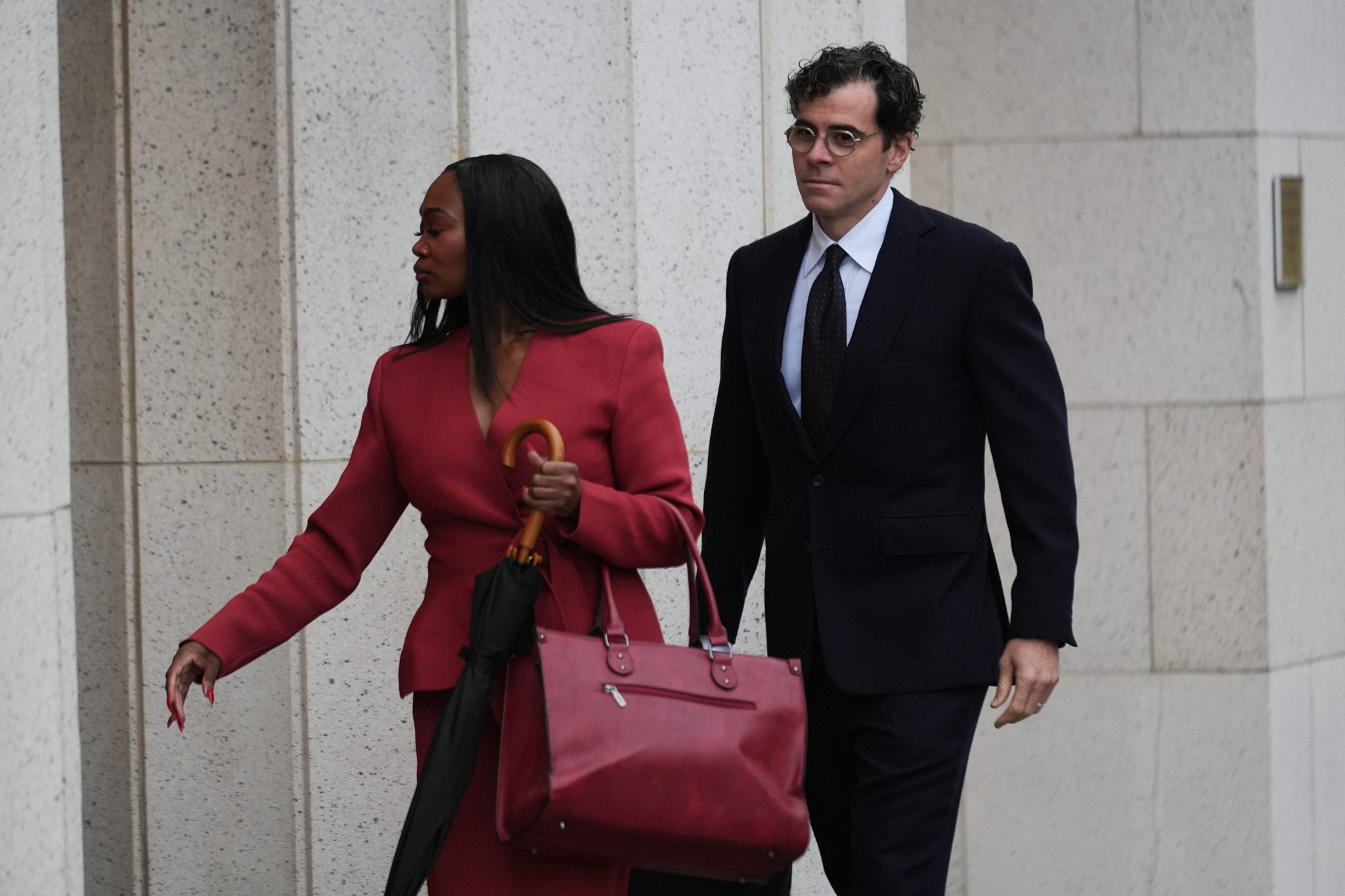
The harder document is not about a feature at all. Internal communications put to him by Jason Slothouber, a senior prosecutor from the Colorado Attorney General's Office, record that Meta's lawyers advised product designers to limit what data Mosseri would see, to check his litigation exposure [11]. Mosseri said he was not aware of the discussion, and that it made sense for the people assembling the document to want the information in it to be accurate [12]. Slothouber's follow-up was whether someone who works with the numbers every day understands better than a lawyer which numbers should be shown to him [13]. A disclosure claim needs a curated decision-maker. That exchange is the states' attempt to show the curation had counsel behind it.
The money frames how much that theory is worth. A New Mexico judge this month ordered Meta to pay $567 million into a youth mental health fund after the state argued public nuisance [20]. The states in Oakland have signalled they could seek close to $200 billion [15], about 350 times the New Mexico order [23]. Earlier this year a Los Angeles jury found Meta and Google negligent and awarded $6 million to one woman who said she became addicted to Instagram and YouTube as a child [21]. Some legal specialists reach for the tobacco cases of the 1990s as the comparison [24]. The documents doing the work this week suggest the states have drawn the same lesson about paper.
Mosseri has run Instagram since 2018 [14]. The trial began last week and is expected to run about six weeks [9], with a further 25 states queued behind it and separate state court actions including one underway in Tennessee [19].
What to watch
- Whether Mosseri, back on the stand Wednesday, concedes the 1.8% figure was known internally when the blog post went out.
Clarity's read
What the record supports and how the coverage leans. The claims behind it follow.
Reality
- Evidence72
- Adoption12
- Hype gap+20
- Incentives70
- Confidence65
Perspective Coverage
4 publishers- Builder
- Builder 21%
- Operator
- Operator 45%
- Investor
- Investor 34%
Claim ledger
Ranked by verification strength, evidence, and original report placement.
- [1]
Take a Break sends a pop-up once someone has been in the app for a set stretch of time, suggesting they stop scrolling; until late 2024 it was optional, so a teenager had to go into settings and turn it on.
- [2]
Meta made Take a Break the default on teen accounts in late 2024, the same year it introduced teen accounts, and Mosseri testified that the question of early uptake was "entirely moot" by then.
- [3]
Colorado prosecutor Jason Slothouber noted that the change to default came after the states had already sued.
- [4]
An internal Meta document admitted into evidence showed that at one point 1.8% of teenagers had Instagram's Take a Break feature switched on, per NPR.
ReportedSupportedSource: Internal Meta document entered in evidence, reported by NPR3 sources— create a free account to open themView cited source - [5]
Around the time Take a Break launched, Adam Mosseri wrote in a blog post that more than 90% of the people who turned it on kept it running.
- [6]
Meta published the 90% retention figure and not the 1.8% adoption figure.
- [7]
Mosseri is a central witness for California, Colorado, Kentucky and New Jersey, four of the 29 states that sued Meta in 2023 alleging it knowingly designed features to addict children.
- [8]
On Tuesday in Oakland federal court Mosseri defended Instagram's safety record and was questioned for about an hour by Slothouber, a senior prosecutor with the Colorado Attorney General's Office; he returns to the stand Wednesday, according to the Associated Press.
ReportedSupportedSource: Associated Press4 sources— create a free account to open themView cited source - [9]
The trial began last week and is expected to run about six weeks in total.
- [10]
An eight-person jury returns an advisory verdict, but US District Judge Yvonne Gonzalez Rogers decides liability and would set any penalties or ordered changes.
- [11]
Internal communications about a presentation on problematic content teenagers encounter record that Meta's lawyers advised product designers to limit what data Mosseri would see, in order to check his "litigation exposure."
- [12]
Mosseri said of the communications: "I wasn't aware of this discussion, but it makes sense that the people putting the document together would have wanted to make sure that the information in the document was accurate."
- [13]
Slothouber then raised whether the person who deals with numbers every day understands better than a lawyer which numbers should be shown to him.
- [14]
Mosseri has run Instagram since 2018.
- [15]
The states have indicated they could seek close to $200 billion.
- [16]
Prosecutors are using the gap between the two figures to argue that Meta emphasized favorable safety metrics without disclosing how limited actual adoption was.
- [17]
Mosseri testified that the pop-ups "helped, but not nearly as much as we hoped."
- [18]
Instagram design director Francesco Fogu acknowledged that data was removed from a 2023 slide showing teenage users encountered 1.5 times more bullying, suicide, hate, nudity and violent content than adults.
- [19]
The remaining 25 states go to trial later, and Meta faces separate state court actions including one underway in Tennessee.
- [20]
This month a New Mexico judge ordered Meta to pay $567 million into a youth mental health fund after the state argued its platforms were a public nuisance.
- [21]
Earlier this year a Los Angeles jury found Meta and Alphabet's Google negligent and ordered them to pay $6 million to a woman who said she became addicted to Instagram and YouTube as a child.
- [22]
Applying the published 90% retention rate to the 1.8% who enabled Take a Break implies about 1.6% of teenagers both switched it on and kept it on, roughly one in sixty.
- [23]
The states' signalled demand of close to $200 billion is roughly 350 times the $567 million New Mexico order.
- [24]
Some legal specialists compare the litigation to the tobacco cases of the 1990s.
Sources
4 independent publishers whose own reporting we read for this story.
- cnbc.comInstagram chief Mosseri says in social media addiction trial he doesn't tell team to 'hide anything'
1 article · August 25, 2026
- cryptopolitan.comInstagram head Mosseri says few teens knew of safety feature in addiction trial
1 article · August 25, 2026
- fortune.comKid safety trial hears Instagram chief’s frustration over safety feature, ex-Meta employee who quit over ‘values’
2 articles · August 26, 2026
- qz.comAdam Mosseri testifies in Meta child safety trial
1 article · August 26, 2026
Topics and entities
Follow any of these and your For You feed starts watching them — no settings page required.
Topics
- Youth social media litigationFollow
- Defaults and Opt-In DesignFollow
- Child Online SafetyFollow