India's 2047 cloud tax holiday applies only to services sold to non-Indian clients
India's FY27 budget exempts eligible foreign cloud providers from tax until 2047, but only on services sold to non-Indian clients. Indian customers' revenue goes through a reseller and is not tax-free, per an opinion piece in Datacenter Dynamics.
The Product Desk
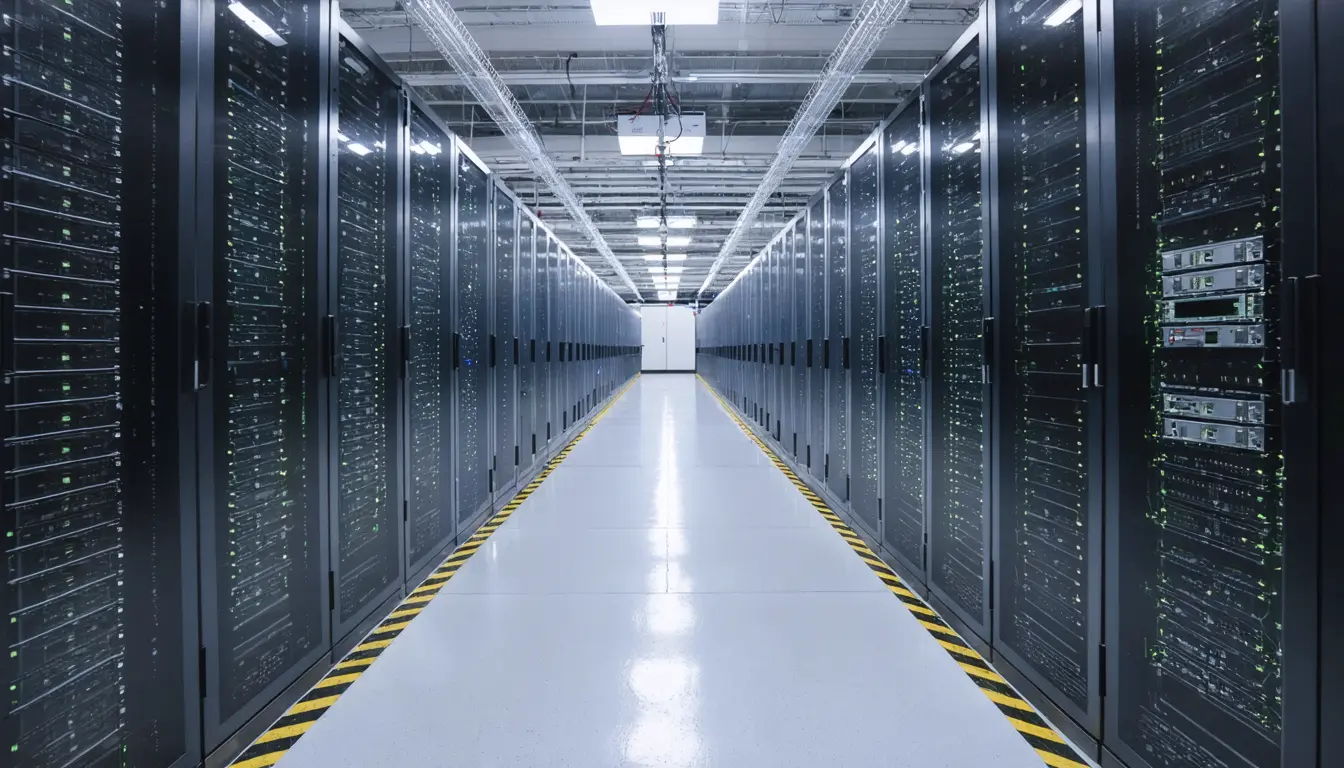
Four figures: India has approximately 150 of an estimated 11,000 data centers; 3.1GW of construction is planned in India; the local operator gets a 15 percent safe harbor margin over operating expenses; a minister says the sector will generate 100,000 engineering jobs.
| Figure | Value | Note | Claim |
|---|---|---|---|
| Data centers in India, approx., of an estimated 11,000 | 150 data centers | 8 | |
| Construction planned, India | 3.1 GW | 7 | |
| Safe harbor margin | 15% | 5 | |
| Jobs, per minister | 100,000 engineering jobs | 13 |
What happened
- Eligibility also requires central government approval of the foreign entity on application, an Indian entity that owns and operates the facility, and MeitY approval of the data center.
- The Indian operating entity gets a 15 percent safe harbor margin over operating expenses, and tax authorities accept that return without opening a transfer pricing dispute.
- Cushman and Wakefield's 2026 comparison puts India second in APAC at 1.6GW, with 3.1GW more planned, a pipeline in the world's top three.
Why it matters
- contradiction The author ties the policy to India's low data center share, yet the exemption applies to services for non-Indian clients, so it reaches the domestic gap only through the taxed reseller route.
- decision Anyone pricing Indian-customer contracts has to pick an assumption for the reseller entity now: the safe harbor does not apply to it, its procedure is yet to be seen, and the author expects the full corporate rate.
- constraint The author says lasting value lies in permanent IT jobs, and the US studies cited tie large information-sector gains to hyperscale counties but not colocation ones, so the facility type decides which builds deliver them.
A cloud provider's planner reading the FY27 budget text [1] has one thing to settle before any site visit: where the customer sits. The exemption covers services supplied to global, non-Indian clients [2]. A provider that wants to serve Indian customers from a new Indian facility has to go through an Indian reseller entity, and that revenue is not tax-free [4].
The Datacenter Dynamics author says the policy was prompted by the data-share figures and by calls for sovereign control over the country's data [11]. The route from the incentive to that goal is indirect. The author writes that the government hopes the holiday draws firms to build for global clients, and that providers such as AWS can then serve Indian clients from the same domestic capacity [12]. The shortcut in a planning deck is to read 20 percent of the world's data as 20 percent of the demand, hostable tax-free. The exemption itself reaches only the share sold abroad [2].
The ratio behind the rationale also needs a second look. The article gives both a three percent share of the world's data centers and a count of about 150 out of an estimated 11,000 [8]. Those two figures disagree. Divided out, 150 of 11,000 is about 1.4 percent [9], while three percent of 11,000 would be 330 [10].
On jobs, Jitendra Singh, the Union Minister of Science and Technology, stated that the sector will generate 100,000 engineering jobs [13]. The author writes that the timeline and calculation behind that number are unknown [14]. The US studies the piece cites found total private employment up four to five percent over five to six years in counties that received their first large data center [15].
For a build decision, we'd sort each planned workload on two questions. Is the customer outside India? Will an Indian entity own and operate a MeitY-approved facility for it [3]? A workload that answers yes to both sits under the holiday. A workload for Indian customers lands in the reseller cell and is taxed [4]. We'd treat the exempt cell as the business case and the reseller cell as upside until its tax treatment is settled. The tradeoff is that the exempt cell depends on foreign demand to fill the building, and the domestic demand behind the data-share figure sits in the taxed cell.
What to watch
- The government's procedure for the Indian reseller entity, including whether services to Indian firms are taxed at the full corporate rate.
- Which foreign entities the central government notifies and approves, and which Indian-owned facilities MeitY clears.
- Whether new Indian capacity announcements are hyperscale campuses or colocation sites, given the US studies' split on information-sector jobs.
Clarity's read
What the record supports and how the coverage leans. The claims behind it follow.
Reality
- Evidence35
- Adoption
- Insufficient
- Hype gap+25
- Incentives
- Insufficient
- Confidence40
Claim ledger
Ranked by verification strength, evidence, and original report placement.
- [1]
India's finance minister, Nirmala Sitharaman, announced a tax holiday till 2047 for eligible foreign cloud service providers as part of the FY27 budget.
- [2]
The exemption applies only where the services are being provided to global, non-Indian clients.
- [3]
The exemption also requires that the foreign entity be notified and approved by the Central government upon application, that the physical data center be owned and operated by an Indian entity, and that the data center be approved by the Ministry of Electronics and Information Technology (MeitY).
- [4]
A cloud provider such as AWS that wants to serve Indian customers with a new data center in India has to do so via an Indian reseller entity, and that revenue will not be tax-free.
- [5]
The government has set a special 15 percent safe harbor margin for the related data center entity, so the local operator can keep a 15 percent profit margin over operating expenses and tax authorities will accept the return without a transfer pricing dispute.
- [6]
The safe harbor margin does not apply to the Indian reseller entity; the standard operating procedure for it is yet to be seen, and services to Indian firms will likely be taxed at the full corporate tax rate.
- [7]
India is APAC's second-largest data center market at 1.6GW of capacity according to Cushman and Wakefield's Global Data Center Market Comparison 2026, and is in the world's top three for development pipeline with 3.1GW of construction planned.
- [8]
India produces 20 percent of the world's data yet houses only three percent of its data centers, approximately 150 out of an estimated 11,000.
- [9]
150 out of 11,000 data centers is about 1.4 percent, not three percent.
- [10]
Three percent of an estimated 11,000 data centers would be 330.
- [11]
According to the author, the data-share numbers, among other calls to gain sovereign control over the country's data, are what prompted the Indian government to take action.
- [12]
The author writes that the government hopes the tax holiday incentivizes firms to set up infrastructure to serve Indian and global clients, which would also let providers such as AWS serve Indian clients using domestic capacity.
- [13]
Dr Jitendra Singh, India's Union Minister of Science and Technology, stated that the sector will generate 100,000 engineering jobs.
- [14]
The author writes that the timeline and calculation behind the 100,000 jobs figure are unknown.
- [15]
US studies cited in the piece found that counties receiving their first large data center see total private employment jump four to five percent over five to six years.
- [16]
In the US studies cited, hyperscale counties see large information sector gains while colocation counties do not.
- [17]
The author argues that the real economic value lies in permanent IT jobs that keep contributing to productivity after the initial buildout phase.
Get this ledger inside ChatGPT. Ask about any of our stories and the answer brings its figure, each claim’s verdict and the sources. Free, no account.
Sources
1 independent publisher whose own reporting we read for this story.
- datacenterdynamics.comThe overlooked impact of India's new data center policy
1 article · October 12, 2026
Topics and entities
Follow any of these and your For You feed starts watching them — no settings page required.