Science1 publisher2 min readPublished
Idaho's Wildhorse fire produced the smoke storm NASA's INSPYRE jets spent weeks hunting
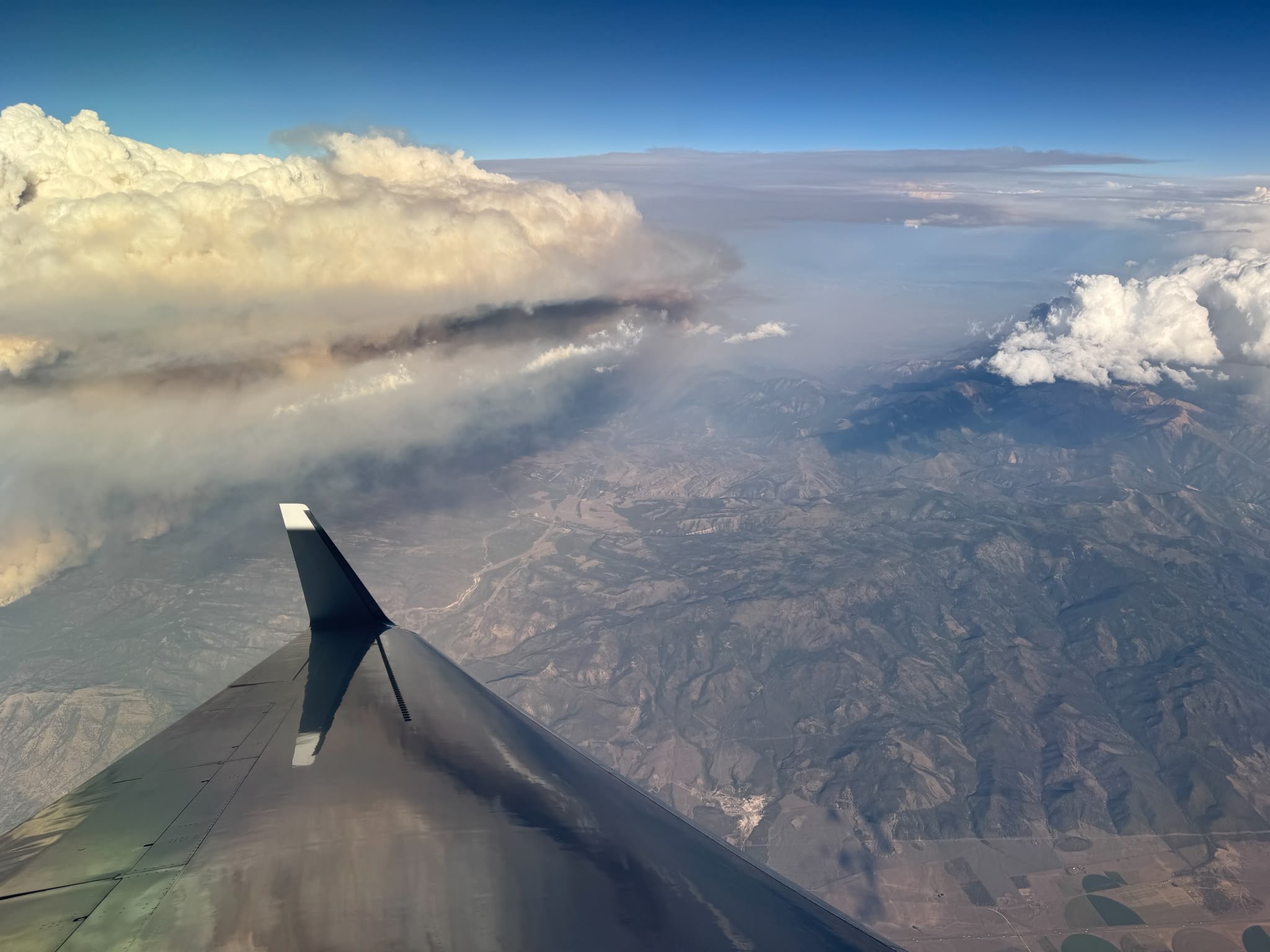
Idaho's Wildhorse grass fire threw up a pyrocumulonimbus cloud, a storm type that can lift smoke 15 km and that NASA's INSPYRE jets hunted for six weeks. Its measurements are meant to test weather and climate models that mostly omit these clouds. NASA has not yet reported results.
The Scientist · Science desk
What happened
- A Gulfstream jet based at NCAR near Boulder flew above, below and through clouds, collecting smoke particles, gas samples, ice-crystal photographs and radiation readings.
- NASA's high-flying ER-2, carrying 14 instruments, tracked fire intensity, updraft speeds, smoke and cloud properties from above while sensor trucks watched the same events from the ground.
- INSPYRE is, by NASA's account, the first aircraft campaign designed specifically around studying pyrocumulonimbus clouds.
- Satellite observations around the turn of the 21st century first showed fire smoke reaching altitudes previously associated with major volcanic eruptions.
Compiled by The ScientistSomething wrong?How this is made
Why it matters
- capability If the cloud data make pyroCb onset forecastable, fire managers could get thunderstorm-style alerts of an imminent downdraft and wind shift, early enough to pull crews off the line.
- constraint According to co-principal investigator Dave Peterson, most numerical prediction models leave out pyroCb smoke injections, so their weather and climate runs miss a source of long-lived stratospheric smoke until simulations are tested against data like INSPYRE's.
- exposure Places far from a fire, and long after it is out, can feel its effects on weather and climate once a pyroCb has carried its smoke high enough.
"We still do not understand if they're driven by fire energetics, or fire intensity, or by atmospheric conditions above," said Olga Kalashnikova, a researcher at NASA's Jet Propulsion Laboratory and one of INSPYRE's principal investigators [6]. The flight plan follows from that question. To separate a fire-driven cloud from an atmosphere-driven one, you need the fire's intensity and the updraft measured at the same moment as the cloud's contents. INSPYRE put instruments above the fire, inside the cloud and on the ground for the same events [8][9].
Getting there was the hard part. PyroCbs can develop in minutes and subside just as quickly, according to NASA, so the central problem was having an aircraft in the right place at the right time [15]. Nobody expected the Wildhorse cloud [1]. A single cloud is a case study. I'd expect the fire-versus-atmosphere question to need several clouds, formed under different upper-air conditions, before it has an answer. NASA's account does not report what the instruments recorded inside the Wildhorse cloud, or how many pyroCbs the aircraft reached over the six weeks of flights [1][8].
The stratosphere figures are still to come. How much smoke reaches that layer, and what happens to it there, are listed as questions the team will investigate, along with how the clouds lift the smoke and transform its particles and gases [10]. Particles that get there can stay for months or longer. While they persist, they change how much solar energy the atmosphere absorbs and how much reaches the surface [14]. From that altitude, smoke can spread across continents and circle the globe [5].
The ground team had a more immediate interest. "A unique thing about pyrocumulonimbus is they are fire-generated weather, meaning the fire makes its own weather," said Neil Lareau, a University of Nevada, Reno atmospheric scientist who led INSPYRE's ground observations [11]. "The fire is making its own thunderstorm, and in the process of doing that, it's also making its own wind," he said [18]. The same clouds produce lightning and rain, along with winds that can whip the flames below [16]. A research dataset and a usable warning are separate products, and the warning has to come faster than a cloud that can form in minutes [15].
What to watch
- Publication of INSPYRE's in-cloud measurements from the Wildhorse event, especially an estimate of how much smoke reached the stratosphere.
- Whether modelling groups add explicit pyroCb smoke injections to numerical prediction models and test them against the campaign's particle, gas and radiation data.
- Whether any forecast service trials Lareau's proposed downdraft and wind-shift warnings for fire crews.