Product1 publisher3 min readPublished
Paladin leads $18 million into Treble's simulated rooms for testing voice AI
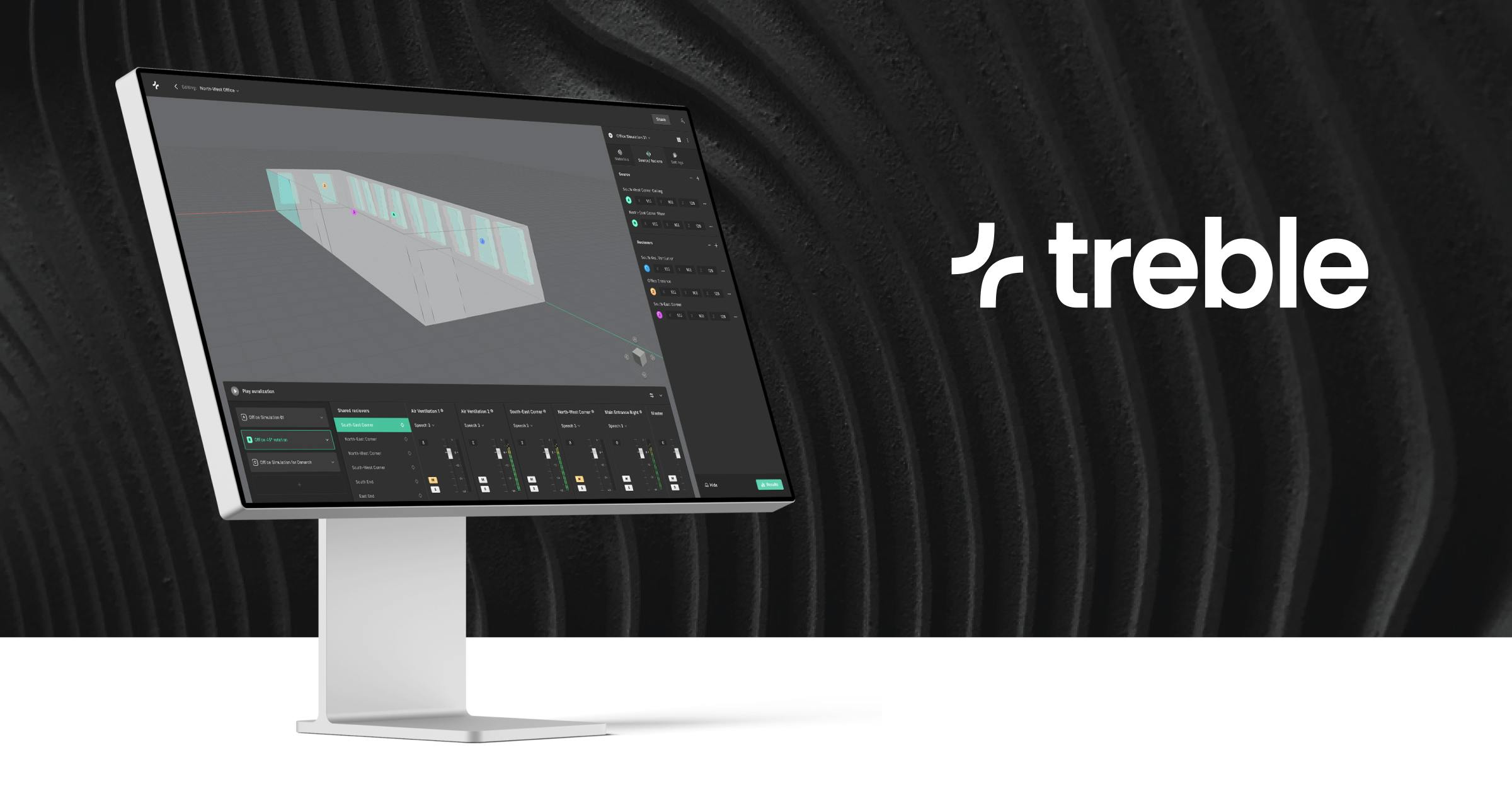
Treble's Series A extension pays for physics-simulated acoustics that model makers and device teams can use as an alternative to scraped recordings. Paladin Capital Group is betting the test layer becomes shared infrastructure.
The Product Desk · Product desk
What happened
- Treble raised $18 million in an extension of its Series A led by Paladin Capital Group, with existing investors KOMPAS VC, Frumtak Ventures, EIC and Omega ehf taking part.
- The Iceland company, founded in 2020 by acoustic engineers Finnur Pind and Jesper Pedersen, has now raised more than $40 million in total, including a $12 million investment in 2024.
- Amazon and Logitech are customers, and Treble's synthetic data platform is sold for speech enhancement, noise suppression and model training.
- Earlier this year Treble partnered with Hugging Face to launch a benchmark that scores speech recognition models across different realistic conditions.
- It also does virtual prototyping for headphone and speaker makers, and now wants more work with robotics, automotive and drone companies.
Compiled by The Product DeskSomething wrong?How this is made
Why it matters
- capability A buyer can now ask which acoustic conditions a speech model was scored in and point at a public benchmark that varies them, instead of accepting a clip recorded in a quiet room.
- constraint Training on simulated audio means the team owns the gap between the simulation's physics and the room the product ends up in, so field recordings stay on the test plan.
- decision Hardware teams get a live option to defer building prototype units and test placement in software first, trading real-room fidelity for the speed of changing a design twice in a week.
The bug report a user files is that the speaker did not hear them from the sink. Treble sells a test for that. Its platform can check how well a smart speaker understands commands depending on where the speaker is positioned [11]. Run that in software and the failing case has a room in it, and you can run it again after the industrial designer moves the microphone.
Subtract the $12 million Treble took in 2024 and the $18 million announced now from a disclosed total above $40 million, and at least $10 million predates both rounds [18].
Finnur Pind's pitch is about method. "Audio AI is really a data challenge, and this is where the most opportunities to enable next-generation models and hardware lie. To date, pretty much all sound-related AI has been made from recordings and data scraped from the internet. We believe that accurate physics simulation can be an alternative way to create data for sound," Pind told TechCrunch [14]. A team that trains noise suppression on simulated rooms takes on the difference between the simulated room and the customer's kitchen. Treble also evaluates voice models under different conditions and feeds the results back to labs [8].
Francois Ruether, VP of Paladin Capital Group, told TechCrunch that the platform stands out and will matter more as it reaches more areas [16]. "Our thesis is that, as more products depend on understanding sound, this infrastructure becomes increasingly valuable across voice AI, wearables, robotics, and physical AI. Customers retain ownership of their models, products, and development workflows, while benefiting from a shared foundation of a simulation-native acoustic infrastructure layer," Ruether said [15]. Ruether is an investor describing a layer he has just bought into. TechCrunch's report does not give Treble's pricing, a customer count beyond Amazon and Logitech [19], or any example of a buyer requiring acoustic test coverage from a supplier.
The customer for this is a model maker, a robotics company, or a consumer hardware maker [22]. A team wiring a support-call agent onto someone else's speech API gets that coverage second-hand, if at all.
For anyone shipping a voice feature next month, two things separate one failure from another: whether a user will report it or only your logs see it, and whether you can reproduce the condition on demand. Simulation is what lets you reproduce it on demand. It can tell you a model holds up in a modelled restaurant; knowing how many of your users are in restaurants still comes from recordings of real ones. Treble has moved into testing smart glasses and AI devices [12], and Pind said he is excited about a next generation of devices such as headphones and smart glasses that could deliver superhuman hearing, meaning hearing better in challenging acoustic environments: a restaurant where you only want to hear people within two meters of range, or a seminar where you want to mute the people around you [17].
What to watch
- Whether Treble publishes pricing or a customer count beyond Amazon and Logitech.
- Whether the Hugging Face speech recognition benchmark starts appearing in model cards and vendor questionnaires.
- Whether the push into robotics, automotive and drones produces a named physical AI customer.