Invest1 publisher2 min readPublished
IBM matches Washington's $1 billion check for the first US quantum wafer foundry
The federal government is funding exactly half of Anderon's upstate New York plant. The outside customers IBM hopes to sell wafers to include three quantum developers that each took up to $100 million from Commerce this month.
The Investor · Invest desk
What happened
- Washington handed $1 billion last week to Anderon, an IBM subsidiary, toward what would be the first pure-play quantum wafer foundry in the United States.
- IBM has pledged a further $1 billion of its own money to get the upstate New York facility up and running.
- The plant, led by IBM semiconductor chief Mukesh Khare, is to make superconducting qubit arrays, quantum input/output signaling and readout signal chain components.
Compiled by The InvestorSomething wrong?How this is made
Why it matters
- cost IBM shareholders are funding half a fab, and that $1 billion is capital the company is not putting into the hardware and software lines whose weakness cost it a quarter of its market value in July.
- constraint Outside wafer demand has to come from developers whose entire federal awards total up to $300 million, so the line's utilisation rests on IBM's internal roadmap until a paying third party signs.
- decision Every quantum developer now has to decide whether to buy critical components from a foundry owned by a company building its own quantum computers.
- contradiction Citi treats the federal wave as credibility for the sector while Google Quantum AI walked away from the conditions, so the same money reads as validation to the companies that need it and as friction to the one that does not.
The Commerce Department put up to $100 million each into Rigetti Computing, D-Wave Quantum and Quantinuum earlier this month, and took a small equity stake in each one [5]. Add the three together and it is $300 million, about 30 cents for every dollar in the single award that went to Anderon [2]. IBM's own pledge takes the announced money for the New York site to $2 billion [1].
IBM said the foundry is not meant for IBM alone, and that it wants to be a critical supplier to a budding quantum industry the way TSMC supplies chip designers [6]. A foundry only pays back on volume, so that ambition needs outside parties committing wafers.
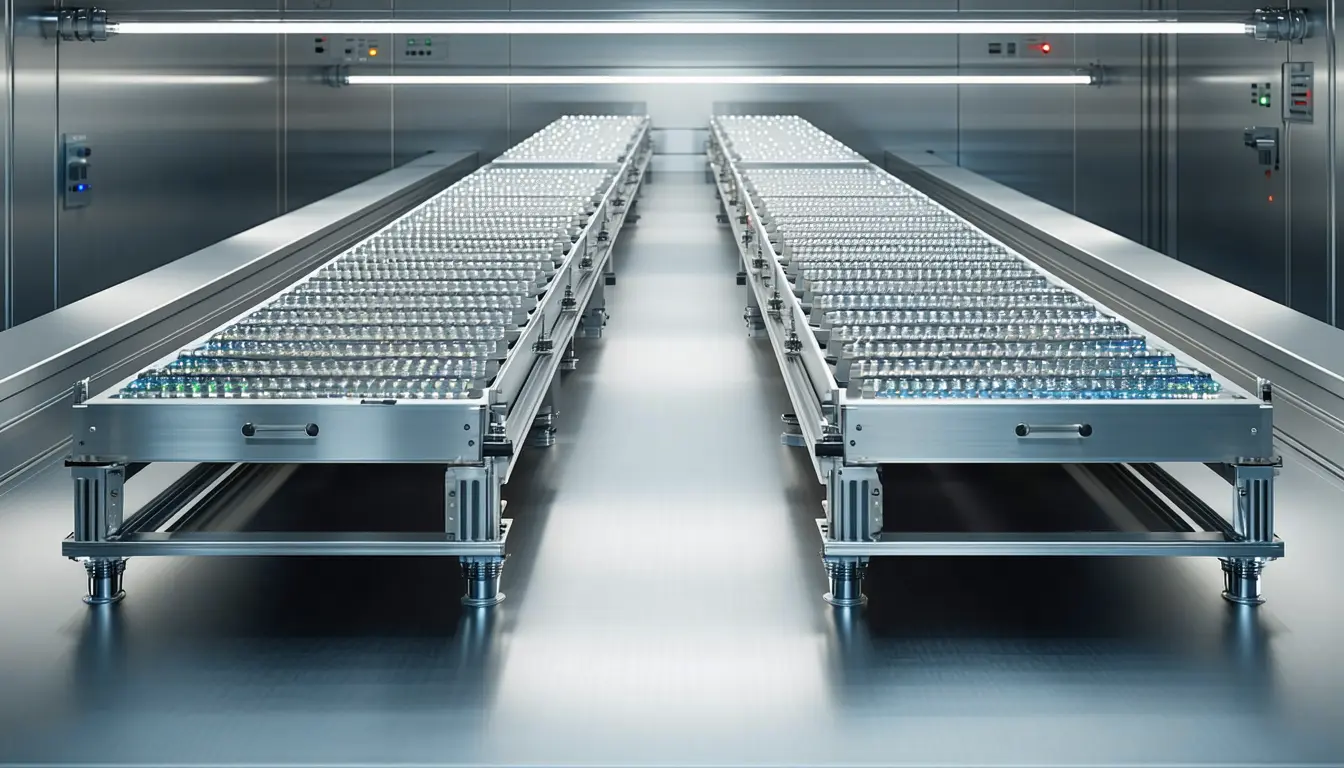
The plant would be the first pure-play quantum wafer foundry in the country [1], so there is no existing US line of its kind for it to replace [4]. It is new capacity, built half with federal money [1].
Demand is the open question. Citi analyst Fatima Boolani told Barron's that the funding wave lends credibility to the emerging market, and said "there's a real opportunity to commercialize this technology" [8]. The one player in the reporting that can pay its own way stayed out: a Google Quantum AI executive said earlier this summer that the unit had declined federal funding, because it came with "various conditions" that could slow research [7].
For IBM, the $1 billion is capital not going into the businesses that just disappointed. The Daily Upside reports that IBM's stock fell 25% in July, its worst day in records going back to the 1960s, after preliminary second-quarter results came in below expectations [9], and that the company has missed the AI wave while its legacy hardware sales suffer as businesses shift spending to AI [10].
In my view the federal money mostly de-risks capacity IBM wants for its own roadmap, and outside wafer sales are upside on top of that. Two other readings are available. The Commerce awards may be a first tranche that turns into purchase commitments, in which case the customers arrive with their own funding [5]. Or Google's refusal is the pattern among firms that can self-fund [7], and Anderon's outside customers are the developers that needed a federal award to reach $100 million [5]. A named third-party wafer commitment with volumes attached would settle which of the three it is; IBM said it has reached significant operational milestones in a demonstration phase and can soon move to commercial production [4].
What to watch
- IBM's next quarterly filings, for how much of the pledged $1 billion has actually been spent on the site.
- Any disclosure of what the government received in exchange for Anderon's $1 billion, given the equity stake attached to the $100 million awards.
- Whether a quantum developer other than Google publicly turns down federal money over the conditions attached.