Science1 publisherNot yet confirmed elsewhere3 min readPublished
HORIBA opens a 15,000 sq ft methods lab in New Jersey aimed at biopharma customers
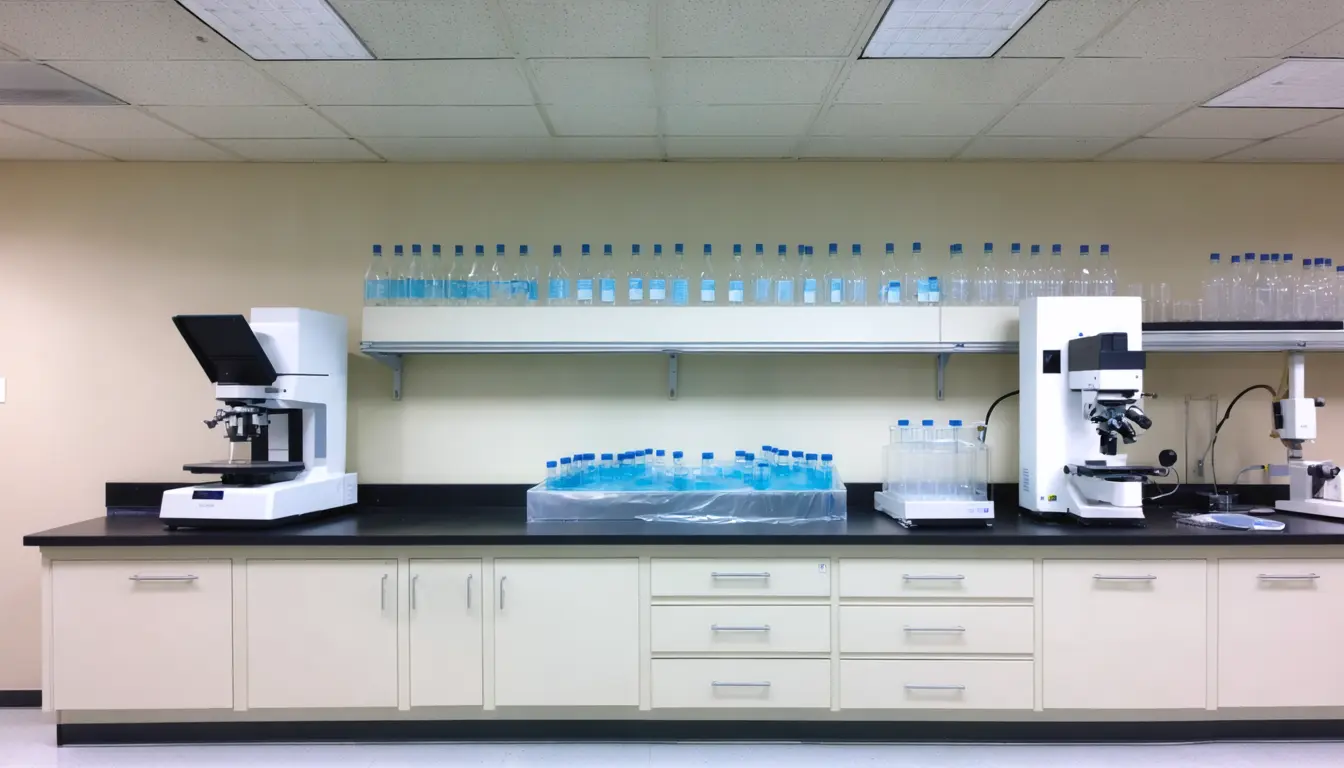
HORIBA has opened its 19th Analytical Solution Plaza, a 15,000 sq ft methods-development lab inside its Piscataway, New Jersey site. East Coast customers across industries can use it, but HORIBA names life science and biopharma as the site's focus.
The Scientist · Science desk
What happened
- HORIBA presents the plazas as part of a strategy to move beyond purely transactional instrument sales toward problem-solving partnerships with customers.
- Scientists in the New Jersey labs work with modular spectroscopy, particle characterization and Raman microscopy, including LabRAM Odyssey and LabRAM Soleil microscopes and the Veloci Biopharma Analyzer.
- The plaza network began in Japan and has spread to sites including China and the United Kingdom before arriving in the United States.
- More than 280 HORIBA staff report to the Piscataway facility, and roughly 200 people work at the site itself.
Compiled by The ScientistSomething wrong?How this is made
Why it matters
- contradiction The plaza accepts materials, semiconductor and energy work, yet its stated emphasis is biopharma, so nearby chip and energy teams should not assume the same depth of specialist support as protein developers.
- capability Therapeutic protein developers who need several orthogonal measurements can bring one characterization problem to a single vendor team running multiple techniques side by side on the East Coast.
- precedent Kato's list puts energy and biopharma first in line for HORIBA's extra resources, so those fields are where new applications staff and methods from the company are most likely to appear.
The design choice I would look at first is the furniture. Instruments in the plaza are placed on, or bolted to, wheeled tables so they can move between labs as a project needs them [12]. Jeff Julien, HORIBA's life science applications manager, said that lets the team reconfigure a room around a customer's problem and bring in technologies "we think could be applicable to those use cases" [16].
His example was biopharma. Companies developing therapeutic proteins often depend on several instruments and techniques during development, and Julien said the plaza's scientists can provide those capabilities [15]. He described the plaza as HORIBA's answer to "how to leverage what HORIBA does well," moving the customer conversation from "what instrument is needed" to "what problem to solve" [1]. According to GEN's account of the opening, HORIBA is presenting its core technologies to that market as an underutilized set of orthogonal tools for applications including biotherapeutic characterization [17]. Julien said it changes the way the team thinks about and approaches all of these problems [2].
For scale, the plaza is about 15,000 square feet [4] inside a facility of about 130,000 [10], or roughly 11.5% of the building [20]. The rest of the tour covered a working instrument operation: stockrooms, manufacturing, testing and quality-control rooms, and space for training field service engineers [13]. The plaza itself holds several labs where HORIBA scientists work on customer projects, plus technical rooms for training application scientists [11].
On where the applications support is going, the evidence points most firmly at biopharma. Koutara Kato, executive vice president and assistant general manager for commercial operations at HORIBA Instruments, named semiconductors among the company's markets and listed energy and environment, along with biopharma and healthcare, as areas where it plans to put additional resources [7]. Each area "gives us a lot of opportunities and challenges," he said [6]. The site takes work in materials, semiconductors and energy as well [4]. GEN reports that the New Jersey focus is specifically life science and biopharma [19].
Michael Oweimrin, a national sales manager, said the plazas could especially help customers on tight budgets facing rising costs for lab equipment and space [8]. "We have a plethora of capabilities to address many different markets," he said [9].
The account does not say how many application scientists staff the New Jersey labs, what a customer project costs, or who owns a method developed there. Those answers decide how much an outside team can lean on the site. I think the modular labs and the protein focus make it a useful resource for biotherapeutic characterization, with one condition a buyer should keep in view. A method built on HORIBA instruments will be simplest to reproduce in a lab that owns the same instruments.
What to watch
- Whether HORIBA discloses staffing, fees or method-ownership terms for customer projects run at the Piscataway plaza.
- Whether HORIBA adds semiconductor- or energy-focused application scientists in New Jersey, or opens a further US plaza aimed at those fields.
- Published application notes from New Jersey customer work in biotherapeutic characterization, which would show what the site's methods actually measure.
Clarity's read
What the record supports and how the coverage leans. The claims behind it follow.
Reality
- Evidence50
- Adoption
- Insufficient
- Hype gap+15
- Incentives70
- Confidence55
Claim ledger
Ranked by verification strength, evidence, and original report placement.
- [1]
Jeff Julien said the ASP is HORIBA's answer to "how to leverage what HORIBA does well" to shift the conversation from "what instrument is needed" to "what problem to solve."
ReportedSupportedSource: Jeff Julien, PhD, life science applications manager, HORIBA2 sources— create a free account to open themView cited source - [2]
"It changes the way we think [and] the way we approach all of these problems."
ReportedSupportedSource: Jeff Julien, HORIBA2 sources— create a free account to open themView cited source - [3]
HORIBA's ASPs reflect a broader corporate strategy to move beyond purely transactional sales towards problem-solving partnerships.
- [4]
HORIBA opened an Analytical Solution Plaza of about 15,000 square feet within its larger Piscataway, New Jersey facility, described as its new East Coast plaza: a lab environment for applications and methods development with customers in materials, semiconductors, energy, life science and biopharma.
- [5]
The New Jersey ASP is the 19th to open globally; the first launched in Japan, followed by facilities in places like China, the United Kingdom, and now the United States.
- [6]
Each area the company focuses on "gives us a lot of opportunities and challenges," said Koutara Kato.
ReportedSupportedSource: Koutara Kato, executive vice president and assistant general manager, commercial operations, HORIBA Instruments IncorporatedView cited source - [7]
Kato highlighted industries HORIBA is involved in, such as the semiconductor market, and said HORIBA plans to concentrate additional resources in energy and environment as well as biopharma and healthcare.
- [8]
Michael Oweimrin, national sales manager at HORIBA, noted the ASP could especially benefit customers working with tight budgets amid rising costs for lab equipment, space and other factors.
- [9]
"We have a plethora of capabilities to address many different markets."
- [11]
The ASP features multiple labs where HORIBA scientists work on customer projects, as well as technical rooms for training application scientists.
- [12]
Instruments in the ASP are placed or bolted to tables with wheels, making it possible to move them between labs as needed.
- [13]
A tour of HORIBA's Piscataway facility showed space for stockrooms, manufacturing, rooms for testing and quality control, and rooms for training field service engineers.
- [14]
ASP scientists use HORIBA expertise in modular spectroscopy, particle characterization and Raman microscopy, with instruments including the LabRAM Odyssey and LabRAM Soleil Raman microscopes and the Veloci Biopharma Analyzer, designed for biopharma and pharma applications.
- [15]
Julien said companies developing therapeutic proteins often rely on input from multiple instruments and techniques during development, capabilities the ASP scientists can provide.
- [16]
Julien said the modular carts make it possible to reconfigure the lab for different customers' pain points and to bring in technologies "we think could be applicable to those use cases."
- [17]
HORIBA is positioning its core technologies as an underutilized set of orthogonal tools for applications including biotherapeutic characterization.
- [18]
Over 280 heads at HORIBA report to the New Jersey facility, and roughly 200 people work at the site.
- [19]
In the New Jersey facility, the ASP focus is specifically in the life science and biopharma sectors.
- [20]
The plaza occupies roughly 11.5% of the Piscataway facility's floor area.
Sources
1 independent publisher whose own reporting we read for this story.
- genengnews.comHORIBA Expands Customer-Focused Solutions with New East Coast Analytical Solution Plaza
1 article · October 5, 2026
Topics and entities
Follow any of these and your For You feed starts watching them — no settings page required.