Honeybees add waggle-dance circuits after the feeder they advertised proves full
Honeybees performed more waggle-dance circuits when a feeder they advertised proved full, a Hebrew University study found. Dancers whose feeder was empty did not add circuits, and unverified dancers recruited less.
The Scientist · Science desk
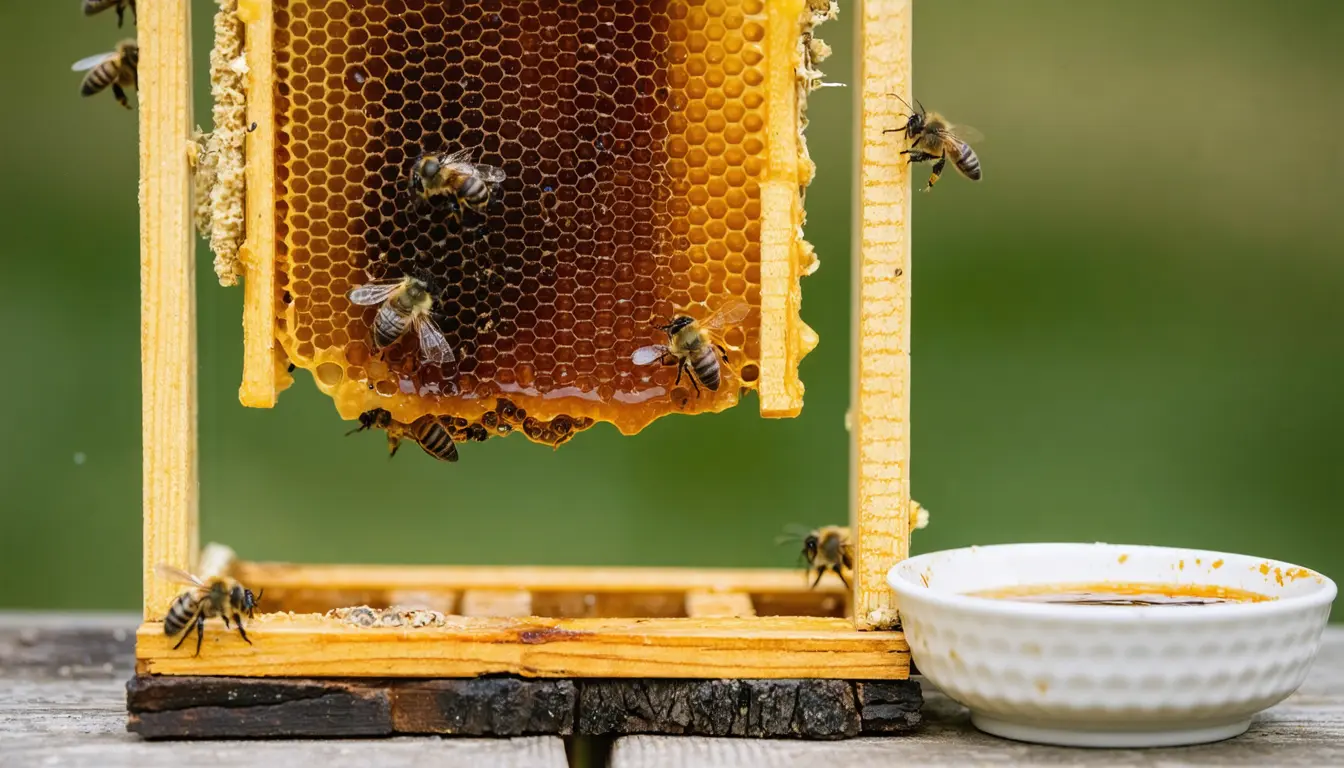
What happened
- With a waggle dance, a bee gives nearby hive mates a flight direction and a distance.
- The researchers changed what happened after a focal bee returned to the hive and gave directions to a specialized feeder.
- Three conditions followed: honest, with a full feeder; liar, with an empty one; and unverified, with the bees caught before they could return to the hive and report.
- Scientific American reports that the study appeared in Behavioral Ecology and Sociobiology earlier this year.
Why it matters
- What it limits constraint The protection against misleading the hive is inferred from changes in the dancer's own circuit count, the only outcome the article reports for the three conditions.
- Who's exposed exposure Oxman calls confidence a "human-y word", so headlines that borrow it can imply an inner state that the study infers from circuit counts.
- What it limits constraint The article reports a decrease only for unverified bees, so a missing report and a bad report did not produce the same behavior. A single "no reward" explanation would have to account for that gap.
The first trip was the same in every condition: the focal bee always found sugar [4]. That rules out the early reward as the reason the groups behaved differently later [16]. What varied was the outcome for the recruits: a full feeder, an empty one, or no report back at all [5].
Karmi Oxman, the study's lead author at Hebrew University of Jerusalem, reads the extra circuits as confidence [2]. In the article's gloss, confidence is the communicator's belief in a message's relevance or reliability [14]. Oxman said "the dance is a self-report of the situation in the field." [9]
James C. Nieh, a behavioral ecologist at the University of California, San Diego, was not involved in the study [10]. He frames the result differently. "For me, the big takeaway is that bees are not little robots," Nieh said [15]. He added that bees get information from their environment, and that this information includes how successful they are at communicating with their nest mates [11].
Oxman's wording is about belief in the message. Nieh's is about whether the message worked. The three conditions changed only what happened after the dance [4], and in our view that sits closer to Nieh's description.
Scientific American's account does not report how many bees were tested, how many circuits the honest group added, or how large the difference was against the other two conditions.
What to watch
- The paper's own tables: how many bees were in each condition and how large the honest-group increase was.
- A follow-up that records what follower bees do after a dance with fewer circuits.
- Tests of chemical signals and vibrations in the dance, which Oxman and Nieh both say they wonder about.
Clarity's read
What the record supports and how the coverage leans. The claims behind it follow.
Reality
- Evidence50
- Adoption
- Not scored
- Hype gap+15
- Incentives
- Not scored
- Confidence45
Claim ledger
Ranked by verification strength, evidence, and original report placement.
- [1]
A study published in Behavioral Ecology and Sociobiology earlier this year examined how bees' communication relates to how certain they are that their information is true.
- [2]
Karmi Oxman, a behavioral ecologist at Hebrew University of Jerusalem, is the lead author of the study and reads the bees' amplified communication as confidence.
- [3]
A waggle dance tells nearby bees what direction to fly in and how far to go.
- [4]
The experiment started with one focal bee flying to a specialized feeder, where it was always met with a sugar solution; the researchers then changed what happened after the focal bee returned to the hive and gave directions to the feeder.
- [5]
In the honest scenario the feeder remained full and all the bees following the directions got a sugary treat; in the liar scenario the feeder was found empty; in the unverified scenario all the bees were caught before they could return to the hive and report what happened.
- [6]
When given the chance to communicate the feeder's location to the hive again in a later stage, the focal bee in the honest scenario performed more waggle dance circuits.
- [7]
Unverified and liar bees did not show the increase in waggle dance circuits seen in the honest scenario; unverified bees decreased their recruitment efforts.
- [8]
Oxman said: "Confidence is sort of a human-y word, but it's useful in this context."
- [9]
Oxman said "the dance is a self-report of the situation in the field."
- [10]
James C. Nieh is a behavioral ecologist at the University of California, San Diego, who was not involved in the study.
- [11]
Nieh said: "They're getting information from their environment, and that [information] also includes how successful they are in communicating to their nest mates."
- [12]
According to the article, the extra information in the dance also prevents the bee from accidentally misleading the hive.
- [13]
Oxman and Nieh both say they wonder what other types of communication beyond what we can see, such as chemical signals or vibrations, could be playing a role in waggle dances.
- [14]
Confidence reflects the communicator's belief in a message's relevance or reliability.
- [15]
Nieh said: "For me, the big takeaway is that bees are not little robots."
- [16]
The focal bee's first-trip sugar reward was identical across the honest, liar and unverified conditions, so it cannot account for differences in later dancing.
Get this ledger inside ChatGPT. Ask about any of our stories and the answer brings its figure, each claim’s verdict and the sources. Free, no account.
Sources
1 independent publisher whose own reporting we read for this story.
- scientificamerican.comHoneybees deemphasize potential ‘misinformation’ in their waggle dances
1 article · October 15, 2026
Topics and entities
Follow any of these and your For You feed starts watching them — no settings page required.
Entities
- Behavioral Ecology and SociobiologyFollow
- Karmi OxmanFollow
- James C. NiehFollow
- The Hebrew University of JerusalemFollow
- Scientific AmericanFollow