Science1 publisher3 min readPublished
Wisconsin study ties a gut-bacteria molecule to faster cognitive decline
UW-Madison researchers linked higher blood levels of the gut-made compound ImP to faster cognitive decline in nearly 1,200 people. Evidence that ImP causes harm so far comes from mice, so lowering it to slow dementia is still an idea for the future.
The Scientist · Science desk
Drafted by a language model from the sources cited here and checked against its claim ledger before publication. How we use AISend a correction
What happened
- In mice, ImP that reached the brain increased the buildup of abnormal beta amyloid and tau, the two main protein hallmarks of Alzheimer's disease.
- Volunteers with higher blood ImP were much more likely to show biomarkers associated with abnormal proteins and impaired neuron function in dementia.
- About 43% of the study's participants carried a genetic variant associated with substantially higher levels of ImP in the bloodstream.
- Before this study, ImP had already been linked to type 2 diabetes and coronary artery disease after entering the circulation from the gut.
Compiled by The ScientistSomething wrong?How this is made
Why it matters
- capability The variant gives researchers an inherited high-ImP group, so they can test in people whether ImP raises risk without relying on blood levels that illness or diet could shift.
- constraint Because histidine is an essential nutrient, cutting it from the diet is a poor lever; an ImP-lowering treatment would more likely have to act on the producing bacteria or on kidney clearance.
- exposure If the link proves causal, risk would be uneven across people, since ImP output varies widely and some people appear to make large amounts while others make very little.
Of the three lines of evidence in the Nature Communications paper [2], the one that tests cause directly was done in mice [6]. Federico Rey, a UW-Madison bacteriologist who led the work with Barbara Bendlin [1], described where that protein buildup leads. "That process eventually results in the death of neurons, and in humans is a key feature of Alzheimer's disease," he said [7].
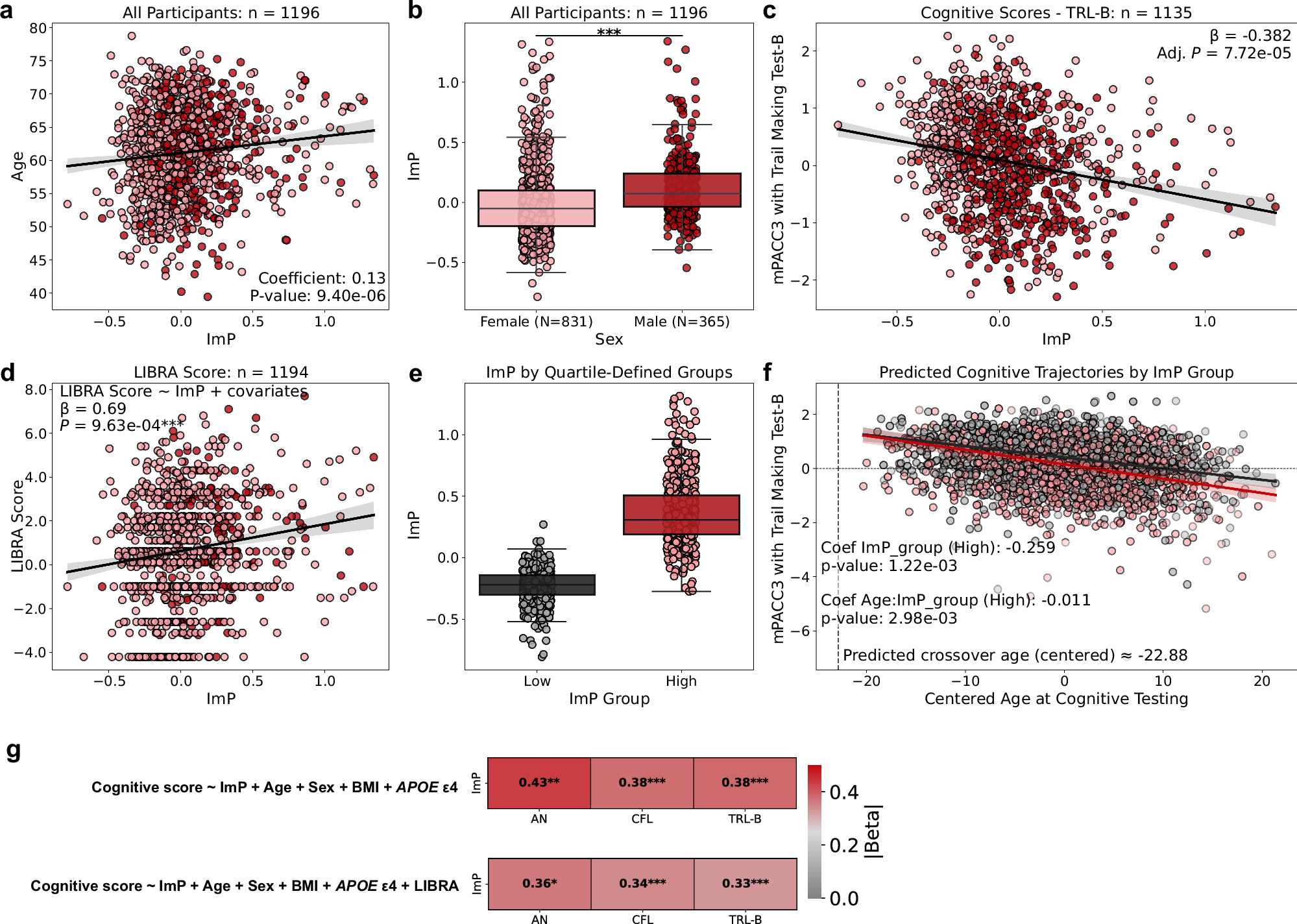
The human work is observational. Blood samples came from volunteers in the Wisconsin Registry for Alzheimer's Prevention and from studies at the Wisconsin Alzheimer's Disease Research Center [8]. Those volunteers had also taken cognitive tests over time, so the team could compare ImP levels with changes in memory and thinking [10]. "And because we have the results of cognitive tests these volunteers took over time, we can see that the people with the highest ImP levels also experienced much faster cognitive decline," Rey said [11].
Tracking cognition over time is a stronger design than a single snapshot. It still cannot tell a molecule that drives decline apart from one that rises alongside something else that does. The release does not give the size of the gap in decline, where the "highest" group begins, or whether the analysis adjusted for the diabetes and heart disease that earlier research has tied to ImP [5].
The genetic result is the part I find most persuasive. In a cohort of almost 1,200, the variant's carriers number roughly 500 [1]. An inherited variant cannot be a result of later cognitive decline, so a genetic link is harder to explain away than a link to a blood level. The team suspects the variant changes how well the kidneys remove ImP from the blood [13]. A change in kidney clearance could affect other circulating compounds too, so the variant points toward ImP without isolating it. "This genetic variation has been associated with increased Alzheimer's risk in large genetic studies before, and now we may understand why it's connected," Rey said [14].
The way ImP is made limits the treatment idea. Gut bacteria produce it while extracting energy from histidine, an essential amino acid found in many foods, especially protein-rich ones [15]. "Generally improving your diet would probably help," said Bendlin, a professor of medicine [1]. "But it's not as easy as saying, 'Stop eating eggs' or 'Don't eat so much red meat.'" [16] On the bacteria themselves, Rey said: "ImP-producing bacteria are present in a large fraction of people, but they're not very abundant in most people." [4]
The release presents ImP as a possible target for preventing or slowing Alzheimer's and related dementias [17]. I think it is a reasonable candidate on this evidence, provided the human link holds once diabetes and heart disease are accounted for [5]. The question dates to the group's finding, nearly a decade ago, that the mix of gut microbes differs between people with Alzheimer's and healthy people [1].
What to watch
- Whether cohorts outside Wisconsin reproduce the association between blood ImP and faster cognitive decline.
- An intervention study, in animals or people, that lowers ImP and then measures amyloid, tau and memory.
- A formal genetic analysis testing whether the ImP-raising variant's known Alzheimer's risk runs through ImP itself.